






There’s a moment that happens in just about every concealed carry renewal class.
Everyone shows up relaxed. They’ve been carrying for years. Nothing bad has happened. They assume they’re “good enough.”
Then the first drill happens.
Five yards. No timer. No pressure. Five careful shots.
That’s when you see it on their faces. This isn’t what they expected.
What happens when carrying a gun turns into a habit instead of a skill you actively maintain? After watching it play out repeatedly, a few patterns are impossible to ignore.
The Guns People Carry and Why They’re Working Against Them
The guns on the line usually fall into a few buckets.
Old carry pistols that were solid choices ten or fifteen years ago, but haven’t kept up. Cheap guns that were bought because they were cheap. Or tiny pistols picked almost entirely because they’re easy to hide.
None of those makes someone irresponsible. But they do make shooting harder than it needs to be.
Old designs tend to have rough triggers, poor sights, and limited capacity. Cheap guns bring reliability questions. Ultra-small guns punish recoil control and consistency. You can carry them all day—but running them well is another story.
When people stop training, their gear choices freeze in time. They’re carrying what feels familiar, not what actually performs well when rounds start going downrange.
Most Concealed Carriers Don’t Actually Know What They Can Hit
After that first string of fire, the disappointment sets in.
Ask the room who’s happy with their target. Almost nobody raises a hand.
Then the real questions start.
Can you hit something the size of a fist at real-world distances? How fast can you draw and get a solid hit? How distracted does an attacker actually need to be before you’d feel confident making a move?
Most people don’t know. Not because they’re reckless, but because they’ve never tested themselves under pressure.
They assume their skill level based on years of carrying, not measured performance. That’s where the problem is. Carrying a gun doesn’t automatically make you an asset. Shooting occasionally doesn’t either.
Confidence without a baseline is irresponsible.
Knowing what you can do matters more than believing you can do it.
The Lack of Pistol Red Dot Adoption
Many long-time carriers came up before pistol optics were reliable or common. They’ve never handled one. Never shot one. Never had a reason to care.
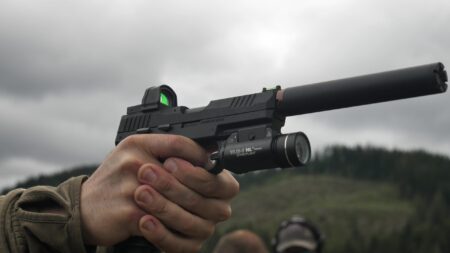
Hand someone a dot-equipped pistol, let them build a sight picture, and explain what’s happening—and the light bulb turns on fast. No sales pitch needed.
Red dots don’t make you a better shooter by magic. What they do is remove excuses. They make aiming easier and visual processing clearer.
Why You Need a Red Dot on Your Pistol
For a lot of shooters, that’s uncomfortable—but useful.
Renewal Classes Expose Comfort, Not Competence
Put all of this together, and the pattern is clear.
They’ve settled into gear that conceals well, skills they assume are fine, and habits that haven’t been challenged in years.
Before your next renewal, ask yourself a few honest questions.
Are you carrying what shoots well—or just what hides easily? Do you actually know your effective distances?
Carrying a firearm is a long-term commitment. Skills fade. Equipment evolves. Staying sharp takes effort.
Achilles Heel Tactical One-Day Firearms Training Course Designed to Deliver Immediate Performance Gains
Read the full article here