





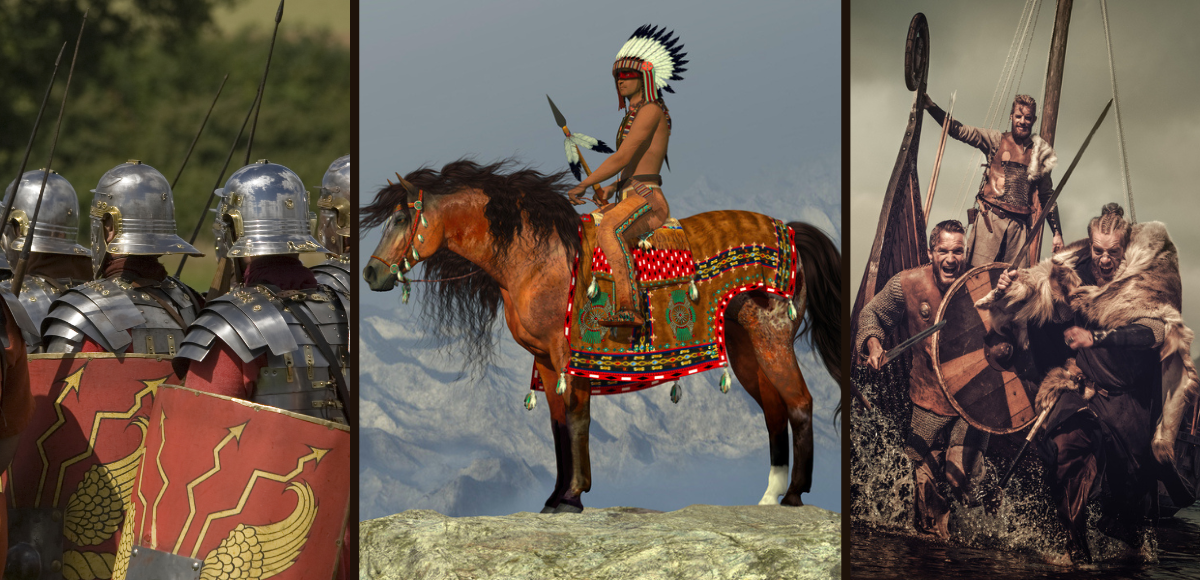
When danger comes knocking (be it war, disaster, or invasion) every society faces a timeless dilemma: do we stay or do we go? In survivalist terms, this is the classic debate of bugging in vs. bugging out. Bugging out means grabbing what you can and leaving for a safer location, while bugging in means hunkering down and fortifying your home or community.1 This choice can mean life or death, and it’s not a new predicament. Throughout history, from ancient empires to 20th-century families, people have confronted the same decision. Understanding how historic cultures either fled or fortified can sharpen our modern preparedness.
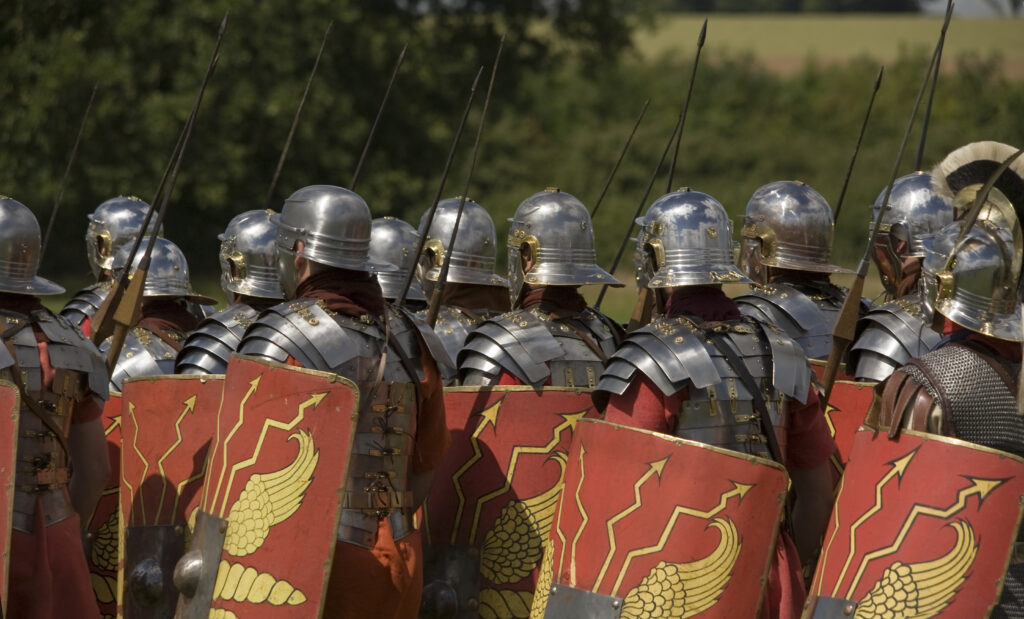 The Roman Empire: Fortify or Flee?
The Romans built one of history’s greatest empires, but even they had to choose between standing their ground or making a strategic retreat. At their peak, Romans were master planners and engineers, famous for fortifying their territory. They constructed defensive walls and forts across their frontiers—Hadrian’s Wall in Britannia, for example, was built in 122 AD as a massive fortified barrier at the empire’s edge.2 This wall (73 miles of stone and turf) was essentially an ancient “bug in” measure: it defined a line to hold, with Roman legionaries ready to shelter behind it and repel outside threats.3 In Rome itself, Emperor Aurelian hurriedly built the Aurelian Walls (271–275 AD) around the capital when barbarian invasions loomed. These 19-kilometer walls (eventually doubled to 16 meters high) let Romans bug in behind stout ramparts, a startling change after centuries of unchecked expansion.4 It was a clear tactical shift: when offense was no longer safe, fortification became vital.
 Yet Rome also knew when to bug out. As pressures mounted, the empire sometimes abandoned far-flung positions to protect its core. A famous example is Roman Britain. For decades, Roman legions held Britain’s towns with fortified camps and roads for resupply (their logistics and mobility were legendary tools). But by 410 AD, beset by barbarian attacks at home, the Romans withdrew from Britain entirely.5 They essentially told the Britons “you’re on your own,” choosing to retreat (bug out) to defend Rome rather than be stretched too thin.
Tools and Tactics:
The Romans’ choices were enabled by their tools. When bugging in, they had legions of well-armed soldiers, disciplined formations, shields and pilum javelins for close defense, and advanced siege engines if needed.6 Their defensive structures were top-notch: thick stone walls, fortified camps (castra), signal towers with fire beacons for communication, and a network of roads to move troops quickly. These logistics meant Romans could often rush reinforcements to a threatened city – a kind of rapid deployment that modern preppers might compare to having multiple fallback positions or caches accessible by good routes. On the other hand, when bugging out, Romans leveraged mobility: their roads and navy allowed faster evacuation or repositioning than most enemies could manage. For instance, during natural disasters like volcanic eruptions, those who bugged out quickly had the best chance. Ancient accounts of Pompeii in 79 AD note that citizens who fled early by road or ship survived, whereas those who delayed perished – highlighting that sometimes speed and early evacuation are the key (just as a fast bug-out can save your life today).

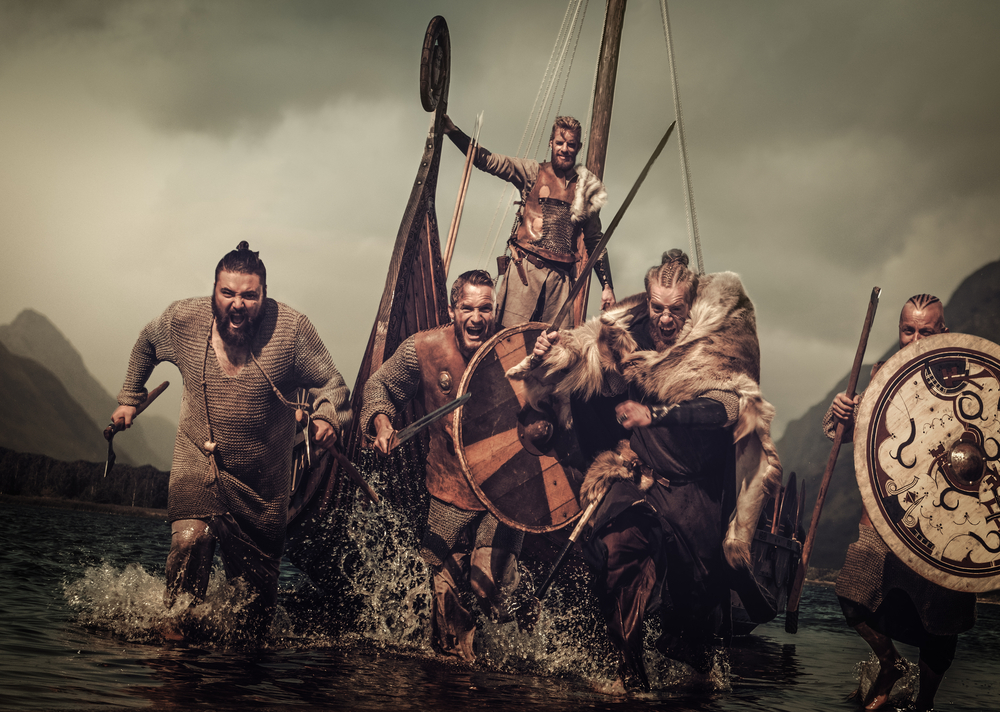 Viking Age Strategies: Raiders, Defenders, and Runaways
In the medieval Viking Age, the tables were often turned: Vikings were the danger forcing others to stay or go. These seafaring Norsemen are famous for raiding and pillaging across Europe, but they too had to choose between digging in or moving out, depending on the fight. Viking culture prized mobility and offense; a common Viking tactic was essentially “bugging out” on offense – strike fast and then disappear before a counter-attack. Their iconic longships were the ultimate bug-out vehicles, shallow enough to beach and launch quickly. This meant Vikings could always escape by sea if a battle turned sour or if larger forces arrived. For example, Norse raiders often fled to their boats when King Alfred of Wessex’s army approached, rather than making a doomed stand. Speed and surprise were their tools; stay nimble, stay alive was an unwritten Viking rule.
However, Vikings weren’t always running. When they aimed to settle or conquer, they had to bug in and defend territory. An illuminating case is the great Viking Army’s campaign in England (865–878 AD). Initially, they roamed freely, but once they started to overwinter in captured areas, they dug in. In 873–874, Vikings fortified a camp at Repton in Mercia, building ditch-and-rampart defenses to hold through the winter.7 This was a classic bug-in: they chose a strategic location and bunkered down. But it had pitfalls – cramped in a camp, the Vikings suffered disease and lost many men over that winter.8 Archaeology at Repton found a mass grave of at least 264 people with no battle wounds, indicating illness cut them down inside their fort.9 The lesson? Bugging in can expose you to threats like disease, fire, or starvation if you’re stuck in close quarters. Viking forts held off enemies, but they couldn’t keep out a plague. Likewise, if a modern prepper locks down in a shelter without sanitation or fresh air, invisible dangers can arise.
Tools and Logistics:
The Vikings’ greatest tool was the longship, giving them unparalleled strategic mobility. If things went bad, they could row away up a river or across the North Sea faster than armies could pursue. It’s akin to a modern prepper having a well-fueled bug-out vehicle or an escape boat – you create an exit option no matter where you are. Vikings also carried compact gear for survival on the move: axes that doubled as tools and weapons, lightweight shields, and preserved foods (dried fish, salted meat) for voyaging. They stored caches of weapons and treasures in secret spots (buried hoards) in case they had to flee and return later. When fortifying, Vikings used what was at hand – timber and earthworks – and positioned camps in defensible spots (hilltops, river bends). They understood geography: a narrow fjord or island could be a natural fortress. In fact, some Norse communities would “bug in” on remote islands like Orkney or Iceland, far from threats, essentially a strategic bug-out to a safe haven that they then fortified simply by isolation.
What worked for them was flexibility: fight when odds are good, run when outmatched, and fortify when you intend to stay for a while. It’s a balancing act familiar to any prepper weighing when to stand their ground versus when to get out of Dodge.
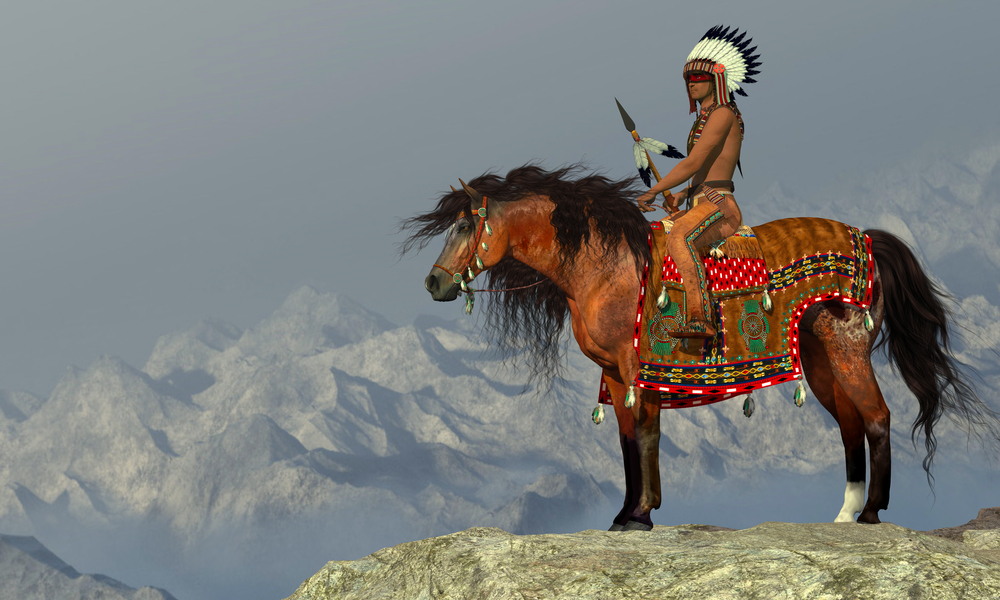 Native American Tribes: Nomadic Flight or Defend the Homeland
Long before the term “bug out” existed, indigenous peoples of North America were experts in mobility and adaptation. Many Native American tribes literally lived a bug-out lifestyle, moving with the seasons or the buffalo. Mobility was built into their culture, making evacuation a way of life. For nomadic tribes like the Lakota, Cheyenne, or Comanche, picking up camp and moving on short notice was normal. Tipis (teepees) were essentially mobile shelters, easy to dismantle and carry. These tribes developed incredible skill in logistics on the move – every family could pack their essentials onto travois pulled by horses or dogs and be gone by sunrise. This meant when danger threatened (another tribe’s raid, approaching U.S. cavalry, or a natural hazard), their instinct was often to bug out to safer ground. For example, during the Plains Wars, the Lakota Sioux and Cheyenne would scatter into small bands to avoid U.S. Army columns, making it hard for enemies to catch them. This guerilla-like bug-out strategy often saved lives; a large village might break into smaller groups that “vanished” into the landscape, then later regroup. Geography was their ally – vast plains, mountains, and forests to vanish into, known only to them.
Not all tribes were nomadic, though, and not every threat could be outrun. Sedentary tribes or those with sacred homelands often chose to bug in and defend their territory fiercely. The Pueblo peoples of the Southwest, for instance, built homes in cliff alcoves and atop mesas (e.g. Mesa Verde or Acoma Pueblo) – natural fortresses where they could hunker down against invaders. In the 1680 Pueblo Revolt against Spanish colonial forces, Pueblo warriors and families bugged in within their fortified villages and successfully withstood sieges, using stored food and water in their high perch dwellings.
Tools and Mobility:
Native Americans were generally lightly equipped, which was an advantage for either strategy. A family might have just a few blankets, a pot, weapons like bows or later rifles, and some dried food. This minimalism meant rapid mobility – comparable to a bug-out bag you can carry on your back. Tribes with horses became even more formidable at bugging out; the Comanche, for instance, practically lived in the saddle, able to relocate camp dozens of miles in a day. But when staying, they also made the most of simple tools: earth lodges or tipis that could handle weather, food preserved in underground caches, and smoke signals or drums to communicate over distance (a kind of early warning system). Socially, the decision to flee or fight was often made by councils, weighing the safety of the whole tribe. They had to consider the elderly, children, and the bulk of their food stores. Sound familiar? A prepper group today must also decide: do we evacuate Grandma and the six kids down perilous roads, or hole up at home? There’s no easy answer, but history shows the decision hinged on assessing the threat and the group’s ability to move or endure. Tribes that knew a fight would annihilate them chose flight (even if it meant hardship on the road). Those who had fortified advantages or no escape (a beloved homeland they’d rather die for) chose to stand fast.
Know your group’s limits and values; it will guide your stay-or-go choice when SHTF.
Conclusion
Our ancestors, from Roman legionaries to pioneer homesteaders, faced the same fundamental question we prep for now: stay or go? They had far fewer resources and knowledge, yet many survived by wit, courage, and sometimes pure luck. We have the huge advantage of hindsight – their experiences – and a buffet of modern tools and tech. We’d be foolish not to use both. History has shown us the signs and the strategies; technology gives us early warnings (satellite weather, news alerts) and advanced gear (GP S, water purifiers, solar panels) that would have been literal magic to people in a medieval siege.
By examining historic close calls and victories, we stack the odds in our favor. We know that dual skillsets are key: you want the fortitude to bunker down when that’s best, and the agility to move out when that’s the wiser path. Don’t pigeonhole yourself as only a “stay put” prepper or a “bug-out” prepper – be ready to be whichever the situation demands.
 Remember, your forebears had to make these choices under duress and often got only one shot at it. We get to analyze and prepare in advance. We can be smarter and faster because of their lessons and our modern tools. So when danger looms, channel that Roman engineer who calmly fortified a town, and also that frontier family that kept a wagon ready. You carry the DNA of survivors – those who fled saber-tooth cats, and those who fought off invaders at the gate. By training both skillsets, you honor all of them and maximize your own family’s chances.
In the end, the decision to bug in or bug out is deeply personal and situation-dependent. But it need not be made in panic or ignorance. Like a seasoned commander, you’ll weigh the terrain, the enemy, the provisions, and make the call. And if fate throws you a curveball, you’ll adapt – because you’ve prepared for Plan A and B. Our ancestors faced the same choices, and many lived to build the world we now live in. We have their wisdom and then some. With that, we can face whatever comes – whether we shelter in our basements or set out for the horizon – with confidence born of knowledge and preparation.
Other Preppers Are Reading Now:
References
[1] Bugging in or Bugging Out which is best? — The Bug Out Prepper Shop & Survival Supplies
https://www.thebugout.co.uk/blog/bugging-out-vs-bugging-in
[2] [3] Theoretical Structural Archaeology
http://structuralarchaeology.blogspot.com/2015/05/understanding-hadrians-wall-why-it-all.html
[4] Muri Aureliani (Aurelian Walls) – Ancient Rome Live
https://ancientromelive.org/muri-aureliani-aurelian-walls/
[5] Roman Empire – Wikipedia
https://en.wikipedia.org/wiki/Roman_Empire
[6] Battle of Carrhae | Facts, Significance, & Casualties – Britannica
https://www.britannica.com/event/Battle-of-Carrhae
[7] [8] [9] Clas Merdin: Tales from the Enchanted Island: Alfred’s Burhs
https://clasmerdin.blogspot.com/2018/08/alfreds-burhs.html

Read the full article here