






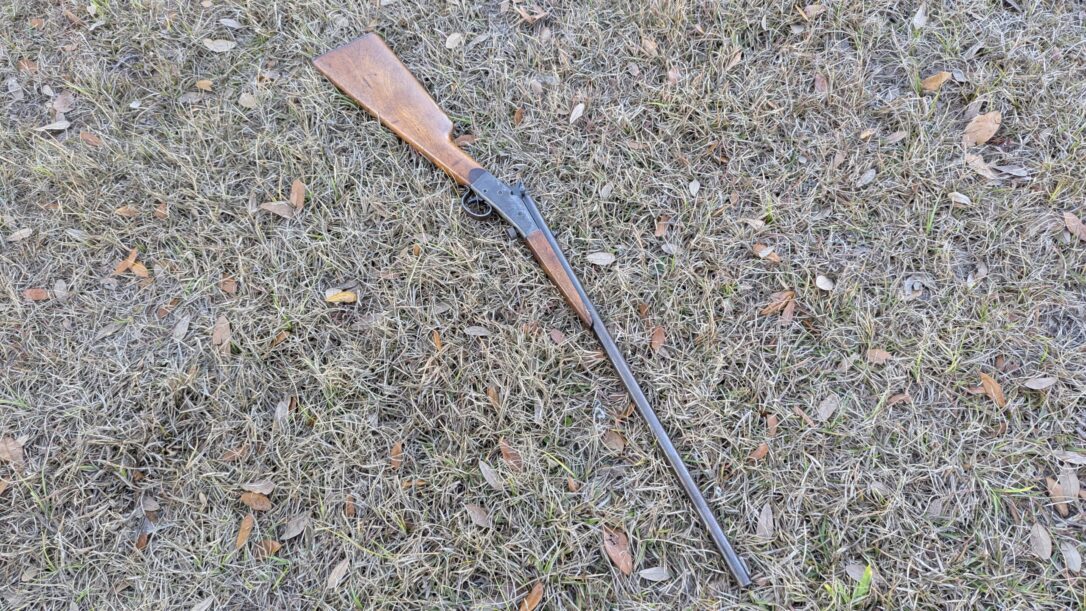
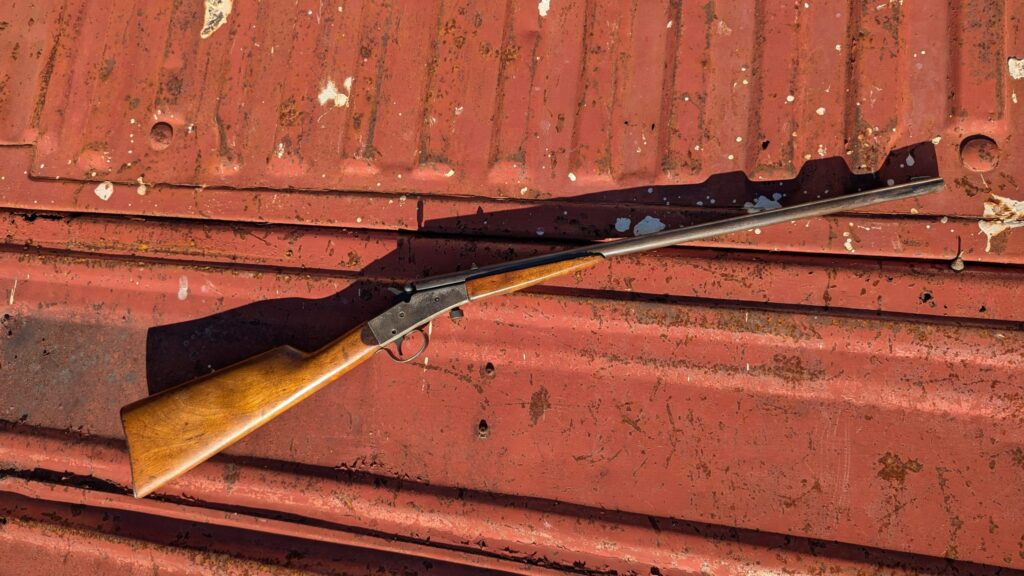
When you hear the term “falling block,” what do you think of? I think of the Sharps Rifle from Quigley Down Under. A great big rifle that throws a massive projectile over long ranges. I bet you picture something similar. What you likely don’t picture is the Stevens Little Scout. The Little Scout is a rimfire .22 LR rifle that gives you a micro-sized falling block design.
Falling block designs were incredibly robust and capable of firing massive, heavy-duty cartridges. Making one in .22 LR seems silly, but I can see why Stevens did so. The Western motif was prominent in the early 20th century. Tales of frontiersmen, cowboys, and adventurers occupied novels, movies, and more.
Advertisement — Continue Reading Below
Stevens produced the Little Scout from 1906 to 1941, the heyday of the frontiersman and cowboy in popular culture. The Little Scout was perfect for the enterprising boy looking to play cowboy. The use of .22 LR kept things cheap and widely available. Countless squirrels, rabbits, and other small game creatures were likely removed from their mortal coil due to a Little Scout.
The Little Scout Design
Stevens produced two Little Scout rifles: the standard Model 14 with the slab stock, and then the more common 14.5 model with a forearm. The Little Scout was marketed through magazines like American Boy and fell into a category of firearms known as “Boy’s Rifles.” Boy’s Rifles are typically affordable, single-shot rimfire firearms.
The Little Scout uses a falling block action where the breech block falls downward for extraction and loading. The block comes back up when you’re ready to fire. The hammer is then cocked and drops when the trigger is pulled. This is a robust system that is well-proven and easy to use. It’s tougher than a rolling block, though, with .22 LR, that strength didn’t really matter.
Advertisement — Continue Reading Below
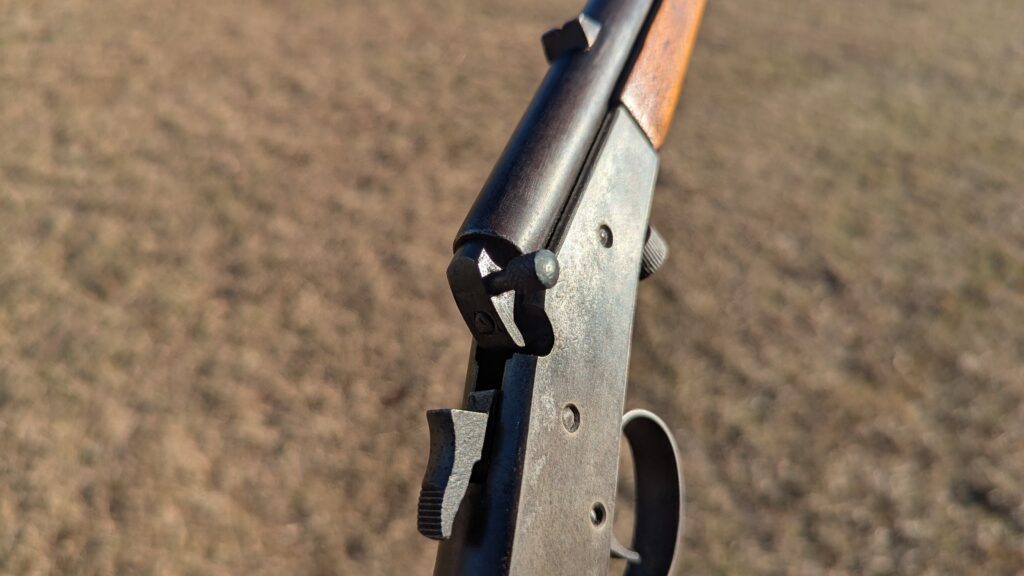
Most Little Scouts are .22 LR models, but Stevens produced several others. The earlier guns were stamped .22 Long and only chambered .22 Long. Stevens also produced gallery gun models for indoor ranges and carnival games that used .22 Short only. There was even a “garden gun” variant with a smoothbore that fired ratshot-like cartridges.
Modern .22 LR loads today are a bit hotter than the loads of yesteryear. I’d suggest using cheap, basic .22 LR loads. Hot loads like the CCI Velocitor or Mini-Magnums are a no-go for me. They might work fine, but I’m not risking one of the coolest rifles in my collection to shoot ammo that’s a hair hotter.
Advertisement — Continue Reading Below
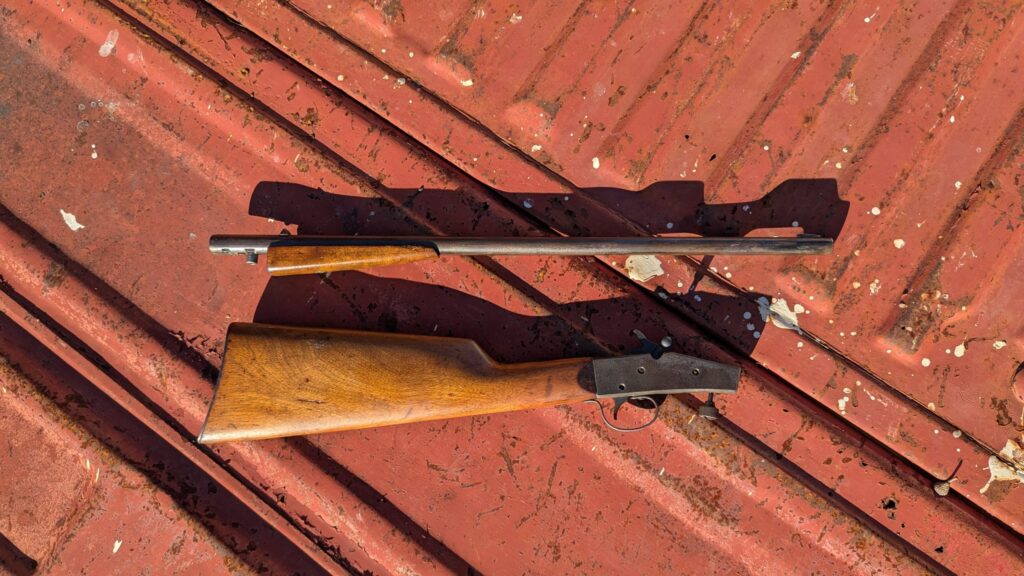
The Little Scouts came with either 18-inch or 20-inch barrels; the 14.5 models had the 20-inch barrels. The 14.5 is a take-down gun that makes it easy to store. It’s nothing more than a thumb screw that separates the barrel from the receiver.
Shooting the Little Scout
Shooting the Little Scout is a ton of fun. Single-shot rifles are rarely all that interesting, but the Little Scout keeps me coming back. The falling block action allows me to pretend I’m Quigley Down Under, but with a .22 instead of those massive .45-110 cartridges.
Advertisement — Continue Reading Below
The Little Scout has tiny sights, but they work. The fine size makes it easy to see small targets. If I were a ten-year-old in the 1930s, I could easily have put food on the table by taking headshots at rabbits and tree rats. My rimfire dueling tree gives me ultra-small targets to take aim at, and at 25 yards, I can work my way down the tree, consistently hitting the little metal gongs.
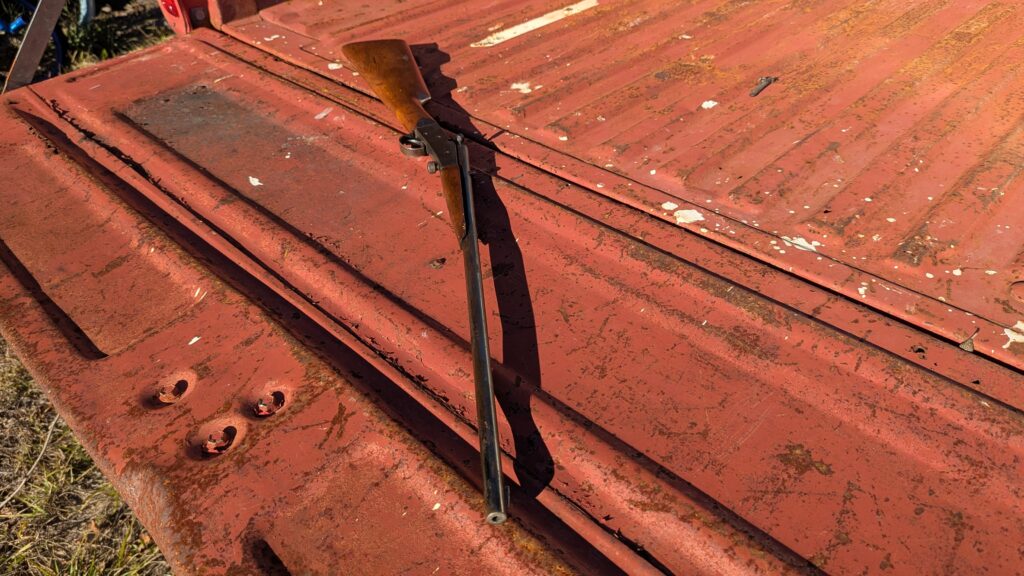
I might need to take a few extra shots at the smaller targets, but I can still hit them fairly easily. The Little Scout is an accurate little gun. Quigley put six rounds in a newspaper advertisement at 900 yards; I can put six rounds into a playing card at 25 yards with ease. The trigger is light and crisp with a fair bit of overtravel.
Advertisement — Continue Reading Below
I’m not the only one who likes this rifle; my kiddos enjoy it too. It’s super lightweight and easy for them to handle under my supervision. The falling block action is a bit novel for modern shooters, so it keeps things interesting. The hammer-fired design makes it quite reliable, and that hammer hits hard, so igniting rimfire primers isn’t a challenge.
The Little Scout Today
This is an old gun, but it’s still a viable option. I wouldn’t beat it up or give it a life in the field, but the Little Scout is accurate, reliable, and easy to shoot. The take-down design makes it super handy for toting and storing. It’s ultra-lightweight and snaps together and comes apart with ease.
Advertisement — Continue Reading Below
If you see one of these guns and it’s in good condition, snatch it up. You won’t regret it.
Read the full article here