





During the past 30 years, extraordinary material released from American and Russian archives has enormously expanded our understanding about Soviet espionage directed at the United States and its allies during the 20th century. The Venona decryptions were the product of American decoding of KGB messages. The Vassiliev Notebooks were based on documents the KGB provided to a researcher as part of a negotiated book deal. The only material provided by a genuine spy was the Mitrokhin material, several thousand pages of notes made surreptitiously by a KGB archivist. While British historian Christopher Andrew collaborated with Vasili Mitrokhin to write two books based on his notes, Mitrokhin himself has not received the attention he merits. Venona and Vassiliev exposed a great deal about Soviet espionage from the 1930s and ’40s. Mitrokhin’s information covered more recent operations and did far more damage to Soviet intelligence than any other defector.
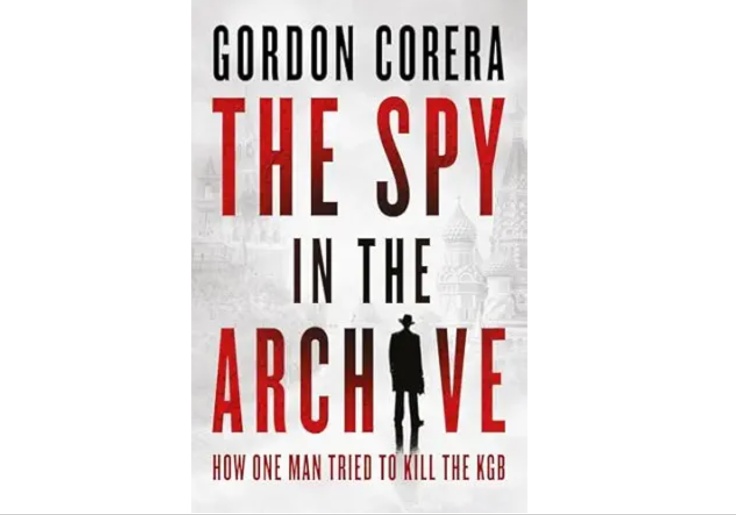
Gordon Corera, a British journalist, has written the first full-length biography of Mitrokhin, whose opportunity to copy sensitive documents came from his time as an archivist working in the vast KGB files from 1968 until 1984. He acknowledges the difficulty—his subject was always reticent to discuss his motives for spying, refused to elaborate on his early service in the KGB, and was notoriously private. Sources about his years in Soviet intelligence are largely nonexistent; he was a loner with few friends.
There was little in Mitrokhin’s background to suggest he would betray the organization that employed him for more than 30 years. Born in 1922, he joined the Cheka—as Soviet intelligence loyalists forever called it—in 1948 after serving in the military prosecutor’s office in Ukraine. He later called himself a “small cog in the machine of Stalinist control” there and “saw horrors.” Assigned to the First Chief Directorate, the KGB’s foreign intelligence arm, Mitrokhin was posted to Israel from 1950 to ’53. Although he never discussed what he did, Corera speculates he may have posed as a Russian Orthodox priest. His posting ended badly when he was among several officers recalled after an espionage ring based in Mapam, a pro-Soviet left-wing party, was exposed.
Another assignment to Australia, as part of a group of KGB minders to prevent Soviet athletes at the 1956 Olympics from defecting, also ended badly after a water polo contest with Hungary—just invaded by the USSR—turned into a bloody confrontation that damaged the Soviet image. It is possible—but unproven—that he was held partly responsible for the debacle. Already regarded as argumentative, gloomy, and awkward in interpersonal relations, he was labeled “Not suitable for operational work” and moved to a dead-end job in the archives.
Although Mitrokhin later insisted his hatred for the Soviet regime stemmed from the brutality and evil he discovered in its archival records, it likely had its roots in the derailment of his career. Instead of glamorous foreign postings, he toiled in the basement of the Lubyanka, controlling access to files and indexing material. Colleagues disparaged him as a “clerical rat,” a “bore and pedant.” He also seethed at the lack of help from the KGB when his son developed a serious neurological condition.
What apparently turned him from a disgruntled employee into a full-fledged, albeit, silent dissident, was the crushing of the Prague Spring in 1968, following years of growing internal repression. Convinced that the Soviet regime was incapable of reform, he found his opportunity to strike back when the KGB prepared to move many of its operations and records to a newly built headquarters on the outskirts of Moscow. Mitrokhin was put in charge of moving, indexing, and securing more than 300,000 files. Ensconced in a private office, he began to write key information down on scraps of paper, secrete it in his socks and shoes, take it to his apartment and then on weekends to his dacha, where he would type it up and bury it inside metal containers. He told no one—not even his family—what he was doing and took elaborate precautions to avoid suspicion, even concocting ink for his typewriter ribbon from pens and fruit juices to prevent any investigations into why he was buying so many ribbons.
His mission took over his life. Mitrokhin had virtually no outside interests. Nor did he have a clear idea of what he would do with his material. A cautious man, he had no intention of contacting foreign governments or trying to smuggle the material out of the country. Not until after the collapse of the Soviet Union did he dare to travel to Latvia and Lithuania and contact an American embassy, but he was rebuffed both times. Dressed in shabby clothes, claiming to have documents that he himself had typed, he was perceived as a fraud or even a Russian dangle. Finally, in March 1992, he appeared at the British embassy in Vilnius and managed to persuade MI6 that he was in possession of important material. Mitrokhin had only two requests: asylum for himself, his wife, and son, and a guarantee that his material would be published to hurt the KGB and the Soviet Union.
Mitrokhin made one surreptitious trip to Britain in 1992 to explain how he had made his notes and persuaded skeptics in MI6 that they were genuine. He also now insisted on a quick exfiltration. The plan hastily cobbled together proved a comedy of errors. His train from Moscow to Vilnius was late. The minibus hired to ferry the family to a port broke down. A telephone to be used for communication was disconnected. Bad weather required ditching a speedy boat for a larger but slower one that was too big to dock at the pier reserved for it. His wife insisted that her mother accompany the family. His son initially balked at leaving. Everyone got terribly seasick as an 18-hour trip took 23 hours. Finally making it to Sweden, the family was flown to Britian, where Mitrokhin went to work with MI6, the CIA, and Andrew, the British historian, to interpret his treasure trove.
The KGB did not cotton on to his defection until just before The Sword and the Shield: The Mitrokhin Archive and the Secret History of the KGB was published in 1999. Since he was retired and had virtually no friends, very few people knew him or had any inkling he had been disaffected. In short, he was so insignificant he was not missed. And, because he had not stolen any documents, the KGB had no idea of which or how many of its operations he had betrayed, making damage control extraordinarily difficult.
Only a handful of the hundreds of spies unmasked by Mitrokhin were ever prosecuted; his notes were not official documents, and numerous governments were reluctant to expose just how deeply they had been penetrated. The one case that transfixed the British press and public was that of Melita Norwood, dubbed the “Granny Spy,” who had infiltrated the British atomic bomb project in the 1940s and spied for the Soviets for more than 50 years but was not prosecuted because of her age.
Ironically, Mitrokhin grew increasingly unhappy with his British handlers. Angered by the delay in publishing, upset that the focus of the Andrew books was on espionage and not the internal crimes of the KGB, and depressed about the resuscitation of the KGB in Russia, he was difficult to work with. Some in MI6 called him “a nutter.” While anyone interested in learning the full extent of the KGB’s reach he exposed would need to read the two books based on his notes, this biography provides a fascinating personal portrait.
Mitrokhin’s wife died in 1999 and he passed away in 2004. One of the lessons of counterintelligence that Corera confirms is that “defectors defect because they are defective.” Whatever his character quirks and monomaniacal obsessions, Vasili Mitrokhin did extensive damage to an evil regime and its chief organ of repression and terror.
The Spy in the Archive: How One Man Tried to Kill the KGB
by Gordon Corera
Pegasus Books, 336 pp., $29.95
Harvey Klehr is the author of numerous books and articles on communism and Soviet espionage.
Read the full article here