




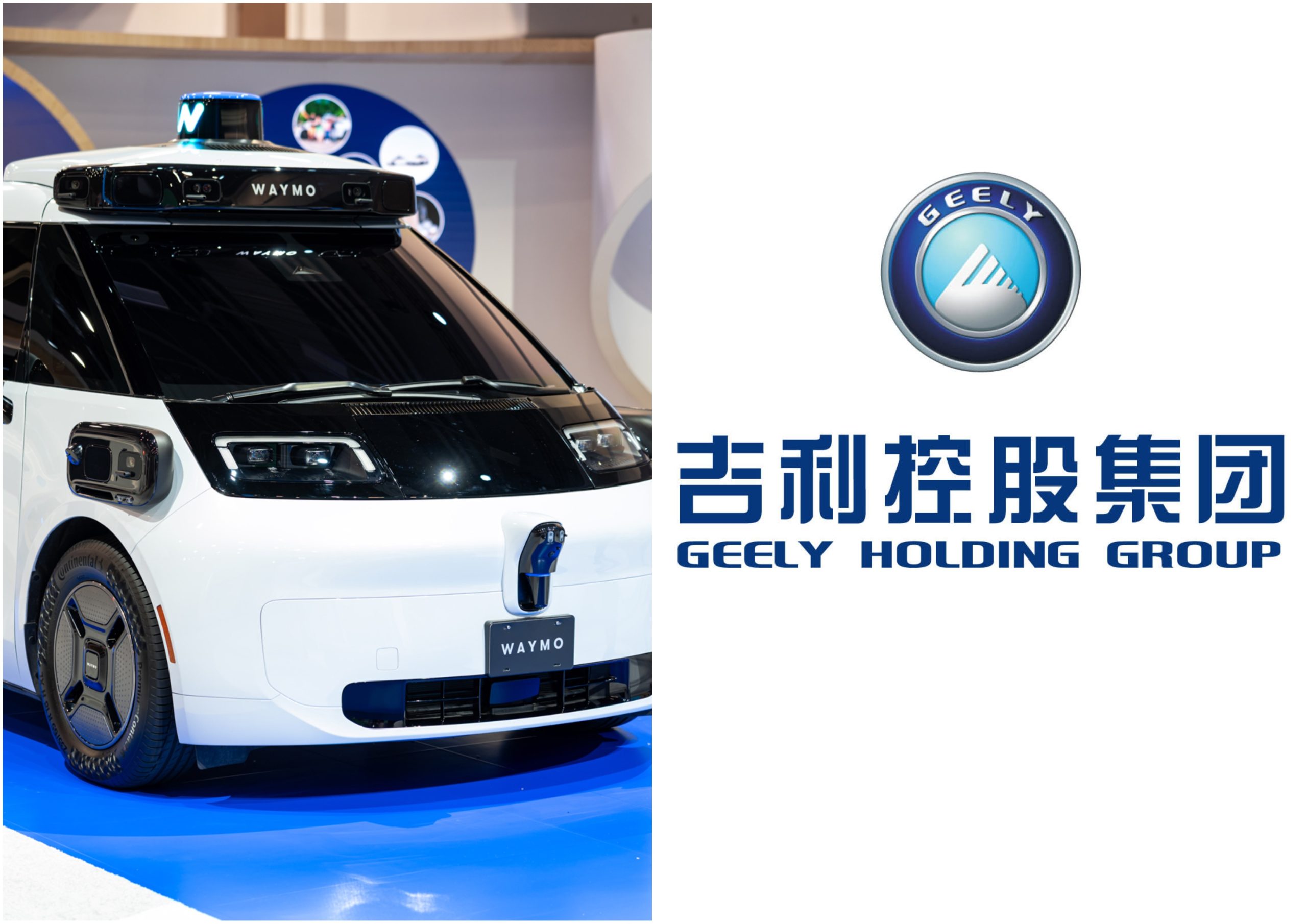
Waymo, the buzzy driverless car startup, recently rebranded its newest robotaxi model, choosing the name of a small California town to create a sense of “familiarity” for customers. The company that actually makes the vehicles, Zeekr, is based in China—and it has extensive ties to the Chinese Communist Party, a Washington Free Beacon review found.
Last month, Waymo unveiled its Ojai model, a four-seat driverless taxi the company plans to roll out later this year. According to Business Insider, the name selection was a “deliberate step” to remove references to Zeekr, an electric car maker described as China’s rival to Tesla.
Waymo, a subsidiary of Google’s parent company Alphabet, said the rebranding to Ojai was intended to bring “familiarity” to customers. But it also obscures Zeekr’s extensive connections to the Chinese Communist Party.
Zeekr, which has built cars for Waymo since 2021, is a wholly owned subsidiary of Zhejiang Geely Holding Group, a Hangzhou-based company chaired by Li Shufu.
Li, the chairman of Zeekr, is a member of the 14th National Committee of the Chinese People’s Political Consultative Conference (CPPCC), the Free Beacon reported. The CPPCC serves as a “critical coordinating body” between the Chinese Communist Party’s Politburo Standing Committee and Chinese interest groups. It’s also a key hub in China’s United Front strategy, which Beijing uses to spread Communist Party propaganda.
Li, who also uses the name Eric, served until 2023 as a representative of the National People’s Congress, which calls itself “the supreme organ of state power” in China. Li was a vice chairman of the All-China Federation of Industry and Commerce, a Communist Party business association that boosts China’s Belt and Road Initiative, an infrastructure program used to develop stronger diplomatic ties to countries in Africa, South America, and elsewhere.
Waymo’s rebranding comes amid growing congressional scrutiny over its ties to China.
On Wednesday, Sen. Bernie Moreno (R., Ohio) grilled Waymo chief safety officer Mauricio Peña over the company’s relationship with Geely and Zeekr.
“It seems like you’re getting in bed with China. The cars that you’re looking to bring into the United States are Chinese automobiles owned by Chinese auto companies, are they not?” Moreno asked.
Peña insisted that Waymo’s sensors and other tracking equipment are manufactured and installed in the United States on Zeekr vehicles imported from China.
“Those Chinese vehicles … have no smarts, no connectivity. What we do is we install our autonomous driving system right here in America, and we don’t share any information whatsoever,” said Peña.
It’s unclear if those assurances will pacify policymakers, especially after the years-long standoff with companies like ByteDance, the parent of TikTok, over its Chinese ties. ByteDance long denied, falsely, that it had links to the Chinese government or that it shared data with Beijing.
Sen. Rick Scott (R., Fla.) pressed the Biden administration on May 30, 2024, over Zeekr’s listing on the New York Stock Exchange.
“Zeekr is a subsidiary of Zhejiang Geely Holding Group, a Chinese conglomerate with close ties to the Chinese Communist Party (CCP),” Scott wrote to Gary Gensler, who served as chairman of the Securities and Exchange Commission (SEC).
Scott raised concerns that Zeekr’s supply chains rely on slave labor and that the company had failed to fully disclose its CCP ties when registering with the SEC.
In September 2024, Sens. Marsha Blackburn (R., Tenn.) and Gary Peters (D., Mich.) pressed Geely Holding Group and other Chinese auto makers over national security threats posed by their CCP ties.
They warned that Chinese auto makers could, at the behest of the CCP, use vehicle sensors and other technology “to access Americans’ sensitive personal data and gather information about our critical infrastructure.”
“These sensors can collect data about road conditions, nearby vehicles, pedestrians, and individuals in the car to be used for safety and convenience applications, but—in the hands of our adversaries—they could be used to map our critical infrastructure and roads, track the movements of U.S. citizens, provide access to the electric grid, and generally surveil Americans,” wrote Blackburn and Peters.
A spokesman for Waymo said the company “understand[s] and share[s] the concerns raised by Senators Blackburn and Peters.”
“The risks they identified arise when Chinese-developed autonomous driving and vehicle connectivity technology operates on American roads, and has the potential to collect data or be remotely accessed,” said Waymo spokesman Ethan Teicher.
Teicher said that, in response to those concerns, Waymo has structured its operations so that “the technology that collects data and makes our vehicles autonomous—the software, sensors, and computing systems—is developed and installed by Waymo in America.”
Read the full article here