




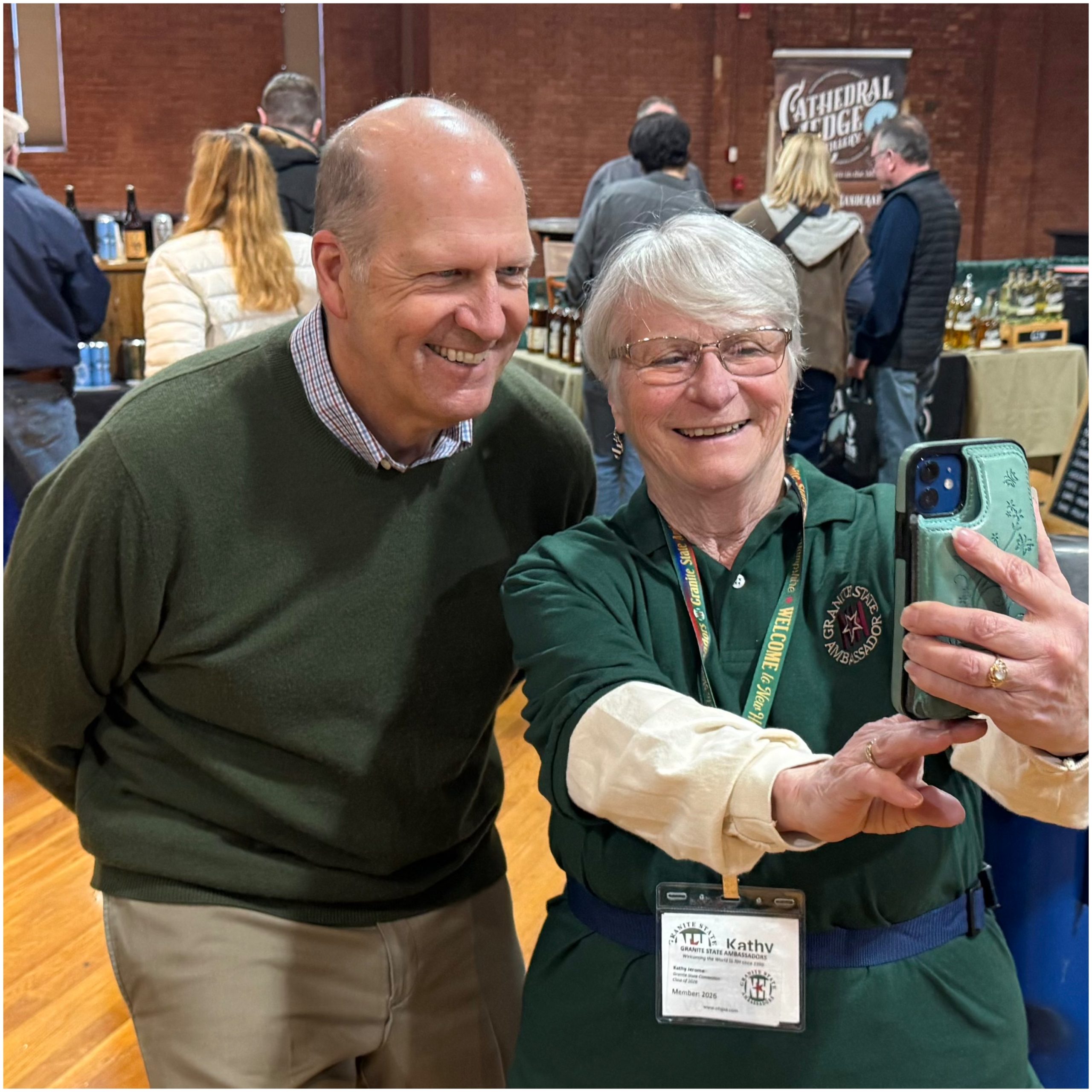
NORTH HAMPTON, N.H.—The race for New Hampshire’s open Senate seat has yet to attract the sort of national media attention as the contests in Maine, Michigan, and Texas, where left-wing Democratic candidates have driven national headlines by donning Nazi tattoos, refusing to celebrate the death of the ayatollah, and calling God nonbinary. But the Republican frontrunner in the Granite State, John Sununu, doesn’t seem to mind flying under the radar—at least for now.
“You have lots of politicians who just want to get elected, go to Washington, and become social media stars, and they do that by throwing the biggest bombs they can throw, by being as acerbic as they can be,” Sununu, who served in the Senate from 2003 to 2009, told the Washington Free Beacon during a sitdown at Seacoast Soups in the southeastern New Hampshire town of North Hampton.
“Does that get you followers?” he asked. “Sure. Does it actually solve problems that people want you to deal with? No, it doesn’t. I want to be effective. I want to be someone that gets stuff done for the state of New Hampshire.”
The race to replace outgoing Democratic incumbent Jeanne Shaheen—in which Sununu, in a comeback bid, is expected to face off against Democratic congressman Chris Pappas—has escaped the star treatment from national media. But recent polling suggests that Republicans may have a better-than-expected chance of flipping Shaheen’s seat. An Emerson College poll taken between March 21 and 23 found Pappas with 45 percent to Sununu’s 44 percent, with a critical 11 percent of respondents remaining undecided.
Sununu is no stranger to Granite Staters or to this particular Senate seat. He won the seat in 2002 (narrowly defeating Shaheen) and then was defeated by her in a 2008 rematch. He’s also a scion of the state’s most famous political family—the son and brother of popular former governors—and served in the House before his single Senate term. His father was also President George H. W. Bush’s chief of staff.
As he eyes a return, Sununu says he’s in an “extraordinarily good position.”
“I feel very confident that we can win—we will win—independents, we’ll win undecided voters, and that’ll be the difference in this race,” he said—and he plans to do so by localizing the race.
First, Sununu will have to win a late September primary race against another former senator, Massachusetts’s Scott Brown, who settled in New Hampshire a decade ago. The Emerson poll that found Sununu narrowly trailing Pappas also found him with a 48 percent to 19 percent lead over Brown.
Sununu’s candidacy is a test of whether a pre-Trump Republican can win in the Trump era—in a state where Republicans have not won a race at the federal level in over a decade, since Frank Guinta was elected to the House in 2014. Currently, both of the state’s congressmen and both senators, including the outgoing Shaheen, are Democrats.
After wrapping his conversation with the Free Beacon, Sununu drove 70 minutes to the remote town of Franklin to speak at a Veterans of Foreign Wars post. During his event, President Donald Trump’s announcement of a two-week ceasefire with Iran lit up the audience’s cell phones. Sununu briefly addressed the development, which he called “good news.” But both the candidate and those in attendance were more interested in issues that don’t make the front pages of national newspapers.
One man asked whether Sununu would back the Major Richard Star Act, legislation that would allow veterans who suffer combat injuries that force them into early retirement to receive full retirement pay and disability benefits. Sununu said it “sounds like something [he’d] be happy to support.”
Another man in the audience spoke of his hope to see more cell towers in Pittsburg, a small town of under one thousand people near the Canadian border.
“I would be happy to focus on that and fight for that,” Sununu said.
Talking with the Free Beacon, Sununu emphasized his moderate sensibilities. He said he supports provisions in the SAVE America Act that would require voters to provide proof of citizenship when they register and a photo ID at their polling place, but does not support changing filibuster rules to pass them.
The House passed the bill in February, but it has remained mired in a Democratic Senate filibuster for nearly a month. Senate majority leader John Thune (R., S.D.) lacks the 60 votes needed to close debate and bring the bill to a final vote, and many in his party have urged the leader to institute a talking filibuster that would require Democrats to physically occupy the Senate floor in order to prevent cloture.
“You get rid of the filibuster and allow a so-called talking filibuster, 15 or 20 senators—forget about 47—can shut the place down,” Sununu warned.
“What you would do is undermine the power of individual states, and the Senate was constructed to protect the interests of individual states—and by extension, small states like New Hampshire,” he continued. “So I’m not really willing to forego anything that was designed specifically to help my state.”
Sununu’s likely general election opponent after the Sept. 8 primary, Pappas, has also touted his own moderate bona fides. A popular four-term congressman who represents the state’s largest city, Manchester, Pappas is a member of the bipartisan Problem Solvers Caucus and has called himself one of “the most independent members of” Congress.
The GOP candidate has attempted to chip away at that image, releasing a statement during last fall’s government shutdown in which he said Pappas “would be a partisan pawn if elected to the Senate.”
Sununu noted in the statement that “when Nancy Pelosi was Speaker, [Pappas] voted with her 222 out of 223 times.”
Sununu’s team provided a list of votes they said Pappas will have to answer for during the campaign, including the initial Build Back Better Act that passed the House in 2021 and contained new energy taxes, the American Rescue Plan Act of 2021 that did not bar local governments from directing funds to illegal aliens, and repeated “nay” votes on the Protection of Women and Girls in Sports Act that would revoke federal funding for schools that allow biological men to play on women’s and girls’ sports teams.
“They’re all votes that he took that are out of touch with where this state really is,” Sununu said.
Read the full article here