





That’s no moon. It’s an orbital weapon.
Outer space has largely been the preserve of astronauts and science fiction, but Air Force Secretary Troy Meink put the world on notice this week that trouble is brewing on the final frontier. On Monday he announced, “the United States now has on-orbit space control weapons.”
The technical language partly obscures the importance of this statement. Robust networks of satellites are becoming increasingly vital for militaries and economies around the world. If a war breaks out between major powers, the fight will extend far above the stratosphere. Maintaining America’s advantage in space is important, but so is using those capabilities to their greatest effect.
Space weapons followed shortly after space flight became possible. Sputnik, the first manmade satellite, began orbiting Earth in 1957, and within five years both the Soviet Union and the United States tested nuclear weapons in space. One American test, Starfish Prime, damaged more than one-third of the satellites in orbit. In 1963, both powers and the United Kingdom signed a treaty banning further space-based tests, and in the Outer Space Treaty four years later, they agreed to “not place nuclear weapons or other weapons of mass destruction in orbit or on celestial bodies or station them in outer space in any other manner.”
Unsurprisingly, Russia is violating its treaty obligations. In early 2024, House Intelligence Committee chairman Mike Turner warned that Russia was preparing to station a nuclear bomb in orbit, which would directly violate the Outer Space Treaty.
Russia and China are acting irresponsibly in other respects too. In 2007, China tested an anti-satellite missile by shooting down an old weather satellite, and Russia followed suit in 2021. Blowing up any satellite creates shrapnel that, because there is no friction to slow it down, endangers people and equipment for years. That did not deter them from their initial tests or from continuing to develop those kinds of weapons.
Until recently, Americans sought to restrict space warfare because the United States would be the biggest loser in such a conflict. The Soviets got into orbit first but quickly fell behind as the United States launched satellites that could spy on Soviet territory, collect weather data, detect far-flung galaxies, relay communications around the globe, and enable other helpful technologies like GPS. To put a cherry on top, NASA put a dozen men on the moon.
But now the Chinese and Russians are gaining space capabilities. They are both deploying their own constellations of imagery, navigational, and communications satellites. In 2000, there was no serious alternative to GPS. That is no longer the case. The U.S. military estimates China has more than 500 satellites that can collect data on U.S. forces.
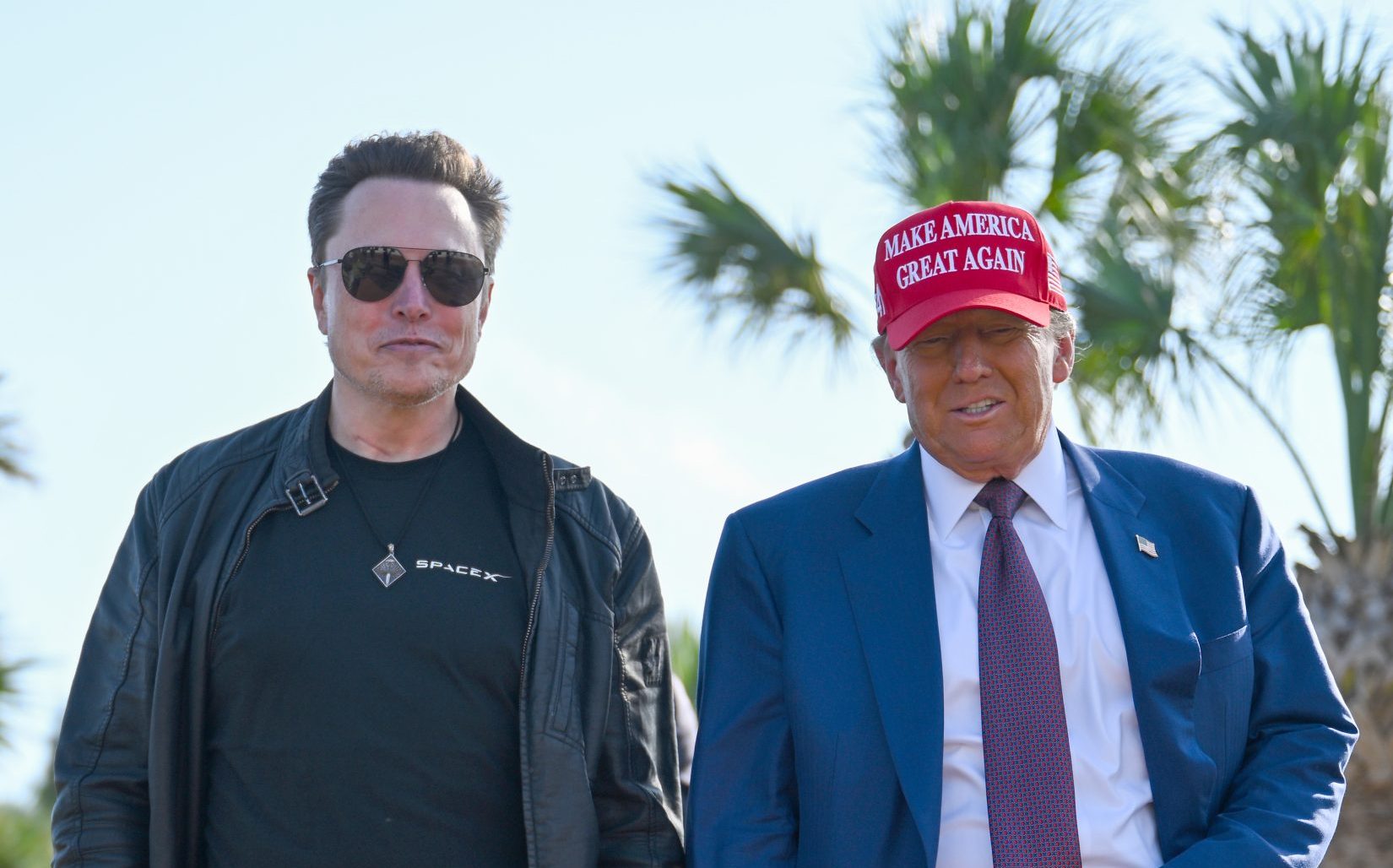
The United States is hardly standing still in this new space race. Donald Trump created the Space Force during his first term. And American civilians are producing their own wonders: SpaceX, for example, has launched more than 10,000 Starlink satellites.
These new space vehicles are having significant effects on earthly affairs. Ukraine’s defenders benefited tremendously in 2022 when Elon Musk donated thousands of Starlink terminals after the Russian attack. His product is so good that the Russian military became reliant on smuggled terminals and suffered significantly when he cut them off earlier this year. Chinese companies reportedly sold detailed images of an American base in Jordan to Iran shortly before an Iranian attack there killed three Americans. Similarly, Russian spy satellites appear to have moved to orbit an American base in Saudi Arabia just days before an Iranian strike there.
Countering these capabilities will be even more important for preserving deterrence in the Pacific. China’s extensive arsenal of long-range missiles, including the heavy “carrier killer” models, won’t do much good if Beijing can’t spot U.S. ships and guide the missiles to their targets. The Space Force is unlikely to shoot down their satellites, since that would create a debris cloud that would certainly hit more American satellites than an adversary’s (we have more in orbit). But blinding and hacking their satellites is fair game. The new orbital weapon is likely to do something like that.
These sci-fi tools are of little use, though, if people cannot employ them effectively. For example, Ukraine and Russia are showing the importance of rapidly acquiring intelligence about the enemy, transmitting it to human or machine analysts, and feeding that information to commanders in time for them to act before the enemy does. Satellite communications can significantly speed this process, particularly over the vast distances of the Pacific.
Getting information to the right analysts and commanders is still a problem, though. The U.S. military does not have the right information-sharing relationships with Taiwan and Japan to do that. All the fancy hardware on and off the planet will be of little use until that is fixed.
Read the full article here