





I’m a big shotgun nerd. I live by life an ounce of lead at a time. I love the power they offer, the high percentage of one-hit stops, and the general challenge in using a shotgun. Throughout my time with the shotgun, I’ve trained in many different ways, accessorized many different shotguns, and shot many rounds. Along the way, I’ve learned a lot, and I want to share five lessons I’ve learned that don’t get talked about much in the shotgun world.
Recoil Eats Accessories
First and foremost, modern accessories, like vertical grips and weapon lights, aren’t made for shotguns. They’re made for AR-15s. Very few accessories are made for shotguns, and you can tell. Shotguns pack a punch when it comes to recoil. A basic AR has about four foot-pounds of recoil, and a 12-gauge shotgun loaded with reduced-recoil ammo has about 17 foot-pounds.
Advertisement — Continue Reading Below
This additional recoil can be hell on most accessories. I have two general recommendations for attaching accessories to shotguns. First, if you’re serious about training and use M-LOK, go metal and use the recommended 35 inch-pounds to connect the accessory to the M-LOK attachment. Using a larger washer for additional surface isn’t a bad idea either.
With that said, polymer is likely going to be fine for most defensive encounters because you aren’t firing a ton of rounds, but expect to tighten it up during training.
Second, if it’s not a shotgun-dedicated product, like the SureFire DSF or Streamlight TL Racker, remove the batteries before training. Recoil forces the batteries back and forth and will break a lot of them. If you’re working in low light, with a lot of live fire, then prepare to swap batteries, so bring extras.
Accessories Can Be Tough To Mount
Since we are the subject of mounting accessories, let’s talk about how much of a pain it can be. Compared to the lush AR and pistol market, the shotgun market seems like a desert. For defensive shotguns, there are two accepted options: semi-autos and pumps.
Advertisement — Continue Reading Below
The problem is that we don’t have a long, dedicated handguard that extends to the end of the barrel, as we do on AR-15s. Mounting lights gets tricky if you want to eliminate barrel shadow. The best options are dedicated forends, but with a standard 18.5-inch shotgun barrel, you get a ton of barrel shadow.
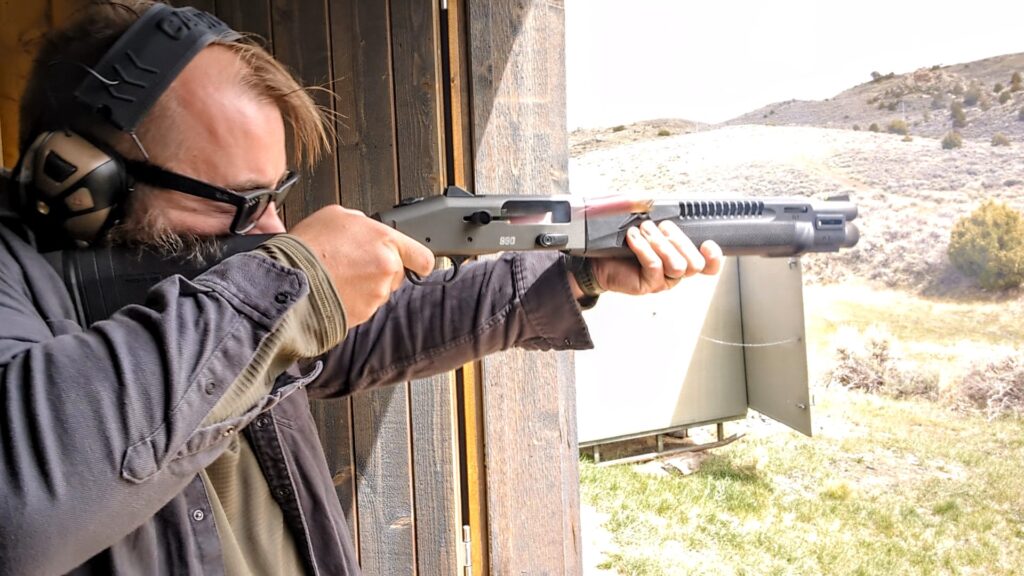
You have to shop around and find what works. A lot of modern shotguns come with barrel and mag tube clamps with M-LOK slots, but they are all polymer, which doesn’t hold accessories well. We need a quality metal option desperately.
When it comes to optics, it’s getting better, but a big problem is that no shotgun company can agree on a single footprint. We have the same issues to a degree with pistol optics, but it’s worse with shotguns. The shotguns drilled and tapped for optics rails are different between companies. Luckily, stuff like the Vortex Universal Shotgun red dot exists.
Optics Work Best Low Mounted
Speaking of optics, another issue I see with a lot of shotguns is that optics sit too high. Most optics are designed with the AR in mind and an inline stock. Some shotguns, like the 590R series, have inline stocks, and these are fine, but most shotguns don’t use inline stocks.
Advertisement — Continue Reading Below
This positions optics higher on the gun than necessary and compromises your cheek weld. The problem with a compromised cheek weld is that the gun can beat you up. It can pop in the mouth.

The second problem is that now we have to think about height over bore. At home defense distances, your shot isn’t spreading much, especially with quality defensive ammo so the issue isn’t covered by shot spread. We accept height over bore with an AR because we can also reach out to 500 yards.
With a shotgun, it’s just another problem to think about in a stressful situation. The remedy is finding a low-sitting optic with the right mount. Luckily, companies like Scalarworks, Defender Tactical, Monstrum, and more are making low-mounted optics options.
Reloading Isn’t The Most Important Skill
For a long time, I focused a lot on my ability to reload the gun. When you see shotgun drills, they always seem to stress reloading. For military and police, reloading might be a critical skill, but for the average home defender, it’s far from the most important skill.
“But shotguns have low capacity!”
Advertisement — Continue Reading Below
Compared to an AR or modern handgun, sure, but an AR and modern handgun have low capacity compared to a belt-fed. My point being the judgment of capacity should be relative to its goal. Shotguns don’t require 30 rounds or even 10 rounds for home defense.

Most civilian home-defense encounters won’t require a reload with a modern repeating shotgun. Throwing eight pellets per trigger pull can solve a lot of problems quickly and efficiently. Four to eight rounds are likely going to be enough to win the fight.
The real critical skill with a shotgun is going to be your ability to rapidly put a round of buckshot on a target in the upper thoracic area or the head. The second critical skill is recoil control.
From there, it’s target transitions, and then maybe reloads. Should you learn to reload? Yes, but that shouldn’t be your main focus when training with a shotgun.
Advertisement — Continue Reading Below
They Are Both Easy and Hard To Use
Shotguns are interesting weapons. They are easy to use when set up correctly, but difficult to use otherwise. Most defensive situations will be covered by one skill: your ability to put a round of buckshot where it matters on the threat. That’s pretty easy to learn to do quickly and effectively.
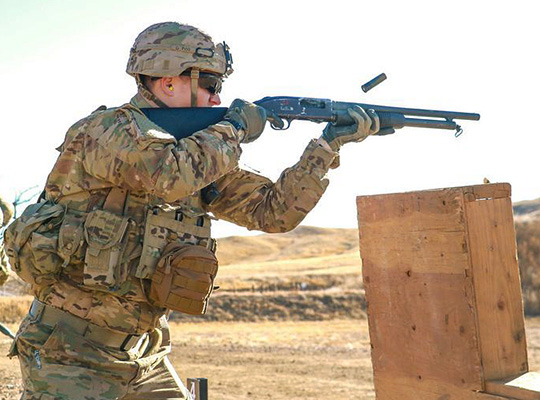
Then everything else gets tougher. The guns are larger and heavier, recoil control is harder, reloading is harder, and accessorizing is harder. Training is harder on the body, on targets, and on your wallet.
It’s easy to understand why shotguns don’t get the same love as ARs. They can be a real pain, and it’s a sacrifice you have to make to put an ounce of lead on target per trigger pull.
The World Of Shotguns
To be a shotgun guy, you have to be pretty dedicated to the platform. To learn, and keep learning, to experiment, and to find what works. The easy button isn’t always there. However, these are a few things I’ve learned and wanted to share because I don’t see these subjects discussed much.
Advertisement — Continue Reading Below
Read the full article here