




Not a post-election ‘deal’
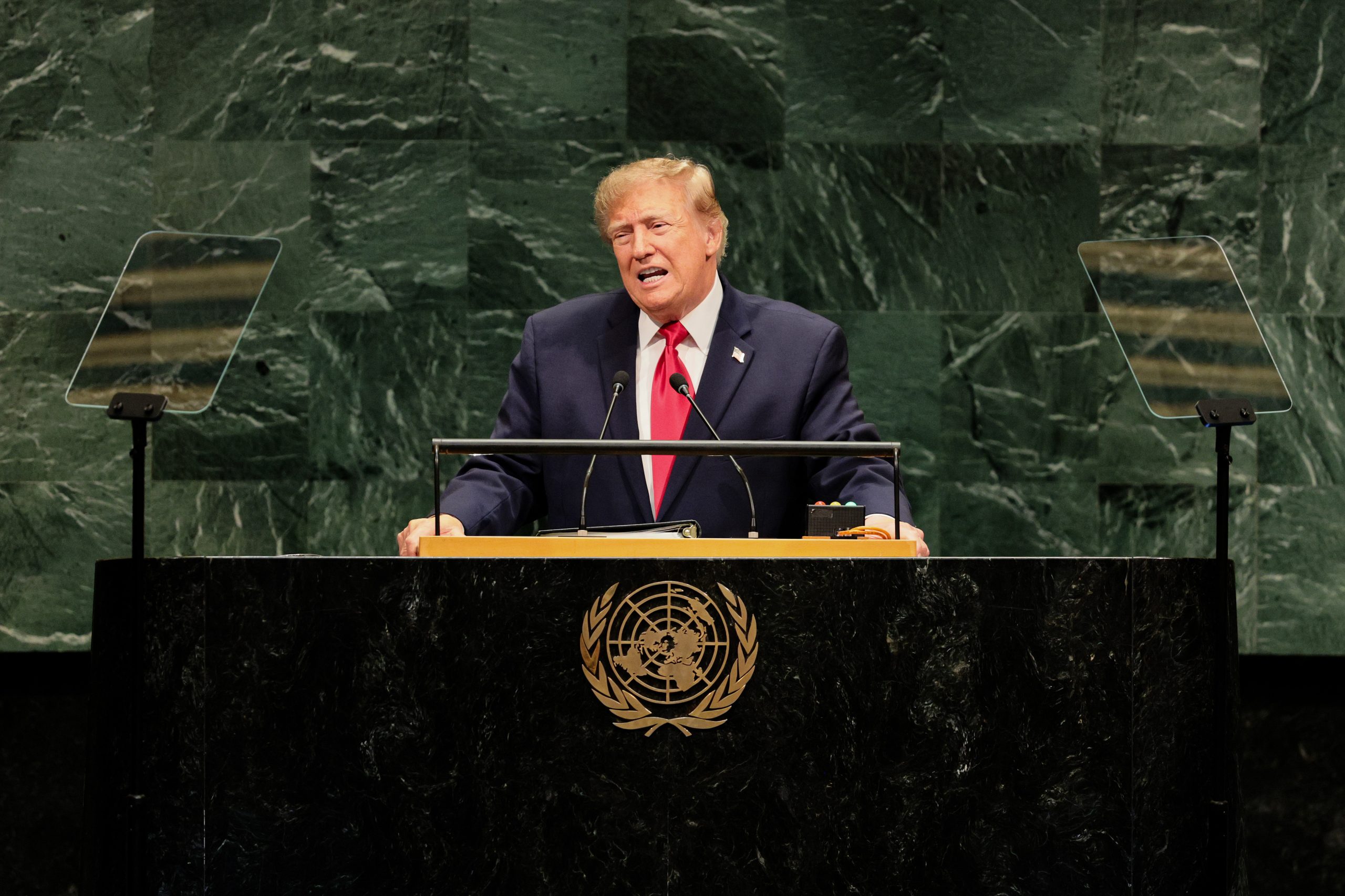
President Trump, in his speech to the United Nations General Assembly this week, laid out the choice he faces.
“I have a big decision to make,” he said. “Will a deal be made with Iran that lets them rebuild and create a far greater country than it ever was before, maybe one of the greatest in the Middle East, or even the world? Or do I annihilate the Islamic Republic and do it quickly, never giving them a chance to kill and destroy people and countries again? Do I drive them into hell with no chance of survival and no hope of future greatness or generations?”
Then Trump answered his own question, at least tentatively, “I believe we’ll make a deal right after the election, because it doesn’t make sense for them not to.”
Trump went on, talking about the Iranians and the election: “They’re waiting to see how I do in the midterm election. What they don’t realize is that I’m not running. I did that already and won in a landslide. We won in a giant landslide, and I’ll be here for two and a half years.” He added, “The Republican Party is running and I’ll be helping them, but I am not running. I gave absolutely no credence and will not give credence to the election when it comes to Iran. It doesn’t even enter my mind. The only thing that does is that Iran will never have a nuclear weapon.”
Though he also allowed that, “Anything is possible. Big changes can happen and happen fast.”
Donald Trump doesn’t need political advice from me, and maybe his comments are designed to lull the Iranians—and the Democrats—into a false sense of security. But just in case he was serious, let me state what plenty of other people are surely thinking and hoping, not least the Iranian people, of whom, Trump said, more than 72,000 had been slaughtered by their own regime this year.
That is, the time to win the battle against the Iranian terrorist state is as soon as possible, not after the election. If the U.S., Israel, and whatever other regional allies we have cannot achieve in Iran what we’ve already achieved in Syria and Venezuela—the toppling of a hostile regime and its replacement with a less hostile one—in the six weeks between now and Election Day, voters might punish Trump—not for starting a war, but for failing to decisively win it.
U.S. presidents who have lost wars have been punished by voters in the past. Biden lost Afghanistan and voters handed Trump the White House in 2024. Ford was president during the fall of Saigon and he lost in 1976 to Jimmy Carter. A 2026 midterm defeat for Republicans because of $4.47 a gallon gas resulting from Iranian threats to Saudi Arabia and to the Strait of Hormuz would be a humiliation for America. And there is still enough time to prevent it.
The economic pressure that the U.S. is exerting on the Iranian regime via the Treasury Department’s Operation Economic Outcast and the War Department’s Central Command blockade of Iran is working. The next and decisive step might not require a whole lot more bombing, but could involve simply recognizing a new provisional Iranian government with authority over key remaining regime assets—communications networks, oil and gas revenues, embassy locations. Deal away, but with them, not with the bitter-end remnants of the failed and defeated Islamic Republic. The parade of horribles that the naysayers warned about before the war started—Hezbollah sleeper cells in American cities, an unconventional weapons attack on Tel Aviv—haven’t happened. The region and the world would welcome a new Iranian leadership committed to peace with neighboring countries, a regime that would spend its time and energy improving Iran’s health care, education, and transportation system rather than funding proxy wars in Lebanon, Gaza, and Yemen.
Why wait until after the elections? Does Trump really think this will be easier to achieve later on, if gas prices stay high through the election and Democrats take the House and possibly the Senate? Let Trump, Saudi Arabia’s Mohammed bin Salman, Reza Pahlavi and his inside-Iran partners, and Prime Minister Netanyahu meet for a photo opportunity and signing ceremony at the White House, aboard an aircraft carrier, or on a strategically placed island to rename Hormuz as the Strait of Trump, or the Strait of America. As the president said, big changes can happen fast.
Read the full article here