





Dr. David Barash begins this book by commenting that he did not put “his heart and soul” into it because he does not believe there is any such thing as a “soul.” After reading it, I can only assume he has serious doubts about the philosophical category of “substance” too, as he has also put very little of that into it. The jacket commendations are laudatory: a “wise, scientific philosopher… deftly disposes of dualism” (Richard Dawkins); an argument written with “clarity and wit” that “shows how appreciating our actual lives is the ultimate uplifting value” (Steven Pinker); “Superb read, erudite and stimulating” (Robert Sapolsky); a book that is “sharp, deeply informed, and often darkly entertaining” (Paul Bloom); “brilliant, ground-breaking, magisterial … the best analysis and demolition of the topic I ever encountered” (Michael Shermer). The reality, however, is far different.
There are basic errors of fact. Aquinas did not, as Barash claims, identify “being” with body and “essence” with soul, as the text he mentions (On Being and Essence) clearly demonstrates. Dante did not write his Divine Comedy “when the sale of indulgences was in full flower.” Perhaps Barash is confusing medieval Florence with 16th-century Saxony, Dante with Luther? Dante wrote in the early 14th century; the papal bull that established the treasury of merits that led to the large-scale racket of indulgences was Unigenitus, dated 1343 and thus 22 years after the poet’s death. And to claim that Christians believe each soul is “unchanging,” without any qualification as to the scope of the term, reflects an ignorance of Christian discussion. Gregory of Nyssa, for example, has much to say about the growth of knowledge of souls in the afterlife. Of course, that is not to claim that Gregory is correct; but it is to indicate a persistent flaw in Barash’s approach: a refusal to engage (or ignorance of) actual theological claims as made by those teachers who have shaped the official Christian tradition.
Barash prefers to highlight popular takes on the doctrine. Whether the same is true for his criticism of other religions—Judaism and Islam being most prominent—I am not qualified to say. But his treatment of Christianity does not inspire confidence.
This shallowness is evident throughout. The chapter on dualism treats the term as if it were adequate to capture Christian views of body and soul and proceeds to deal with it as a single phenomenon. This is both fallacious and mischievous. Fallacious, in that it fails to address hylomorphism, the position articulated most influentially by Aquinas (a leading theologian who merits but one reference from Barash and even that is, as indicated above, incorrect). Mischievous, in that it allows Barash to present Descartes as somehow representative of Christianity. Had Barash knowledge of the extensive literature on this topic, he would know that that is a highly contentious claim that cannot be assumed as basic. Further, his rejection of soul-body dualism in general engages none of the current philosophical debates on the issue.
Barash also appears clueless about the nature and importance of metaphysics. Again, he might reject the very notion of metaphysics as nonsense. That is not a crime. But he cannot claim (as he does) to have successfully refuted ideas like the soul and God when the notions he has refuted are not those held by, for example, the Christian church. His failure to engage hylomorphism is one example. His apparent assumption that Christian metaphysics thinks of God as one creature among others, as evidenced by his citation of Bertrand Russell’s China teapot argument and even his claim that there is “no such dude,” is to miss the metaphysics of orthodox Christian theism and is a basic category mistake. Again, this is not to say that there are not sophisticated objections to Christian metaphysics, merely to point out that Barash himself does not offer any.
The intellectually weakest chapter is the last, where he argues that rejection of the soul is useful, perhaps even necessary, for the development of a moral society. Barash himself is pro-abortion and pro-medically assisted suicide, two positions that presumably require an understanding of the nature of human personhood and purpose and of the values that make a life worth living. He has great confidence that evolution can provide moral foundations for these and other positions, but evolution typically eschews final causality, something which creates interesting questions of normative ethics that he ignores, or perhaps is unaware of. In an age of technological advancement, this is even more of an acute question. And Barash’s quoting with approval Hanno Sauer’s claim that there is a shared global morality is risible. What about cultures that find slavery okay? Or female genital mutilation? Or polygamy? Or child sacrifice? Yes, he mentions “love”—of children, family, friends, etc., as a universal. But even that list raises questions of what love looks like, who counts as worthy of it (not necessarily the inhabitants of wombs, apparently).
In the West, we cannot even agree on such basic things as sexual morality, abortion, or euthanasia. That Barash sees the death of the soul as freeing us up for morality indicates that he himself is invested in the notion of human beings as free, autonomous, expressive individuals with a morality shaped by utilitarianism. That is a distinctly modern, Western, not global nor historic, notion of humanity. In fact, in his discussion of morality (engaging with hardly any serious moral philosophers, unless one stretches the definition to include cognitive psychologist Steven Pinker), what Barash is really doing is assuming his Western morality is normative and implicitly, maybe even unconsciously, denying the legitimacy of alternatives.
The book might have worked well 20 years ago, in the heyday of the naïve atheism of Christopher Hitchens and company, when the cozy liberal morality of Ivy League cocktail parties still held sway. But we live in a more Nietzschean age. Gesturing toward evolution and love as solid bases for moral society has long been exposed as inadequate.
And that takes us to the heart of the problem: Barash is so contemptuous of those with whom he disagrees that he never engages them seriously or addresses the many problems in his own approach. It seems that he considers such to be beneath his dignity. This would explain his use throughout of sarcasm, couched in the patois of the puerile (“dude,” “bullshit,” etc.). And it explains his comfort in seeing the beliefs of others as signs of psychological defects, desires, or manipulations, and his own as obvious common sense. I do not often recommend this, but Barash is one person who might benefit from reading some critical theory. It would help him understand that his own thinking may not be as disinterested as he presents it.
I am by training not a scientist but an intellectual historian. My discipline operates with certain canons to which an argument must conform if it is to be sound, let alone “magisterial,” “wise,” “erudite,” and “deeply informed.” These include an avoidance of errors of fact, the fair representation of the strongest arguments against the proposed thesis, not allowing sarcastic rhetoric to substitute for substantial argument, a careful attention to the different ways in which words and concepts are understood by those who use them, the eschewal of anachronisms, serious engagement with the relevant secondary literature (and not merely those examples that fit one’s own preferences), and a basic competence in relevant areas where one is not a specialist in order to avoid elementary category mistakes. By none of these criteria is this book a serious contribution to the field of intellectual history nor, I suspect, of philosophy or even science.
Indeed, I am inclined to say that those who believe it to be so are themselves vulnerable to the accusation that Barash lodges against believers in the soul, of it being a Freudian illusion—of them thinking it is true because they want it to be true, not because of any intrinsic merit it possesses. I am sure that a deep, historically and philosophically informed critique of the idea of the soul can be written, but do not be fooled by the jacket blurbs: This book is not it.
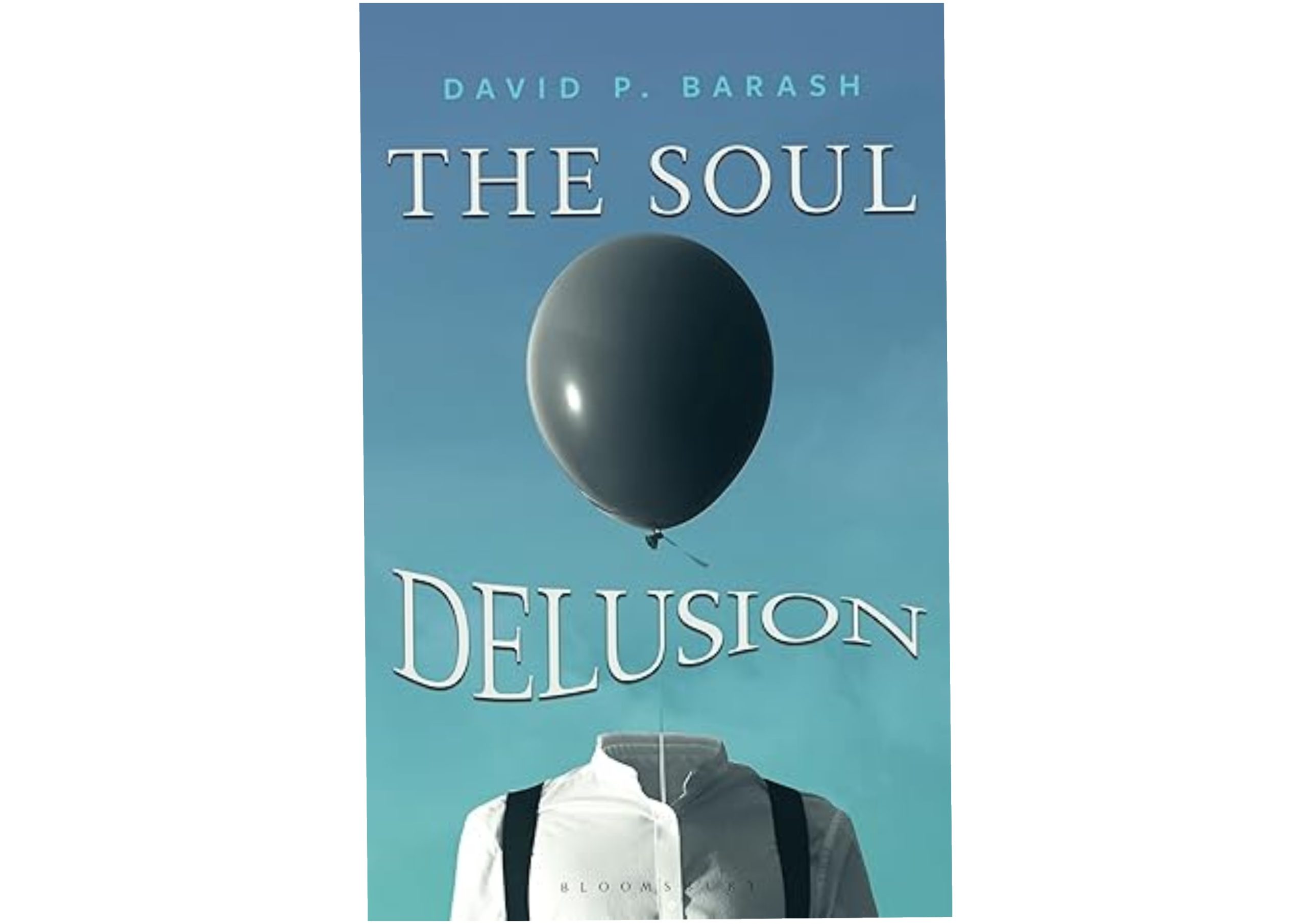
The Soul Delusion
by David P. Barash
Bloomsbury Academic, 218 pp., $32
Carl R. Trueman is the Busch Family Visiting Research Fellow at the Center for Citizenship and Constitutional Government at the University of Notre Dame and a fellow at the Ethics and Public Policy Center in Washington, D.C.
Read the full article here