






Water is a critical survival need. Without a reliable source of potable water, survival gets sketchy. Therefore, knowing how to handle questionable H2O and render it safe to drink is important.
Let’s take a quick run at several different options. Understand that we’re going to be moving fast, and we’re not getting too deep into the weeds with any of them. Explore them further on your own and determine which ones make the most sense for your individual situation.
Boiling
Advertisement — Continue Reading Below
Bringing water to a rolling boil will kill most waterborne pathogens. You don’t need to let the water boil for several minutes, though. At sea level, water boils at 212°F, and those pathogens are killed after hitting 158°F for about a minute. By the time you’ve reached the boiling point, you’re good to go.
Both the CDC (Centers for Disease Control) and the EPA (Environmental Protection Agency) recommend boiling for one minute, three minutes if you’re above 5,000 feet.
Pros:
Advertisement — Continue Reading Below
- Requires no special equipment.
- Easy to accomplish.
Cons:
- Requires a heat source.
- Does nothing to eliminate particulates, heavy metals, or chemicals.
Distillation
If you bring water to a boil, then capture the steam and let it condense back into liquid form, you’ve distilled it. The end product is pure water, just hydrogen and oxygen. But in order to be even remotely efficient, this process requires some special equipment or the ability to improvise it.
Pros:
Advertisement — Continue Reading Below
- Works well to eliminate just about any contaminant and pathogen.
Cons:
- This is a slow process, and it’s energy-intensive.
- It removes all minerals from the water, which isn’t healthy for us in the long run.
Chemical Treatment
There are a number of different water treatment products on the market. Water purification tablets abound in any sporting goods store as well as online. This category also includes chlorine bleach. These options work great on waterborne pathogens, but don’t do anything about other contaminants.
Pros:
Advertisement — Continue Reading Below
- Inexpensive and easy to use.
Cons:
- Very limited shelf life.
- Won’t do anything about pollutants or other non-biological contaminants.
Mechanical Filtration
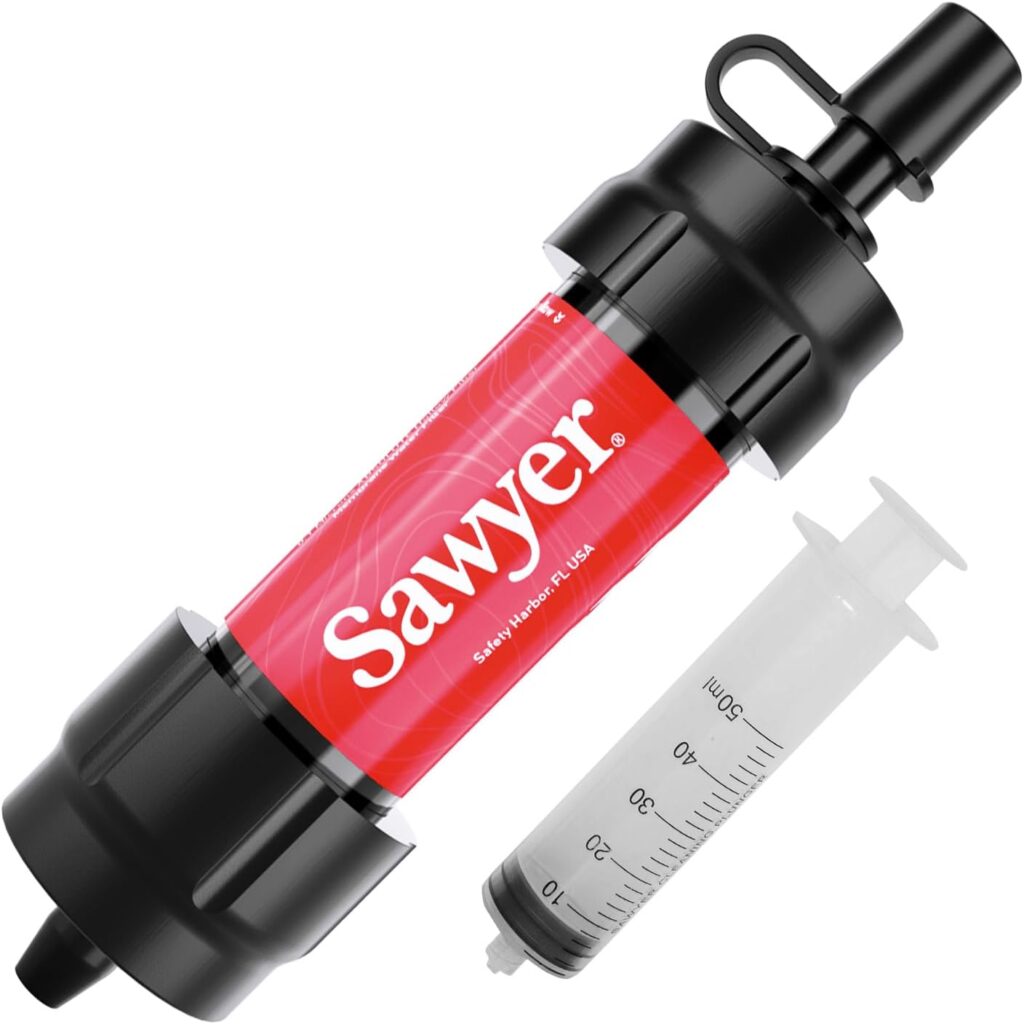
There are all sorts of different filters out there, such as the Sawyer Mini and the Lifestraw. Most are easy enough to use. Straw-type are point of use, where you suck the water through the filter. Gravity-fed are nice because they’ll work while you’re doing other things. Most common kitchen filters aren’t going to handle pathogens. You need something a little more robust. Be sure to read the specs on the filter you choose to ensure it will accomplish what you need.
Advertisement — Continue Reading Below
Pros:
- Easy to use.
- Depending on the model, it’ll remove virtually any contaminant and pathogen.
Cons:
- Can be expensive.
- Not all filters are equal; be sure to read the specs.
- Most filters require some level of maintenance.
UV Light
Advertisement — Continue Reading Below
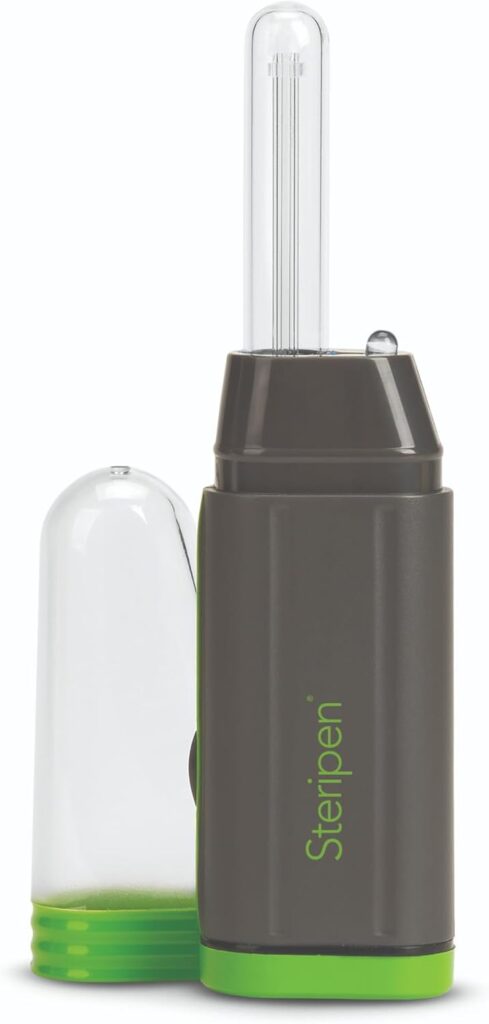
Ultraviolet light will kill pathogens. These devices, such as the SteriPen, work on that principle. You insert the working end into the water container and press a button. Of course, if the battery dies on the unit, it isn’t going to help you clean your water.
Pros:
- Easy to use.
- Works well on pathogens.
Cons:
Advertisement — Continue Reading Below
- Does nothing about non-biological contaminants.
- Doesn’t work well if the water is dirty or cloudy.
- Requires batteries.
SODIS
SODIS is short for Solar Disinfection. It’s sort of a homemade version of the UV devices. You fill a clear container with water and place it in the sun, ideally on top of a dark surface. As the sun’s rays travel through and bounce around in the water, the UV waves will kill off the nasty stuff. This isn’t a fast process, though. Think a couple of days rather than a few minutes.
Pros:
Cons:
Advertisement — Continue Reading Below
- Takes 1-2 days.
- Water needs to be fairly clear.
- Won’t do anything about pollutants.
Homemade Filters
You’ll see these talked about on social media and even mentioned in some survival manuals. There are a couple of different variations, but basically, you set up a contraption where the water runs through layers of rock, sand, and charcoal. While these filters will remove some particulates and other bad stuff, you’ll still want to boil it or treat it in some other fashion before drinking it.
There’s a school of thought out there that says you should let your system get accustomed to drinking wild water. While I’ve known people who have done that, it isn’t something I’d recommend to everyone.
Read the full article here