




State requirement is ‘discrimination,’ law professors say
Conditions imposed by the state of Massachusetts on a $675 million tax-exempt bond offering by Harvard raise serious questions about unconstitutionally infringing on free exercise of religious liberty, some of the nation’s foremost legal scholars told the Washington Free Beacon.
The Free Beacon reported Sunday that Harvard, under financial pressure from the federal government, will try to borrow $675 million via the Massachusetts Development Finance Agency. A draft offering document used to help line up buyers for the bonds says that as a condition of qualifying for the Massachusetts tax-exempt financing, Harvard “agrees that no part of the Project, so long as it is owned or controlled by the Institution, shall be used for any sectarian instruction or as a place of religious worship or in connection with any part of a program of a school or department of divinity for any religious denomination.”
“That’s got to be unconstitutional,” the John P. Murphy Foundation Professor of Law at Notre Dame Law School, Nicole Stelle Garnett, wrote in response to my query. Garnett, who is also a senior fellow at the Manhattan Institute, said the state is “imposing a condition on the funds that discriminates against religious conduct/free exercise in violation of Carson v. Makin,” a case the U.S. Supreme Court decided in 2022.
My Sunday story asked, “If an economist says a prayer before eating a meal at his desk, does that turn his office into a ‘place of religious worship?’ What if a Harvard Divinity School student wants to come talk with Ben Friedman, a Harvard economics professor who wrote a book titled Religion and The Rise of Capitalism. Is Professor Friedman supposed to bar the Harvard Divinity School student from the Pritzker building?”
Garnett said the stipulation “raises bizarre enforcement challenges. Maybe Harvard would reply that its Divinity School isn’t sectarian.”
It’s not inconceivable for religious worship to take place inside Harvard buildings. Harvard Chabad has Shabbat dinners inside Harvard Business School and Harvard Kennedy School buildings and hosts High Holiday services at Harvard Law School. Harvard has a Hindu prayer space in the basement of a dormitory building for first-year students. It has a Muslim prayer space on the second floor of the Smith Center, an office building and campus center whose eighth and ninth floors are part of the “project” being financed with the tax-exempt bond offering. A room adjacent to a shower in the basement of the Harvard Kennedy School also functions as a Muslim prayer space, or did when I worked in the building from 2019 to 2023.
The Maurice & Hilda Friedman Professor of Law at Columbia, Philip Hamburger, who is author of the landmark 2002 book Separation of Church and State (published by Harvard University Press), wrote to me that he may use the example in the course he teaches on religious liberty. “You are right that the breadth of the limit raises free exercise and even free speech questions,” wrote Hamburger, who is also CEO of the New Civil Liberties Alliance.
Brenden Mann Foundation Chair in Law and Religion at Pepperdine Caruso School of Law, Michael Helfand, who is also a visiting professor at Yale Law School, wrote to me that “these sorts of provisions exist across state and across contexts, previously enacted because of an old, but now abandoned, interpretation of the Establishment Clause. Indeed, under a recent series of Supreme Court cases over the past decade, this sort of provision is unconstitutional as it violates the Free Exercise Clause as a prohibited form of religious discrimination. A state cannot exclude an institution from participating in such a government program because it would like to use the funds—made available to other private institutions—toward some sort of religious use.”
Garnett and Helfand maintain a website, religiousequality.net, that describes itself as “Exposing discriminatory laws and regulations to prevent the exclusion of religious organizations and activities from public programs.” Garnett said they might add this example to the website documenting discrimination.
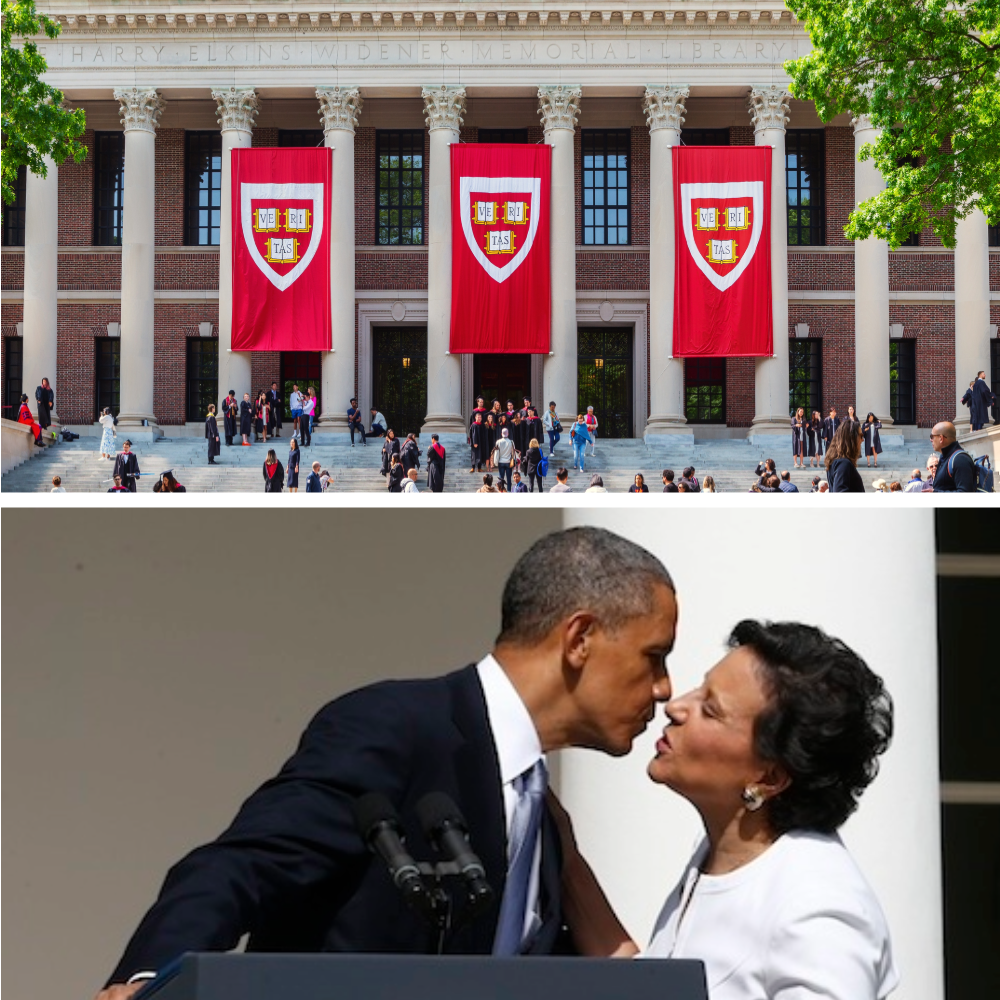
Penny Pritzker, who announced a $100 million gift for the new economics building in 2021, did not respond to an email seeking comment. Pritzker served as Secretary of Commerce in the administration of President Barack Obama and as a State Department envoy in the administration of President Joe Biden. She is the senior fellow of the Harvard Corporation, one of Harvard’s two governing boards. The chairman of the Harvard economics department, Elie Tamer, did not respond to an email seeking comment. Lawyers for Harvard and for the Massachusetts Development Finance Agency did not provide comment before deadline.
The Harvard bond offering was approved by the state in February at an amount up to $750 million. It’s unclear why the amount of this offering is $675 million when a larger amount was approved by the state. One possibility is that Harvard plans a separate, taxable offering for the remaining amount of $75 million. Another possibility is that the offering was downsized after informally checking and discovering less interest from investors. It’s also possible Harvard found borrowing conditions better than expected and was able to raise more money with a smaller-sized offering because it had to pay lower interest rates.
Read the full article here