


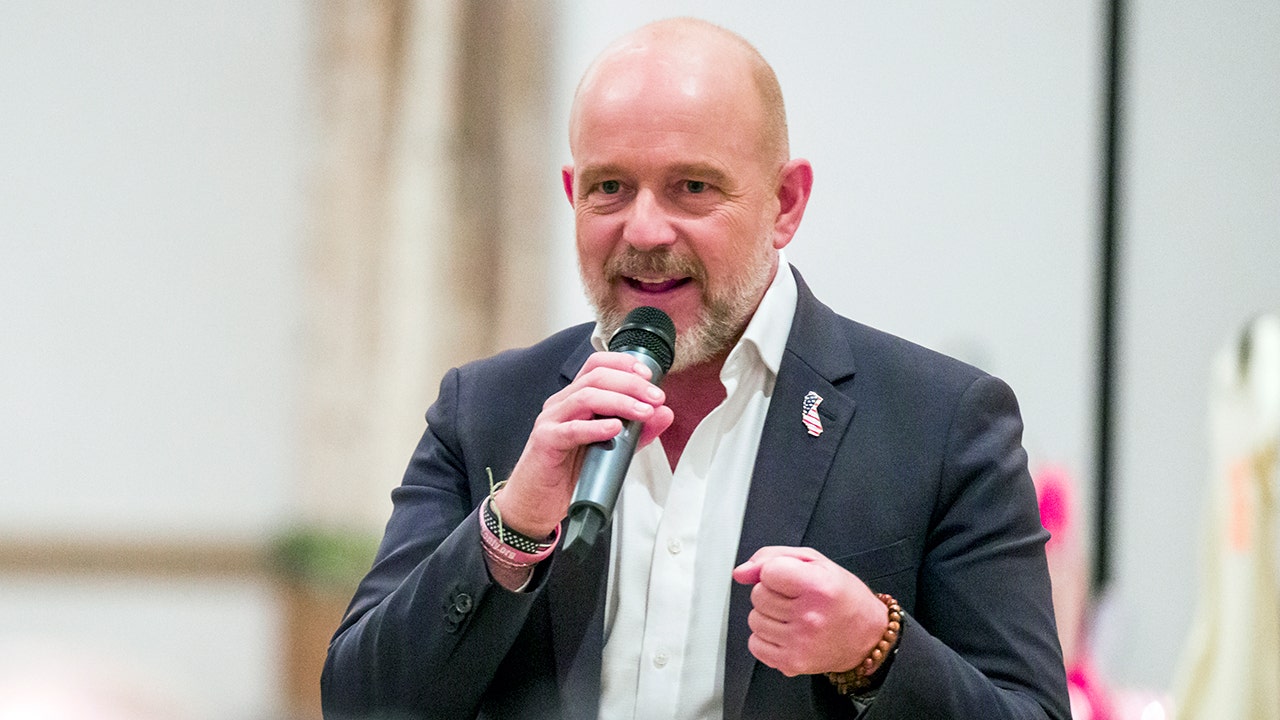



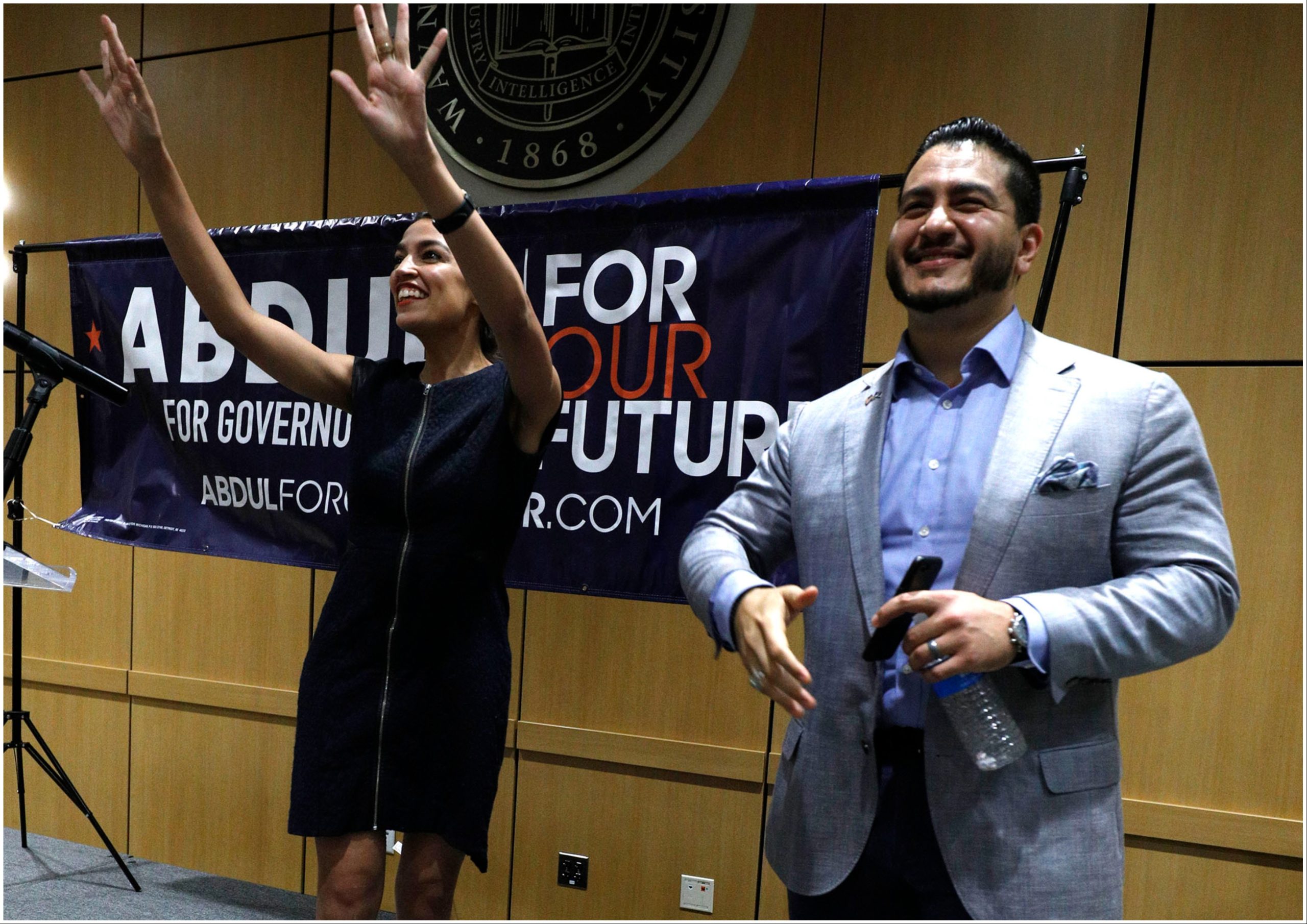
The Senate candidate, who is not a defendant in the suit, allegedly bragged about using leftover Columbia University grant money to buy ‘very high-end furniture’
The left-wing Democratic candidate for Michigan’s open Senate seat, Abdul El-Sayed, told an older female colleague that he didn’t want to work with “anyone over 40” as he prepared to assume a prestigious role at New York City’s Icahn School of Medicine at Mount Sinai, according to a 2019 age and gender discrimination lawsuit brought by former employees against the institution.
El-Sayed, who declared at the launch of a “Women for Abdul” campaign initiative in mid-March that “incredible women raised me” and “incredible women guide me today,” must now contend with the inconvenient lawsuit, which is ongoing in both federal and New York state court and is now in the discovery process.
The lawsuit does not name El-Sayed as a defendant, but he is a central villain in the complaint. Eight former female employees at the Icahn School of Medicine at Mount Sinai allege that, when their department, Mount Sinai Global Health, was reorganized into the Arnhold Institute for Global Health (AIGH) in 2015, new boss Prabhjot Singh demoted them and pushed them out of their roles. They claim Singh sought to fill leadership positions with “overwhelmingly young men” in his social circle—including his first hire, El-Sayed, who worked with Singh at Columbia University.
El-Sayed, a recipient of a Paul & Daisy Soros Fellowship and graduate of Columbia’s medical school, ultimately spent little or no time in the Icahn School job, returning in 2015 to his native Detroit when he was named executive director of the Detroit Health Department. He would leave that role to launch an unsuccessful gubernatorial campaign in 2018, and later directed the Department of Health, Human, and Veterans Services in Wayne County, Mich. While El-Sayed has a medical degree, he never did a residency and has never been licensed to practice medicine.
In 2015, in New York, Singh and El-Sayed were two ambitious young men with prestigious credentials and far-left views about health policy. The complaint alleges that El-Sayed, who was 30 at the time, told one female AIGH employee “that he was excited to not be working with ‘anyone over 40.’” That woman was 41 at the time of that conversation.
El-Sayed and Singh “made numerous statements about how they only wanted to work with young people,” said the plaintiffs. “They wanted to run AIGH like a Silicon Valley start-up and believed, as is common in that world, that effective enterprises should be run by young men.”
The lawsuit includes other allegations about El-Sayed’s behavior at the time. It claims he “boasted” to women in the office that he was “part of a group of academics who had a tacit agreement to promote each other’s reputations and provide each other with prestigious speaking engagements and career opportunities.”
The women allege that El-Sayed, who was “one year out of medical school and had not completed a medical residency” at the time of his hiring, did not have to compete with other applicants for the job. El-Sayed, at age 30, was named AIGH’s associate director with a $200,000 salary, according to the complaint. Singh “did not open the position to AIGH staff, others within Mount Sinai or to the public—he recruited El-Sayed directly,” the suit alleges.
The lawsuit states that after El-Sayed was tapped for the position in April 2015, he spent a few months visiting AIGH’s offices and events and attending strategy meetings. But in the summer of 2015, he moved back to Michigan for the Detroit Health Department job, a powerful position that would serve as a springboard to politics. It’s not clear if El-Sayed worked even a day in the Icahn School job that’s now the subject of the lawsuit. Based on the timeline, he was there, at most, only a few weeks.
There are cases at the federal and state level because a judge dismissed some of the plaintiffs’ claims in federal court due to the statute of limitations. Those plaintiffs filed in state court as the plaintiffs who were not dropped from the federal case moved forward.
One allegation in the lawsuit is that El-Sayed was engaging in creative use of his grant money as he moved between jobs. He allegedly “boasted to [one plaintiff] that he was furnishing his AIGH office with very high-end furniture, using leftover grant money from grants he transferred from Columbia University to Mount Sinai.” While the source of El-Sayed’s grants is not named in the lawsuit, the majority of grants to Columbia’s public health school come from the federal government.
Singh and the Icahn School of Medicine at Mount Sinai did not respond to requests for comment. El-Sayed spokeswoman Roxie Richner said the plaintiffs’ allegations are false.
“Dr. Abdul El-Sayed never worked at Mount Sinai,” she said. “He had been hired to a role in which he never served. The hearsay allegations in this lawsuit are not based in fact.”
The revelations from the lawsuit come as El-Sayed has sought to rally women in Michigan to support his candidacy. In March, he launched “Women for Abdul,” an initiative his campaign described as a “statewide, volunteer-led coalition mobilizing women across Michigan in support of U.S. Senate candidate Dr. Abdul El-Sayed.”
“You can’t say you are truly ‘for women’ when you are unwilling to recognize that that money ought to be spent to educate our little girls and boys in their schools to grow up to become anything that they want to be,” he said at the launch event.
El-Sayed’s early career has gone largely unexamined, though the Washington Free Beacon reported in January that he identified himself as a dual U.S.-Egyptian citizen while working as an assistant professor at Columbia. His campaign told the Free Beacon that was a mistake.
“Abdul is not a dual citizen by any verifiable metric and never has been,” campaign spokeswoman Roxie Richner told the Free Beacon at the time. She said El-Sayed was “told as a child that his grandfather had pursued Egyptian citizenship on his behalf, for which he was eligible due to his parents being born in Egypt,” but that the person who gave him that information was mistaken.
“When he tried to verify this later on in life,” Richner said, “he and his family were unable to find any documentation to verify this claim.”
Read the full article here