



‘If you’re serious about better energizing the world, you also should be all in on natural gas and nuclear,’ Energy Sec. Chris Wright tells Free Beacon
IDAHO FALLS, Idaho—The Trump Department of Energy is preparing to finance up to 10 nuclear power plants in an effort to usher in a nuclear energy “renaissance,” Energy Secretary Chris Wright said in an exclusive interview with the Washington Free Beacon.
The agency will use its rebranded Office of Energy Dominance Financing to provide low-interest loans for the reactors, Wright said. The financing is designed to provide a “nudge” to an industry that has struggled for decades to get new projects up and running.
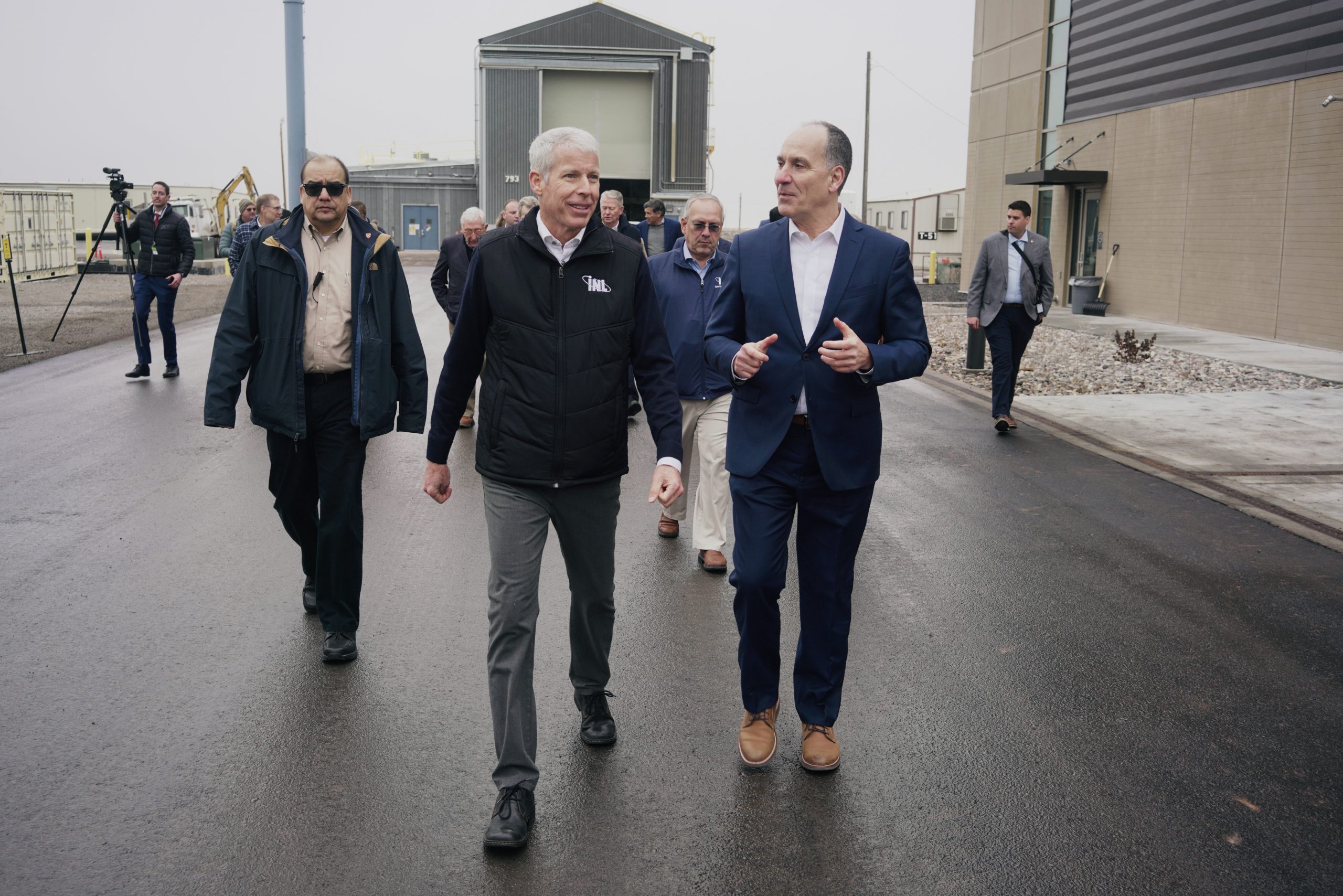
Wright’s comments came as he toured the Idaho National Laboratory (INL), a government facility that focuses on cutting-edge nuclear energy research, on Monday.
“We want things built by and risk capital coming from the private marketplace, and most everything we’re doing is dominantly going to be funded by private capital,” Wright told the Free Beacon. “But the government smothered the nuclear industry for 40-plus years. We’ve got to get it back up on its feet again.”
“We are going to use our loan program office at the Department of Energy for credit-worthy hyperscalers that are putting equity capital in front of us,” he continued. “We’re going to back that up with low-interest loans. We’ll supply it to maybe the first 10 reactors that get built. That’ll incentivize people to move fast.”
The Energy Department’s intent to finance new nuclear projects is an extraordinary signal that the Trump administration is serious about deploying a new wave of nuclear reactors. President Donald Trump has identified nuclear as a strategic sector for shoring up both energy and national security. In May, he set a lofty goal of quadrupling the nation’s nuclear capacity over the next decade.
Wright’s comments come a month after the Department of Energy closed on a $1 billion loan for a project to partially restart the Three Mile Island nuclear power plant. That loan, though, will help bring a decades-old plant back online. The future financing Wright teased on Monday will support new projects and new technology.
It could help finance the development of small modular reactors. Traditional reactors typically produce around one gigawatt of electricity—enough to power about a million homes—but are stationary, costly, and must be custom-built for their location. Modular reactors are small enough to be transported, can be assembled in a factory, and will still be able to generate as much as 300 megawatts of electricity, enough to power roughly 300,000 homes.
There are only two operational small modular reactors in the world—one in China and one in Russia.
“Maybe the only way to get these projects done is through the loan program,” Rep. Mike Simpson (R., Idaho), who serves on the House Appropriations energy subcommittee and toured the INL alongside Wright, told the Free Beacon. “Because how are you going to find investors that are going to invest long term? These are long-term investments.”
Experts say the expansion of nuclear power—which, unlike wind or solar energy, provides electricity regardless of weather factors—is vital for ensuring the United States keeps up with skyrocketing power demand stemming from artificial intelligence, data centers, manufacturing, and residential uses. Wright agrees.
“We don’t need a little more energy, we need a lot more energy,” he told the Free Beacon. “We want to get the huge benefits from AI. We want to reshore manufacturing in this country. We want to do things we never dreamed of before. All of those take massively more energy. If you’re serious about better energizing the world, you also should be all in on natural gas and nuclear.”
Wright said the lab he toured—which is home to the first reactor used to produce usable electricity via nuclear fission—will be a crucial player in his nuclear “renaissance.” INL’s leaders said they plan to allow private companies to develop projects on site.
The partnership between the government and private developers was on full display during the tour Monday: The bus transporting the group drove by the site where Silicon Valley startup Oklo, with the enthusiastic support of Trump officials, recently broke ground on its first advanced nuclear reactor. It’s an active construction site and a sign that the administration’s nuclear ambitions may not be far off.
Still, those ambitions must face the reality that just two reactors, both located at the same plant in Georgia, have been licensed and constructed in the 21st century. Those reactors were also completed only after years of delays and billion-dollar cost overruns.
Addressing those concerns, Wright said the administration will reform the Nuclear Regulatory Commission. The commission, which is responsible for licensing reactors, has slowed development in recent decades, according to Wright.
“It became so bureaucratic, so slow, and so difficult that it just killed the economics of new nuclear reactor development,” he said.
Read the full article here