





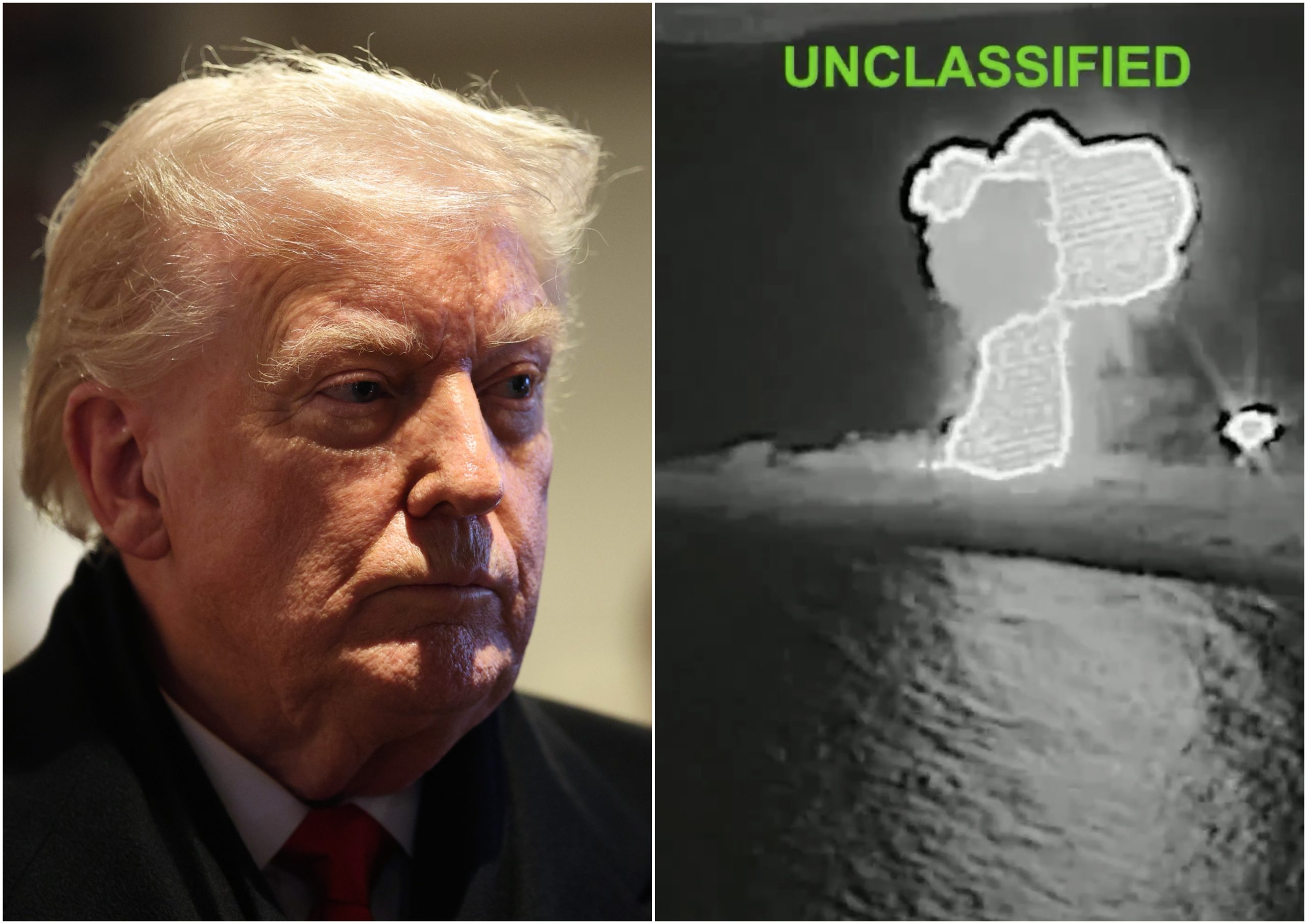
Now that NATO has shot down an Iranian missile aimed at Incirlik Air Base in Turkey and an American submarine torpedoed an Iranian frigate off the coast of Sri Lanka, the conflict with Iran extends from the skies above NATO to the Indian Ocean floor. The Iranians are not just attacking U.S. and Israeli bases, but also civilian targets across the Middle East and neutral shipping in the Persian Gulf. As the battlefield widens, oil prices begin to climb, and the stock market starts to wobble, many onlookers are growing nervous about the prospects of a quick conclusion to this war or even of an American victory.
This stage of the conflict is only a week old, but the contours of both sides’ theories of victory are coming into view. The Iranian regime hopes to outlast the U.S. and Israeli bombardment and inflict enough damage on their neighbors and the global economy to force a settlement that leaves them in power. The Americans and the Israelis are suppressing Iran’s ability to launch missiles, destroying its prized facilities and—if necessary—preparing to tear the entire country apart. The Iranians aim to broaden the conflict; the allies threaten to deepen it.
From Iran’s perspective, this is an existential conflict. The revolutionary government in Iran intends to destroy Israel, slaughter Jews worldwide, and, in its leaders’ more fevered dreams, conquer the globe. The war it began 47 years ago ultimately is a war of annihilation.
Carl von Clausewitz argues the goal of a war is to “compel the other to submit to [our] will,” and the will of each side for this round of the conflict is clear. The rulers of Iran aim to maintain their grip on the Iranian people and ensure their nuclear program survives for later use. Donald Trump wants the mullahs to stop building long-range missiles, to cease their lavish support for terrorism, and to give up their nuclear ambitions.
Again, Iran is lashing out not just at American bases in the region and Israel, but also at most of its neighbors. Iranian missiles and drones are landing across an arc extending from Azerbaijan to Cyprus to Oman, and everything in between. Qatar and Oman have long sought to mediate between the United States and the “death to America” crowd, but they are nonetheless under fire along with their neighbors. Hezbollah has foolishly expanded the war to Lebanon.
Not content with terrorizing innocent civilians across the Middle East, the mullahs intend to make the rest of the world suffer. They are trying to close the Strait of Hormuz, a bottleneck in the Persian Gulf through which passes roughly 20 percent of the global supply of oil and natural gas. If they succeed, the global economy will suffer greatly: Saudi Arabia can shift only a fraction of its oil exports to the Red Sea, and in the short term, American shale producers can barely make up a small percentage of the Gulf’s daily output.
The Trump team is mitigating the damage the Iranians can inflict. Trump directed the Development Finance Corporation to insure tankers in the Gulf and said he will send naval escorts. (Escorts may not be necessary, since much of the Iranian Navy has been sunk.)
Air defense systems that intercept incoming ballistic missiles are expensive and in short supply, so the U.S. and Israeli militaries are blasting them before they get in the air. Iranian missile launches have decreased 90 percent since the first day of this conflict. Drones can be stopped the same way—launches are down 83 percent—and Ukraine is teaching America’s allies how to efficiently disable Iranian drones, which the Russians have used for years.
Israel and the United States remain on the offensive, too. In addition to jointly bombing command centers, airfields, and other military facilities, both countries are reportedly covertly arming separatist Kurdish movements. Israel is destroying the people and the organizations the mullahs employ to repress the Iranian populace, particularly in the Kurdish-heavy parts of the country.
The broadening and deepening of the war will significantly affect the rest of the world. Energy-importing Europe, India, and China will suffer if tankers cannot transit the Strait of Hormuz. Higher oil prices could stabilize Russia’s dismal finances. Arming the Kurds will not sit well with Turkey, which has fought its own Kurdish separatists for decades. But Azerbaijan, which collaborates closely with Israel, could be intrigued by the implications for the Azeri Turks just across the border in Iran.
Trump is offering another way out of this mess. He said on Thursday that he is open to another ruler in Tehran, but “I have to be involved in the appointment. … We want someone that will bring harmony and peace to Iran.” That would be a major victory, and not just for America.
Read the full article here