






Most people are completely unprepared for a disaster. And I’m not talking about being prepared for some end-of-the-world scenario. Most people aren’t even prepared for common disasters that happen all the time. Hurricanes. Floods. Earthquakes. Wildfires. Chemical spills that force an evacuation. A winter storm that knocks out power for a week.
Sudden disasters don’t care whether you’re ready or not. And when one hits, the last thing you want to be doing is scrambling to find flashlight batteries or realizing you don’t have a single gallon of clean water in your house.
The good news is that basic preparedness doesn’t have to be complicated or expensive. You don’t need a bunker. You don’t need a year’s worth of freeze-dried food. What you do need is enough supplies to get you through the first 72 hours. That’s the period when stores are picked clean, roads are flooded or blocked, and you’re essentially on your own.
This article is going to cut through all the noise and give you the bare minimum of what you need to have on hand before disaster strikes.
Click here to download a printable version of the checklist below.
Want to save this post for later? Click Here to Pin It On Pinterest!
Water
Water is your single most important prep. You can survive weeks without food but only a few days without water, and in a disaster, tap water could be cut off or contaminated. Don’t wait until a storm is approaching to think about this one.
- Water (3 gallons per person) — The standard recommendation is one gallon per person per day for drinking and basic sanitation, so three gallons covers you for 72 hours. Buy bottled water or store it in containers specifically designed for water storage.
- Water purification tablets — Even if you have stored water, purification tablets are a cheap insurance policy in case your supply runs out or gets contaminated. They’re lightweight, inexpensive, and can make creek water, puddle water, or questionable tap water safe to drink in about 30 minutes.
Food
New preppers love to buy MREs and emergency ration bars because they see survivors eating them in shows and movies. While those are good to have in certain scenarios, for short-term disasters you should just buy more of what you already eat and rotate through it on a regular basis.
- Food (3 days’ worth per person) — Think canned goods, peanut butter, jerky, granola bars, and dried fruit. Aim for a mix of carbohydrates, fat, and protein. A good rule of thumb is roughly 2,000 calories per person per day.
- Fiber tablets — When you’re stressed and eating nothing but high-sodium, high-carb pantry food, your digestive system is going to have a bad time. Fiber tablets are small, cheap, and can save you a lot of discomfort.
- Manual can opener — This one sounds obvious until the power is out and you’re staring at a can of beans with no way to open it. Get a sturdy, well-built manual opener and toss it in your kit now.
- Paper cups and plates — With limited or no running water, washing dishes becomes a real problem. Disposable cups and plates let you eat without burning through your water supply on cleanup.
- Plastic utensils — Same reasoning as above.
Sanitation & Hygiene
When the water goes out, staying clean becomes both harder and more important. Illness spreads fast in disaster conditions, and something as simple as dirty hands can turn a bad situation into a dangerous one.
- Cleaning wipes (skin-safe) — These are your substitute for washing your hands and face when running water isn’t an option. Look for wipes that are safe for skin. Baby wipes work great and are usually cheaper than “adult” versions.
- Disinfectant wipes — Different from the above. These are for cleaning surfaces like countertops, door handles, and anything that might be contaminated. Don’t use these on your skin.
- Hand sanitizer — A fast, waterless way to kill germs between tasks. Keep a bottle in your kit and use it often, especially before eating.
- Soap — Even with limited water, a small amount goes a long way. Bar soap is more compact and longer-lasting than liquid soap.
- Personal hygiene items — Toothbrush, toothpaste, deodorant, and whatever else you use daily. Three days without brushing your teeth isn’t going to kill you, but it’s one more thing that chips away at morale.
- Feminine supplies — If this applies to anyone in your household, don’t leave it as an afterthought.
- Garbage bags — Trash piles up fast when you’re living out of a kit, and in a disaster, you may not have regular trash pickup. Large heavy-duty bags also have dozens of secondary uses like makeshift ponchos, waterproofing, waste management if plumbing is out.
Medical & Health
Disasters have a way of making small health problems into big ones. A cut that gets infected, a headache that becomes debilitating, or a stomach bug from contaminated water can all take you out of commission at the worst possible time. Stay ahead of it.
- Basic first aid kit — At minimum, you need bandages, gauze, medical tape, antiseptic wipes, and a pair of gloves. Most pre-assembled kits cover the basics. Just make sure yours isn’t expired and actually has what you’d need for cuts, burns, and minor injuries.
- Prescription medications — If you or anyone in your household takes a daily medication, make sure you have at least a 3-day supply in your kit at all times. Talk to your doctor about getting an emergency supply if needed.
- Painkillers — Ibuprofen or acetaminophen covers a wide range of problems: headaches, muscle pain, fever, inflammation. Pack both if you can, since they work differently and can be alternated.
- Anti-diarrhea medication — This one is more important than people realize. Diarrhea caused by drinking tainted water can dehydrate you dangerously fast, especially if you’re already short on water. Imodium or a generic equivalent can buy you critical time.
- Prescription eyeglasses or contact lenses and solution — If you can’t see clearly, you can’t function safely. Keep a backup pair of glasses in your kit, and if you wear contacts, pack enough solution and a spare case to last the full 72 hours.
Communication & Power
When the grid goes down, so does your access to information. Knowing what’s happening, whether the storm has passed, whether there’s a shelter nearby, whether you need to evacuate, can be the difference between making good decisions and wandering into danger.
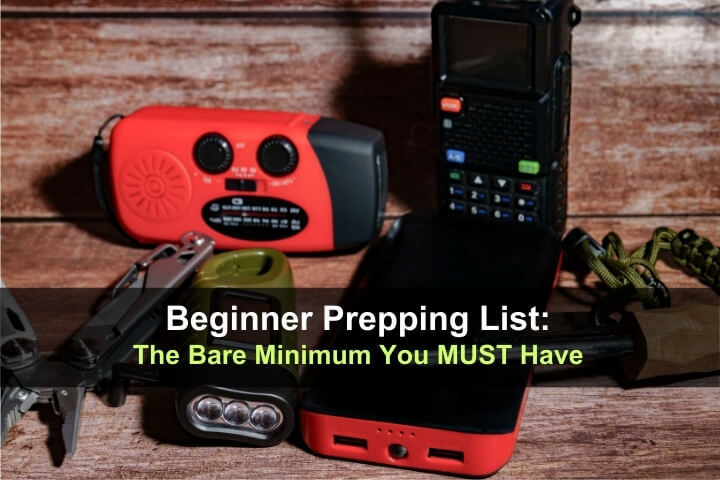
- Hand-crank weather radio — This is your lifeline to official information when your phone is dead and the internet is down. NOAA weather radio broadcasts emergency alerts 24/7 and doesn’t require batteries or a power outlet. Get one that also has a solar panel and a USB charging port — they’re worth the few extra dollars.
- Flashlight — A basic but essential tool. Get at least one per adult in the household, and don’t rely on your phone’s flashlight because you’ll need that battery for communication. A headlamp is even better since it keeps your hands free.
- Extra batteries — Flashlights, radios, and other battery-powered devices all need fuel. Stock up on the sizes your devices use, and store them somewhere cool and dry to extend their shelf life.
- Cell phone chargers — Your phone is your connection to family, emergency services, and information. Keep it alive as long as possible. Pack your regular charging cable, and make sure it’s compatible with your power bank.
- Power bank — A fully charged power bank can recharge your phone several times over, giving you days of communication without any outlet. Charge it up before storm season and check it every few months to make sure it’s still holding a charge.
Disasters don’t just cut off your power and water. They can damage your home, compromise your air quality, and put you in situations where you need to take quick action to protect yourself or your property.
- Lighters — You may need to light candles, start a camp stove, or start a fire to stay warm or cook food. Pack at least two or three so you have backups. Waterproof lighters are worth the small extra cost.
- Fire extinguisher — Disasters increase the risk of house fires, downed power lines, candles, improper use of generators or camp stoves. A basic ABC-rated extinguisher should be in every home regardless, but make sure yours is charged and accessible.
- Shut-off tool — After an earthquake or gas leak, you may need to shut off your home’s gas or water supply quickly. A dedicated utility shut-off tool fits most standard meters and lets you do this without having to search for a wrench in a panic. Keep it somewhere you can find it fast.
- Plastic sheeting and duct tape — If a window gets blown out, a tree lands on your roof, or you need to seal off a room in case of airborne chemical contamination, plastic sheeting and duct tape are what you’ll reach for. Keep a roll of heavy-duty sheeting and a couple rolls of duct tape together in your kit.
- N95 face mask — Wildfires, building collapses, industrial accidents, and even some flooding events can put dangerous particles or chemicals into the air. A standard surgical mask won’t cut it. You need an N95 or better to actually filter fine particles. Pack one per person.
- Whistle — If you’re trapped under debris or in a damaged building, yelling for help will exhaust you fast. A simple loud whistle carries much farther and takes almost no energy to use. The signal for distress is three short blasts.
- Weapon for self-defense — In the immediate aftermath of a major disaster, law enforcement is stretched thin and response times can be extremely long. A firearm, pepper spray, or other means of self-defense is a personal decision, but it’s worth thinking about before an emergency happens.
- Map of local area — GPS and cell service can both fail during a disaster. A printed map of your area, one that shows evacuation routes, shelters, and hospitals, could be invaluable if you need to navigate without technology. Download one from your county’s emergency management website and print it out.
Shelter & Comfort
Staying physically comfortable matters more than people think. Hypothermia is a real risk during winter disasters, and mental exhaustion sets in fast when people are bored, stressed, and uncomfortable. Don’t neglect this category.
- Change of clothing for everyone — You may need to evacuate quickly and end up stuck somewhere for days. A clean change of clothes, including sturdy footwear and weather-appropriate layers, is a basic comfort worth having.
- Warm blankets or sleeping bags and pillows — If the heat goes out or you end up in a shelter or your vehicle, staying warm becomes a survival issue. Wool blankets and quality sleeping bags retain heat even when wet.
- Books, games, puzzles, etc. — This one surprises people, but boredom and stress are serious morale killers during a disaster, especially for children. When the power is out and there’s nothing to do for hours on end, having something to keep your mind occupied is genuinely important. Pack a few physical books, a deck of cards, or a travel board game.
Special Needs
If you have young children or pets, don’t forget everything you need for them.
- Baby supplies — Diapers, formula, wipes, diaper rash cream, and any other items your baby needs daily. Stress can affect nursing mothers, so formula backup is smart even if you’re breastfeeding. Pack more than you think you’ll need. Three days can stretch longer than expected.
- Pet supplies — Three days of food and water for each pet, plus any medications they take. Don’t forget a leash, carrier, or crate if you may need to evacuate. Many shelters won’t accept pets, so also research pet-friendly hotels or emergency boarding options in your area ahead of time.
As long as you have these things, you’ll be ready for all of the most likely disasters and in better shape than 95% of people. Don’t wait until the last minute stock stock up on these items. Get them now while they’re still relatively cheap and easy to find. The peace of mind is well worth it.
Like this post? Don’t Forget to Pin It On Pinterest!
You May Also Like:

Read the full article here