





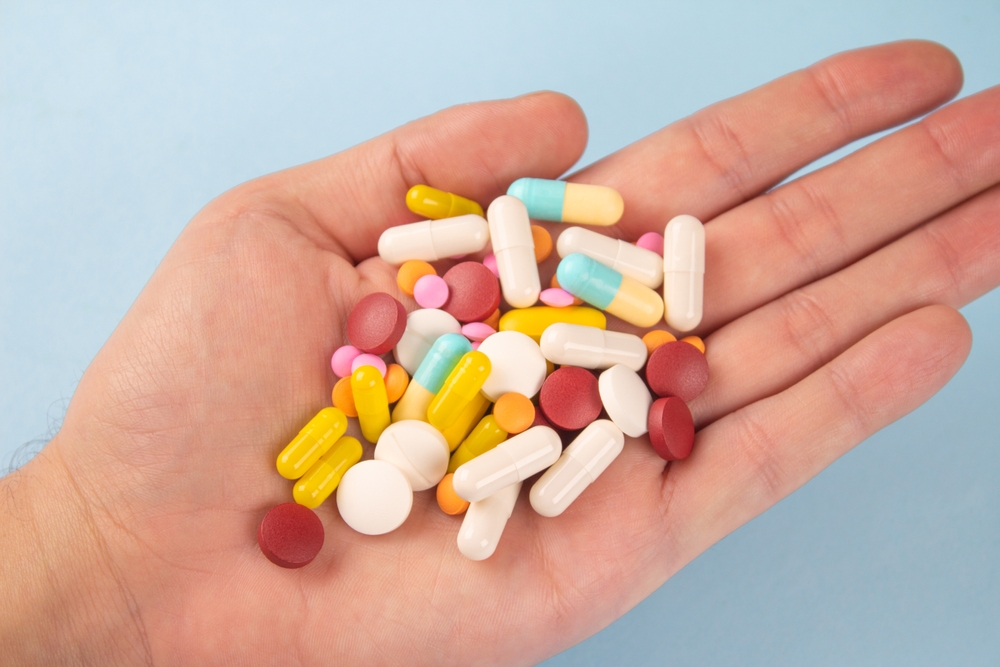
My objective in this article isn’t to spread fear regarding the use of modern medicine, but rather to discuss rational preparation strategies in case we can’t get our hands on medicine.
The most obvious reason is because so much has to go right in order for our modern healthcare system to function. Major disruption to the electrical power grid, Internet, water treatment infrastructure, transportation system, banking, or the supply chain will bring hospitals and pharmacies to a screeching halt.
Infrastructure
A large CME, HEMP, a cyberattack, war, or a Black Swan could mean your healthcare gets cut off. Anything that takes down the electrical grid also takes down water treatment plants. Most hospitals can function for a short time on emergency power, but they can’t function without water and have to shut down.
China Has a Stranglehold on our Generic Drug Supply
The USA is dependent on China and India for the majority of generic drugs and something like 80% of India’s Active Pharmaceutical Ingredients come from China, giving China the ability to cut off our generic drug supply anytime they feel like it. (McCaughey, 2025) (Wolf, 2025)
Large-Scale Disasters
Several broad-scope, large-scale natural disasters have also taught us that sometimes too few healthcare workers show up for work to the get the job done when we have really big disasters. This is because too few healthcare workers are prepared to the point that they are sure that their families will be taken care of even if they are not home. If your doctor’s basement and first floor are submerged under water, he’s probably not showing up to work. Few people are so prepared that they can keep doing their job if something like that happens and it is difficult to help others unless you are OK and the other members of your household are OK. How can you help others if your family is in danger?
And not everyone defines their household the same way. For some of us, our families are our household, and for others, they consider their property and their families to be their household. Some folks will show up to help others even though their home is a pile of rubble, as long as they believe that their surviving family will be OK.
But then others aren’t going in to work because they are unprepared and worried that their family will be in danger even though they will probably be OK. If the electricity is out, or there is a “boil water” order in effect, or they have insurance claims to file, they aren’t going to show up to work even though their community desperately needs them to.
Many people died because of this in the aftermath of Hurricane Katrina, so if you have loved ones who depend on medical care to live, you had better have a rescue plan for them if there is a serious emergency. Doctors and nurses euthanized patients. I couldn’t leave a family member to that fate.
There was even at least one case where healthcare workers attempted to kill a patient who ended up surviving. (Johnston, 2005)
So you want to prepare, but how? You can’t just order laudanum from the Sears catalog anymore. It takes some doing but it’s possible.
Know Your Needs
Two things I’ve learned about medical care are that you have to be your own advocate and you have to do your homework. Start with your known medical needs. Learn about any health conditions you have and what the treatment options are.
The Medical Stockpile
Start with what you need on a regular basis. Then add supplies for the most common emergencies and illnesses.
Alternative Medicine
There could be a time when alternative medicine, wild medicinable plants, and home remedies comprise the extent of the available pharmacopeia. If this were to happen, you would probably be very glad to have them. Anyone who has used aloe vera to soothe a burn or used witch hazel to soothe minor skin irritations knows that such cures can quite effective.
Stockpiling prescription medication is a prickly subject. There are so many laws and so much red tape.
Ask Your Doctor
If you are a responsible person and have built a relationship of trust with a decent doctor, and you explain what you would like to do. There are doctors out there who will help you. There are also plenty who are far more interested in protecting their backsides than the welfare of their patients, so don’t be surprised if they say no, but that may be a sign that you might be better off finding a better doctor.
Over the years, I have known several doctors who were survivalists and who catered to the preparedness minded. Some took phone consults and would prescribe many medications via telehealth.
Research the Actual Shelf-Life of Drugs
Pharmaceutical companies put much shorter expiration dates on drugs than is necessary. Big Pharma has lots of reasons to lie to you about shelf life and few, if any, reasons to tell you the truth.
Liability-wise, they should shorten shelf-life dates. If the drug goes bad, they could be liable. If it doesn’t, they gain nothing.
Monetarily, the shorter the shelf-lives are, the more drugs people buy, and thy Big Pharma is the drug business. In 2023 they had 1.6 trillion reasons to print shorter shelf-life dates on the drugs they sold.
You can often find the truth published in articles about the Shelf-Life Extension Program (SLEP), administered by the Defense Health Agency & the FDA and in studies on the stability of active ingredients in long expired medications. In the 1980’s the fake expiration dates printed on prescription medicine was costing the Pentagon an insane amount of money, so they began studying the problem and determined that many drugs in pill form are still useful 5, 10, 20, even 40 years after the fake expiration date.
Some drugs, of course, are not safe to use after the expiration date, such as the wide-spectrum antibiotic tetracycline, (it’s not prescribed often anymore anyway though) insulin, nitroglycerin, and most liquid and injectable drugs, but it is possible to learn a great deal about drug shelf life by researching actual shelf-life. That information could come in handy if the China turns off the drug faucet.
I’m not going to give you medical advice because I’m not a doctor, so you’ll have to do your own research. Start with:
Learning the real shelf-life of any medicines that you stockpile can help prevent throwing out drugs that are still medically useful.
Buy Foreign
Anytime you travel to another country be alert for legal opportunities to stock up on prescription pharmaceuticals.
Seeing a doctor is WAY cheaper practically anywhere but the USA (sometimes even free), and you can often see doctors who studied at the best medical schools in the USA, whereas you’ll probably have to pay an arm and a leg and settle for seeing a PA if you see a doctor in the US.
Now, please don’t misconstrue this next bit as legal advice, because it isn’t: I have yet to be hassled by Customs over prescription medications and I travel internationally enough that I have been hassled plenty. I have even been selected for extra security checks a couple of times. But even when my suitcases have been searched and the customs official played the criminal version of 20 questions where the prize for answering wrong is a cavity search and a court appointed lawyer … nobody ever said boo about my legally obtained prescription medications.
If you come back from your trip with an extra couple of months of high blood pressure meds, chances are, no one is going to care as long as you have a prescription. Hordes of senior citizens drive to our northern and southern borders and walk across to access cheaper foreign healthcare and bring back cheaper prescription medicines, so any foreign travel that you do may provide an opportunity to legally add a little medicine to your emergency stockpile. Talk to your lawyer about specifics to make sure you don’t unknowingly break any laws.
Veterinary Pharma
Dr Alton, Ragnar Benson, and others have written about the use of veterinary medicines, such as fish antibiotics, when there is no other option. In many cases, they are pulled from the same production lines that are producing medications for human consumption and can be purchased without a prescription. Still, I would be sure to research any such products thoroughly that you plan to stockpile.
Weaning
When prescribed certain medications, taking less medication than you are prescribed can be dangerous.
With the exception of such medications, weaning yourself off medication may be a valid strategy in an emergency where you are unable to acquire more. With certain medications, gradually weaning yourself off over time can be easier on the body than taking the prescribed dosage until you are out and being forced to quit cold turkey.
In some cases, weaning off medicines over a period of weeks or months can ease withdrawal symptoms and help prevent certain severe symptoms, such as tonic-clonic seizures, which can occur when quitting high doses of alcohol or certain benzodiazepines.
If you do take medications that are known to cause physical dependence, you may experience severe withdrawal symptoms if you quit them, especially if you quit cold turkey. If this is the case, I would research quitting, discuss it with your doctor. In certain cases, other medications may ease withdrawal systems somewhat and those may be worth keeping on hand, if possible.
Things You Shouldn’t Do
I shouldn’t have to point out that it’s also possible to run afoul of the law if you obtain prescription medications illegally. So, don’t doctor shop or attempt to modify prescriptions.
Transferring prescription medication to anyone other than the person to which it was prescribed is also generally illegal, even if you give it to a family member.
I also shouldn’t have to point out that you should not accumulate a supply of any prescription medication that exceeds the amount of medication that you have been legally and validly prescribed.

Stockpiling medicines is not easy, but I hope the solutions that I have found over the years will help you prepare for emergencies. Strategies include:
- Ask your healthcare professional.
- Research the real shelf life of any drugs you stockpile.
- Make use of any foreign travel.
- In some cases, veterinary drugs may help in an emergency.
- Research your medicines to see if you should wean yourself off or go cold turkey if you run out.
There are ways to legally stockpile medicines, but laws are different in every jurisdiction, so research any applicable laws and seek qualified legal counsel if you are unsure.





References
Johnston, K. (2005, October 13). Staff at New Orleans hospital debated euthanizing patients. Retrieved from cnn.com:
https://edition.cnn.com/2005/US/10/12/katrina.hospital/index.html
McCaughey, B. (2025, April 15). China’s Chokehold on US Medicine is Risking American Lives. Retrieved from nypost.com:
https://nypost.com/2025/04/15/opinion/chinas-chokehold-on-us-medicine-is-risking-american-lives/
Wolf, R. (2025, December 11). Abraham Accords allies may help US shift drug sourcing from China, report says. Retrieved from foxbusiness.com:
https://www.foxbusiness.com/politics/abraham-accords-allies-may-help-us-shift-drug-sourcing-from-china-report-says
Read the full article here