






As Americans Struggle with gas prices and rising inflation, the Trump administration is preparing a $2.8 billion taxpayer-funded weapons sale to Israel, including 40,000 2,000-pound bombs.
American families are getting hammered by another round of rising energy costs, with diesel now well above $6 a gallon nationally, gasoline climbing again, and crude oil back above $100 a barrel. At the same time, Washington is preparing another massive weapons package for Israel, this one reportedly worth $2.8 billion and containing tens of thousands of some of the largest conventional bombs in the U.S. arsenal.
According to the U.S. Energy Information Administration, the national average for regular gasoline hit $4.319 a gallon on September 14, while on-highway diesel jumped to $6.285. Diesel was $5.599 just two weeks earlier. Meanwhile, Brent crude closed Tuesday at $108.75 a barrel and West Texas Intermediate reached $105.83 as fighting and disruptions across the Middle East continued to threaten global energy supplies.
Those prices are already showing up in the broader inflation numbers. The Bureau of Labor Statistics reported that consumer prices were up 3.4 percent over the previous year in August, but energy prices were up 16.3 percent. Gasoline was up 27.4 percent from a year earlier, while fuel oil had surged 52 percent. This comes as US long-term unemployment have hit crisis levels.
But, the President who campaigned on now foreign wars is now sending Isreal another multibillion-dollar weapons package.
40,000 Two-Thousand-Pound Bombs
The Washington Post and Reuters reported Tuesday that the Trump administration is preparing a $2.8 billion munitions sale to Israel that would include 20,000 MK-84 bombs and 20,000 BLU-117 bombs, both weapons in the 2,000-pound class. The proposed package would also include 20,000 I-2000 penetrator warheads designed for hardened targets.
These are not small tactical weapons. A 2,000-pound MK-84 is designed to destroy major structures and fortified targets, and its blast and fragmentation can extend far beyond the immediate point of impact. The Washington Post reported that the weapons have been used extensively by Israel in Gaza and Lebanon and that their use in densely populated areas has been one of the central concerns raised by humanitarian organizations and arms-control critics.
The Biden administration temporarily suspended one shipment of 2,000-pound bombs in 2024 because of concerns about their use in heavily populated sections of Gaza. President Trump reversed that policy shortly after returning to office in January 2025.
The latest package has reportedly been informally presented to the relevant congressional committees. That distinction matters: this is a proposed sale moving through the approval process, not 60,000 weapons being loaded onto aircraft tomorrow. Large foreign military sales can also take years to manufacture and deliver.
Who Is Paying for It?
This is where the story becomes especially relevant to Americans watching their grocery, utility and fuel bills climb.
The Washington Post reports that the weapons would be purchased using U.S. taxpayer dollars. Israel already receives $3.3 billion every year through the American Foreign Military Financing program, along with another $500 million annually for cooperative missile-defense programs under the ten-year U.S.-Israel security assistance agreement running through 2028.
For perspective, the reported $2.8 billion value of this single weapons package is equivalent to roughly 85 percent of the $3.3 billion Israel receives in annual Foreign Military Financing.
Supporters of U.S. military assistance argue that Israel faces serious threats from Hamas, Hezbollah, Iran and other armed groups in the region, and that maintaining Israel’s military capabilities has been a longstanding American strategic policy supported by administrations of both parties. Critics increasingly question why American taxpayers should continue financing large weapons transfers, particularly during a period when conflict in the same region is contributing to higher energy costs at home.
That debate has become harder to separate from what Americans are paying every day.
The Middle East Is Already Showing Up at the Gas Pump
This isn’t some theoretical argument about whether a war thousands of miles away might eventually affect your wallet. The effects are already here.
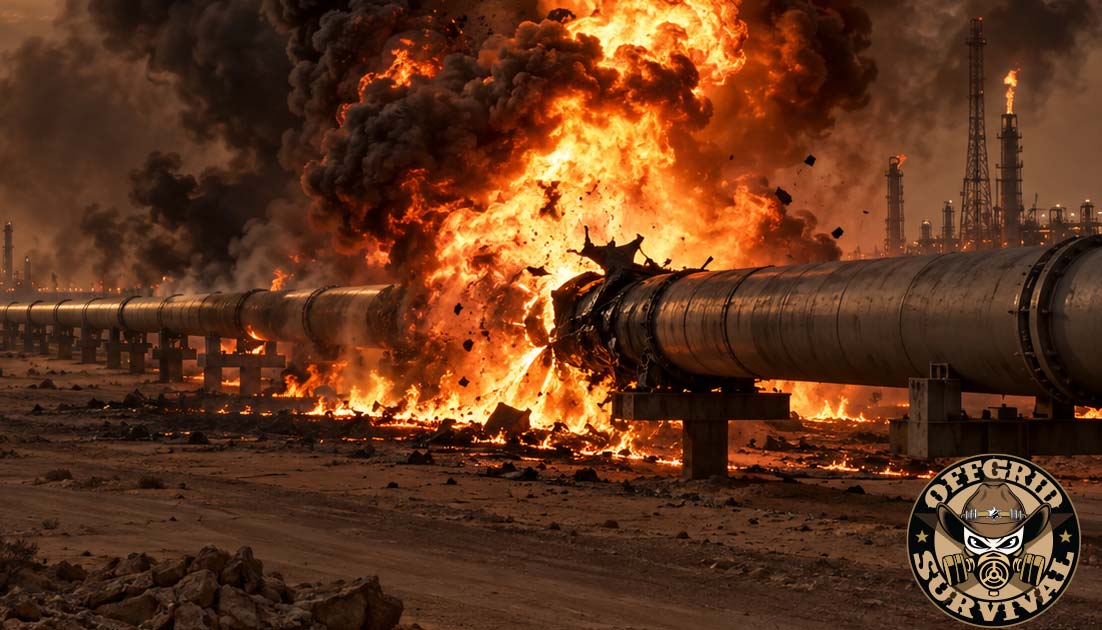
Brent crude surged to $108.75 Tuesday after new problems involving Saudi Arabia’s East-West Pipeline and Yanbu export terminal added to existing disruptions connected with the conflict involving Iran and the Strait of Hormuz. Reuters reported that West Texas Intermediate jumped more than 4 percent in a single session to $105.83.
The EIA’s numbers show what has happened downstream. National diesel prices went from $5.599 on August 31 to $6.285 on September 14, an increase of nearly 69 cents a gallon in two weeks. Regular gasoline rose from $4.071 to $4.319 over the same period.
Diesel matters far beyond what somebody driving a pickup pays at the pump. Trucks move groceries, building materials, medical supplies and almost everything else Americans buy. Farms run tractors and harvesting equipment on diesel. Construction equipment burns it. Freight companies burn enormous amounts of it moving goods across the country.
When diesel stays elevated, those costs do not simply disappear. Somebody eventually pays them.
Nearly 250,000 Reported Dead or Injured in Gaza
The weapons package also arrives after nearly three years of enormous casualties in Gaza.
As of September 15, Gaza health authorities reported 73,789 Palestinians killed and 174,798 injured since October 7, 2023, for a combined reported casualty count of about 248,600 people. The United Nations and major news organizations regularly cite Gaza Health Ministry totals while identifying the figures as coming from Palestinian health authorities rather than independently verified individual cases. Israel disputes accusations that its military campaign deliberately targets civilians and says its operations are directed at Hamas and other armed groups.
Those casualty numbers are one reason the use of massive 2,000-pound bombs has become so controversial. Critics argue that weapons designed to destroy large structures present an unacceptable danger when used in densely populated urban environments. Israel and supporters of continued American military assistance argue that heavy munitions can be necessary against fortified positions, underground infrastructure and other hardened military targets.
Whatever side of that argument someone falls on, this latest package is enormous.
Another Reminder That Global Chaos Eventually Becomes Your Problem
For people who follow preparedness, the important part of this story extends beyond another argument over foreign policy.
Wars create shortages. Shipping lanes close. Pipelines get hit. Refineries go offline. Insurance rates on ships rise. Oil traders start pricing risk into every barrel moving through the Middle East. Diesel goes up, transportation costs go up, and eventually those increases start showing up in the price of food and everything else that has to be manufactured and moved.
We are already watching that process play out.
Americans were told repeatedly that inflation was coming under control, yet energy prices were 16.3 percent higher in August than they were a year earlier. Gasoline was up 27.4 percent. Diesel has now blown through $6 a gallon nationally. At the same time, another $2.8 billion American-financed weapons package is moving through Washington while the region producing a huge share of the world’s oil remains dangerously unstable.
That does not tell anyone what America’s foreign policy should be, but it does tell you something important about preparedness: pretending overseas wars cannot reach your kitchen table is a bad bet.
Keep enough food and household essentials around that another price spike doesn’t immediately wreck your budget. Stay ahead on vehicle maintenance and the supplies you regularly use. Pay attention to diesel, crude oil, shipping disruptions and refinery problems instead of waiting until shortages show up at your local store.
Because whether the next crisis starts in Washington, the Persian Gulf, a refinery halfway around the world or a shipping lane most Americans couldn’t find on a map, the bill has a habit of eventually showing up at home.
Read the full article here