




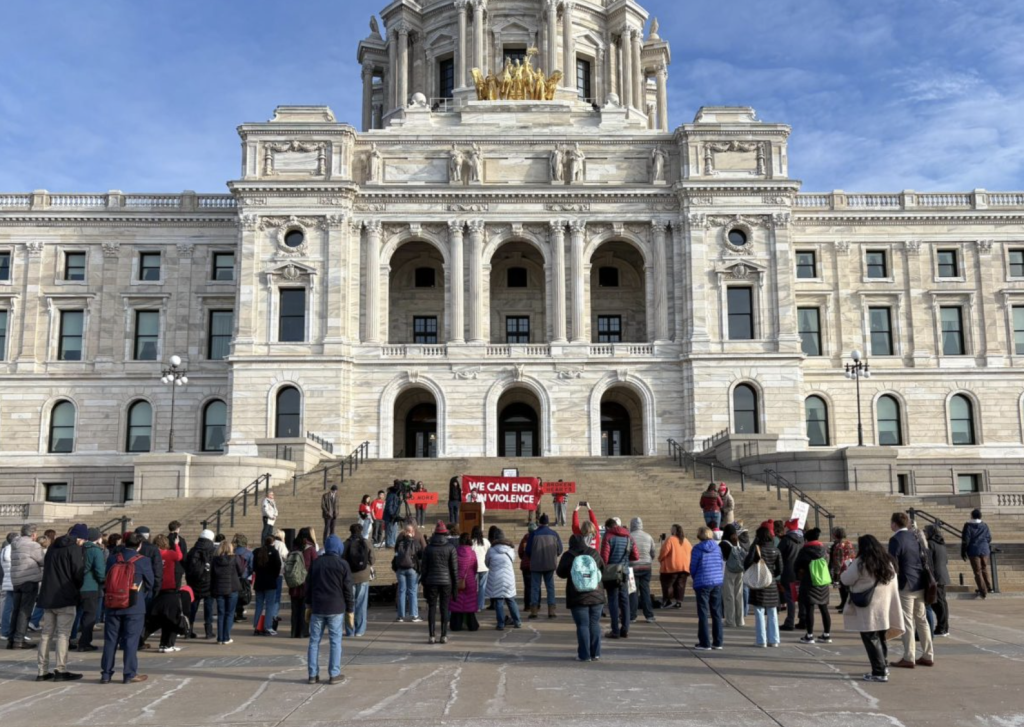
Minneapolis Mayor Jacob Frey signed a sweeping gun control ordinance on Wednesday that bans semiautomatic rifles classified as “assault-style weapons,” magazines holding more than a state-set capacity, and unserialized firearms, and that the City of Minneapolis has limited authority to actually enforce.
The Minneapolis “Safe Firearms Act” was passed unanimously by the City Council the previous week. It now sits in legal territory that has already produced one active lawsuit in a neighboring Minnesota city and is poised to generate another. The Minnesota Gun Owners Caucus, which filed suit against a similar St. Paul ordinance last fall and recently launched a dedicated Law Center to pursue Second Amendment litigation, has signaled it will sue over the Minneapolis measure as well.
What the ordinance does, and the law that says it can’t
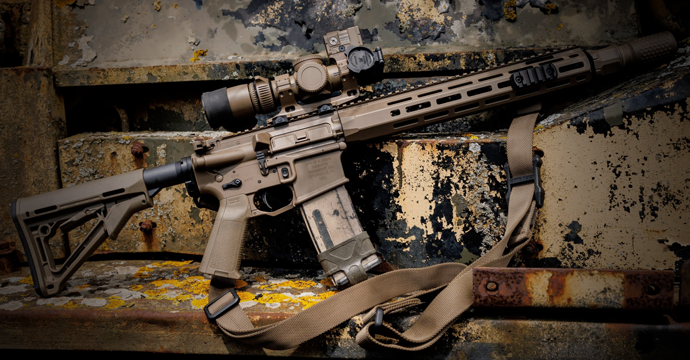
The Minneapolis ordinance bans the sale and possession of so-called assault-style rifles, restricts magazines above a defined capacity, prohibits unserialized firearms (commonly referred to as “ghost guns”), and limits where firearms may be carried within the city. The framework largely mirrors gun control proposals that Democratic lawmakers in the state legislature have been trying to advance for years without success in a divided state government.
The fundamental problem with the ordinance is structural, and it predates the current political moment by four decades. Minnesota Statute § 471.633, the state firearms preemption law, states unambiguously:
“The legislature preempts all authority of a home rule charter or statutory city including a city of the first class, county, town, municipal corporation, or other governmental subdivision, or any of their instrumentalities, to regulate firearms, ammunition, or their respective components to the complete exclusion of any order, ordinance or regulation by them.”
The statute provides two narrow exceptions: cities may regulate the discharge of firearms within municipal boundaries, and cities may adopt regulations identical to state law. The Minneapolis ordinance does neither. It creates substantive restrictions on possession and sale that have no state-law equivalent.
A second preemption provision, Minnesota Statute § 624.717, reinforces the same prohibition specifically for handgun-related regulations. The Court of Appeals of Minnesota has previously held in In re Application of Hoffman (1988) that even a Minneapolis city policy imposing additional handgun permit requirements beyond state criteria violated § 624.717.
In other words, Minnesota’s preemption framework is express, broad, and has been enforced by state courts when challenged. The Minneapolis ordinance walks directly into it.
Frey’s own framing concedes the point
The mayor’s own statement at the signing acknowledged the legal vulnerability. “This is going to set us up so that if preemption is lifted, Minneapolis won’t need to act because we already did,” Frey said. That framing positions the ordinance as a placeholder pending state action rather than a currently enforceable law, which is honest as a political statement but legally awkward as a defense of the ordinance.
Frey also called the measure one of “the leading pieces of legislation in the entire country.” The first half of that claim is contestable; the operative half is “if preemption is lifted.” Minnesota’s preemption law has been on the books since 1985 and has survived multiple legislative attempts to weaken it. There is no current bill in the state legislature to repeal § 471.633, and the politically divided House makes such a repeal unlikely in the near term.
Council Member Aurin Chowdhury, the ordinance’s lead author, told reporters that city attorneys “worked closely with council members on the policy, and they are ready for a challenge.” That readiness will be tested.
The St. Paul precedent and what it tells us
This is not the first time a major Minnesota city has tried this approach. The St. Paul City Council passed a substantively similar ordinance last fall. The Minnesota Gun Owners Caucus filed suit. That case is still being litigated.
Rob Doar, general counsel for the Minnesota Gun Owners Caucus, said the organization expects to file a parallel suit against Minneapolis. Given that Minneapolis and St. Paul sit in the same state, under the same preemption statutes, and with substantially identical ordinances, the legal analysis in the two cases will be nearly indistinguishable. Whichever ruling comes first will likely determine the outcome of the other.
For gun-rights advocates, the strategic question is whether to litigate the cases separately, building two parallel records, or consolidate them. For the cities, the calculus is whether to defend each ordinance separately at full cost or coordinate a single legal defense. Both decisions will shape how quickly the underlying question reaches the Minnesota Supreme Court.
The Annunciation shooting
The Minneapolis ordinance comes months after a mass shooting at Annunciation Catholic Church on the city’s south side. The shooting prompted calls from city leaders, affected families, and medical professionals for tighter state-level gun laws. The Minnesota Senate passed a state-level gun control bill along party lines last week, but the legislation is widely viewed as dead in the politically divided state House. Gov. Tim Walz responded to similar legislative stalemates by signing executive orders on gun-related data collection and a Statewide Safety Council in December 2025, placing the Minneapolis ordinance in a broader pattern of Minnesota Democrats pursuing gun control through any avenue available outside the standard legislative process.
Frey directly tied his ordinance signing to the legislative gridlock. “We’re not talking about your father’s hunting rifle,” he said. “We’re talking about the ability to reel off 20 or 30 bullets before you have to reload.”
The framing is rhetorically effective and factually shaky. The semiautomatic rifles Frey is describing are the most commonly sold rifles in America by a substantial margin, with an estimated 24 million AR-pattern rifles in private civilian ownership. The “20 or 30 bullets before you have to reload” framing applies equally to any semiautomatic firearm using a standard-capacity magazine, including the semiautomatic rifles long used for deer hunting, varmint control, and competitive shooting. The line between “your father’s hunting rifle” and the firearms the ordinance bans is largely cosmetic — and that’s part of what’s made similar laws so vulnerable to Bruen-era constitutional challenges in other jurisdictions.
The numbers the ordinance is responding to
Minneapolis city data shows 1,384 “shots fired” calls as of Wednesday morning of this year, with 70 people injured by gunfire. Both numbers are down year over year, a trend the ordinance neither created nor was needed to extend. The decline tracks with a broader national pattern of falling violent crime rates that has continued through the past two years across major American cities, with or without local gun ordinances.
That doesn’t mean the city has no public safety problem worth addressing. It does mean the political case for the ordinance, that current conditions require emergency local action, is harder to make on the underlying numbers.
What’s next
The lawsuit timeline is short. Minneapolis ordinances typically take effect within 30 days of signing unless the ordinance specifies otherwise. The Minnesota Gun Owners Caucus has the institutional infrastructure in place to file. A preliminary injunction motion would likely be filed within days of the filing, asking a state court to halt enforcement before the ordinance takes effect.
The likely outcome, based on the plain text of § 471.633 and the Hoffman precedent: the ordinance gets enjoined. Minneapolis appeals. The case eventually reaches the Minnesota Court of Appeals or Supreme Court, where the preemption statute will either be reaffirmed (the strong probability) or narrowed (the long-shot possibility).
For Frey, the political value of the ordinance may not depend on whether it survives. Signing a high-profile gun control measure positions him with key constituencies regardless of the ordinance’s ultimate fate, and the “if preemption is lifted” framing builds in a graceful explanation for an eventual court loss. As political messaging, the ordinance has already done much of its work. As a piece of enforceable law, its future is, as CBS Minnesota put it, murky.
Read the full article here