


Randy Villegas made the claim in a doctoral paper that lamented the popularity of Gadsden flags and shamed a teacher who referred to ‘illegals’
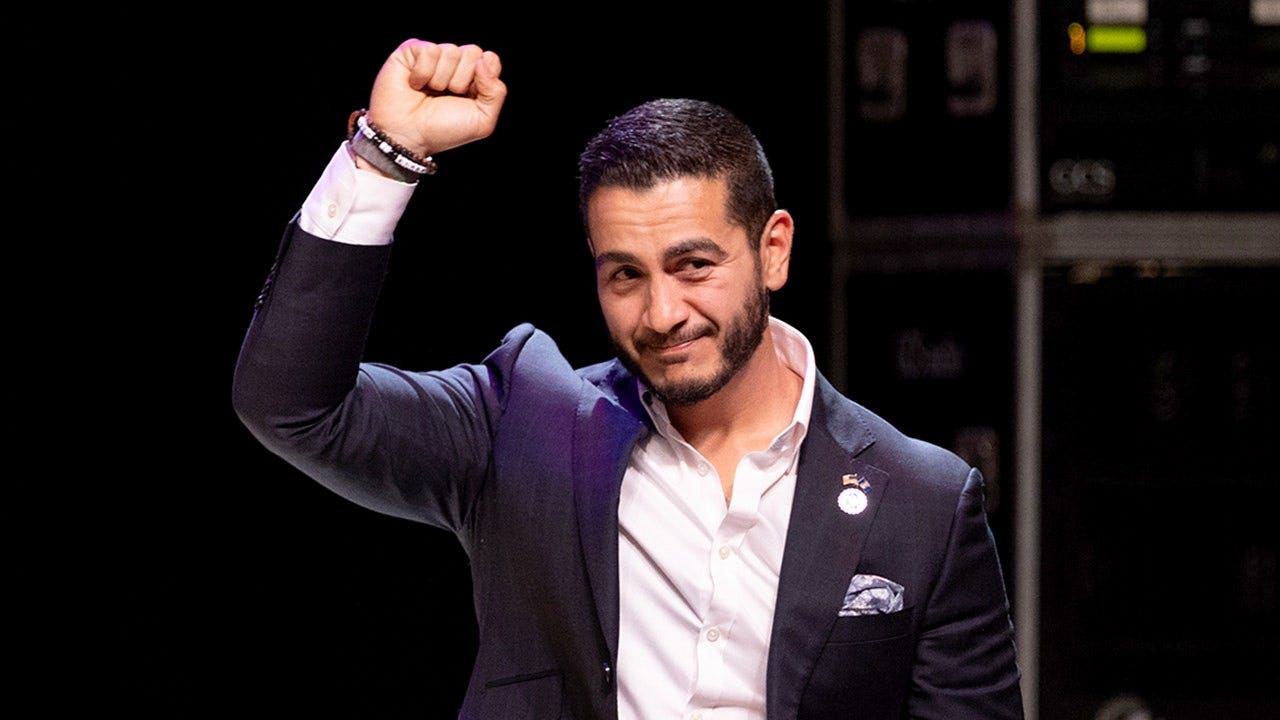
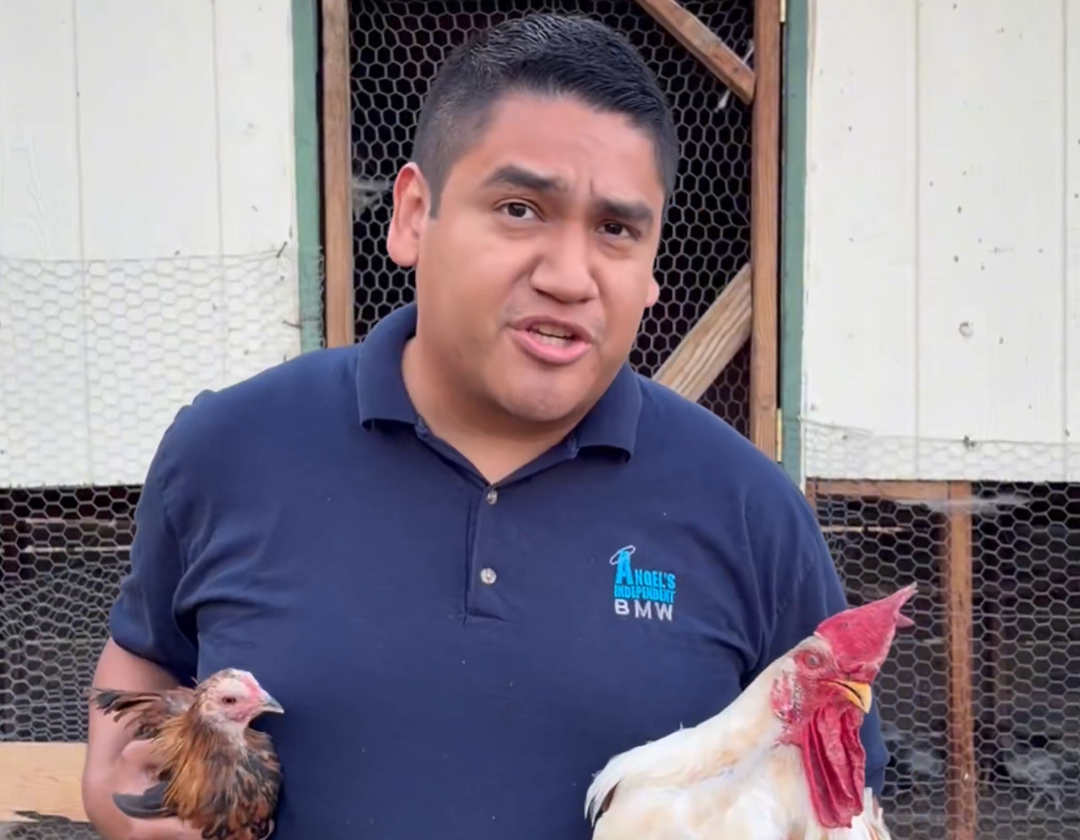
The left-wing nominee for California’s 22nd Congressional District, political science professor Randy Villegas, authored an academic paper disparaging conservative residents of the Central Valley—which includes the district he seeks to represent—as creators of a “climate of fear in some Latinx immigrant communities” due to their opposition to illegal immigration.
Villegas, who teaches at the College of the Sequoias, co-wrote the paper—titled, “The political socialization of Latinx youth in a conservative political context”—while a doctoral student at the University of California, Santa Cruz, in 2020. It analyzes the “poor Whites” and “older White residents” in the valley who, by opposing mass migration through the southern border, cause “fear in some Latinx immigrant communities.”
“The region is characterized by a populist conservatism that can be traced to the Dust Bowl influx of poor Whites from the Midwest,” Villegas and his coauthors wrote in the paper, which appeared in the Journal of Applied Developmental Psychology. “Today, older White residents, who dominate the active electorate, tend to lean to the right and overwhelmingly supported Trump in the 2016 election.”
Such voters and the “political elites” who lead them, the paper argues, “have been particularly outspoken in their open opposition to immigration from south of the border,” which “has created a climate of fear in some Latinx immigrant communities and contributed to contentious classroom environments.” In the Central Valley, Villegas wrote, the political climate is characterized by “racial tensions and anti-immigrant sentiments.”
“In a region where Confederate and ‘Don’t Tread on Me’ flags associated with the Tea Party movement fly freely on trucks and in the front yards of some White residents’ homes, youth commonly reported hearing anti-immigrant and anti-Mexican rhetoric in the media (including social media) and in public, sometimes voiced by elected officials.” Such rhetoric, Villegas wrote, includes an instance in which a “social studies teacher made negative comments about immigrants” by “referring to them as ‘illegals.'” He acknowledged that he could not “affirm” whether the anecdotes “reflect a more general experience.”
Six years later, Villegas is running to represent many of the same voters he implied were racist. California’s 22nd district, represented by two-term Republican incumbent David Valadao, includes a heavily agricultural, majority-Latino section of the southern Central Valley. Though Villegas’s paper argued that President Donald Trump’s immigration policies scared Latino voters in the area, Trump won the district by six points in 2024. The district is less red as a result of California’s redistricting process, but Republicans still hold a slight advantage under its new boundaries.
Villegas’s campaign did not respond to a request for comment.
Villegas ran in a contentious primary against state lawmaker Jasmeet Bains. He was considered the more liberal candidate, running on policies like Medicare for All and carrying endorsements from the likes of Sen. Bernie Sanders (I., Vt.), Reps. Pramila Jayapal (D., Wa.), Ro Khanna (D., Calif.), and Alexandria Ocasio-Cortez (D., N.Y.). Bains, by contrast, had the support of the Democratic Congressional Campaign Committee (DCCC) and 11 members of California’s Democratic congressional delegation.
While the DCCC spent $135,000 on an ad supporting Bains, Villegas defeated her by 5 points, sparking outrage from a number of House Democrats who threatened to withhold their dues to the committee over its failed attempt to boost Bains.
“That money definitely could be used for something else and it was weird to me that the DCCC jumped in when so many caucuses had made a different decision,” one House Democrat told Axios.
Valadao did not face a Republican opponent, giving him a significant cash advantage going into November. He has raised $4.2 million to Villegas’s $1.7 million and has $2.9 million in the bank to Villegas’s $340,000.
Read the full article here