




A typically manic episode of the iconic ’50s TV show The Honeymooners has Jackie Gleason’s embattled everyman Ralph Kramden coming home from work to find his wife Alice, along with several other wives of the apartment complex, taking mambo lessons from a suave new neighbor, a professional mambo dancer. Naturally, Kramden goes ballistic, even as Alice tries to reassure him that everybody’s doing the mambo. “I don’t do it!” Kramden thunders. “[Neighbor Ed] Norton doesn’t do it! My GRANDMOTHER never did it!”
Before rock ‘n’ roll, there was the mambo, a postwar music craze that swept Ralph Kramden’s America and beyond, as law-abiding citizens were slain by mambo’s lethal double whammy of infectious rhythms and addictive melodic hooks. And, like early rock, the music stoked controversy and was targeted by authorities. In 1951, a Catholic archbishop in Peru threatened to excommunicate anyone who danced or dared to even listen to the mambo. In Venezuela, church groups got personal, clamoring for the excommunication of the instigator, Pérez Prado, the Cuban-born bandleader and composer. His massive tours and hit records had left in their wake millions of converts to Mambo-Mania.
Seventy-five years before Bad Bunny played the role of a Pied Piper of the Americas at the 2026 Super Bowl halftime show, Prado brought Latino music high-kicking and screaming to the mainstream public, from Bangor to Buenos Aires. In his heyday in the early ’50s, Prado was a multimedia megastar on records and TV and radio, including cameos in Hollywood movies, exhorting his brass-and-percussion-driven band with his exultant trademark grunts of “Dilo!” and the more universal “ahhhh-AH!”
Prado’s sartorial style matched his outrageous sound. He had a sharp cholo goatee and drove a Cadillac with tiger-stripe upholstery. He wore gold crosses and a custom-made sealskin suit that glistened onstage, a nod to his nickname, Cara de Foca (Seal Face). Beyond the bling, Prado’s string of seismic instrumental hits, “Mambo No. 5,” “Cherry Pink And Apple Blossom White,” and “Patricia,” among others, shook the era’s easy-listening Perry Como pop-music scene and have enjoyed an afterglow that still resonates today.
“Your first exposure to his music is thrilling and yet shocking to hear how he grasps the saxophones by the back of the neck with his right hand and forces them to answer the call of his trumpets in his left,” writes Prado’s first biographer John Radanovich. “His mambos are the most dynamic and aggressive recorded dance music possible.”
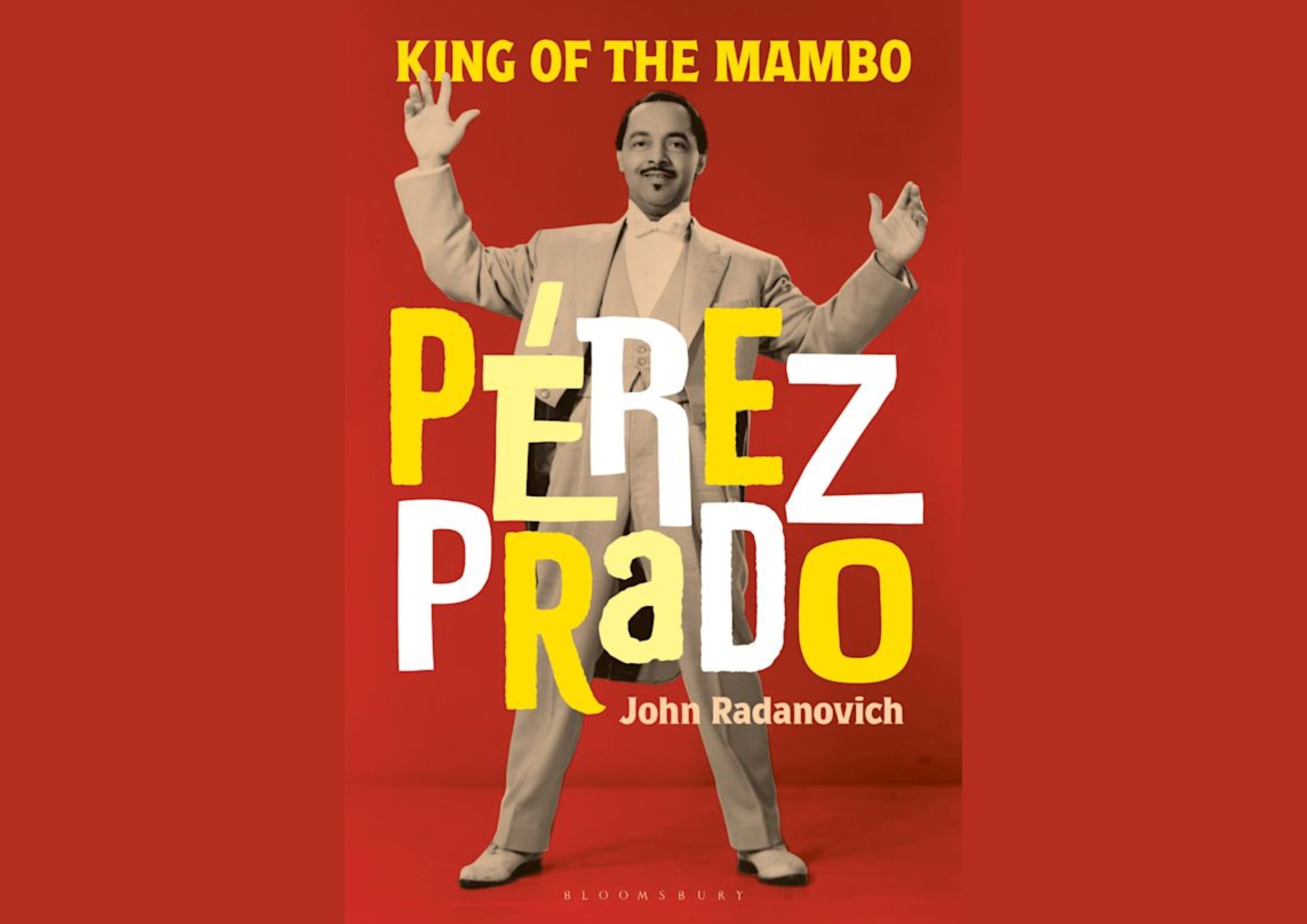
King of the Mambo is a smart and snappy portrait of a revolutionary musician whose fans ranged from Jack Kerouac and Quincy Jones to Igor Stravinsky, and who, according to Radanovich, hasn’t received his proper due. The book rescues Prado from the Exotica section of record stores where his albums are still found next to cult oddballs like Yma Sumac, Esquivel, and Martin Denny, all of which, as Radanovich notes, “couldn’t have existed until the Pérez Prado thing happened.”
Yet while the loopy sounds of the Exotica acts are championed for their dated, time-capsule ambience (cf. Space-Age Bachelor Pad Music, the title of an Esquivel compilation), Prado’s music has stayed fresh and ageless, even as it morphs and reappears through the decades, such as the 1999 sampled version of “Mambo No. 5” by Bavarian singer Lou Bega, which sold seven million CDs and remains a staple at weddings around the world. “As a pianist and bandleader,” writes Radanovich, “Pérez Prado exerted more outside influence on American jazz, R&B, and even rock and roll than probably any other single musician in American history.”
Radanovich is the author of a biography of legendary Cuban singer Benny Moré, whose 1952 record, “Locas Por el Mambo,” gave Prado his famous nickname and anointed him as the genre’s creator, sure to ruffle the feathers of rival mambo practitioners: “Who invented the mambo that drives women crazy?” Moré chides. “Who invented this crazy thing? A little dude with a seal’s face!”
Radanovich has a feel for the music that borders on the fanatical. Even so, he seldom lapses into technical jargon, whether he’s tracing the polyrhythmic lineage from “Mambo No. 5” to James Brown’s 1967 soul-funk classic “Cold Sweat” or describing Ray Charles’s “precise and funky organ versus horns homage to Prado” in Ray’s 1961 Top 10 pop crossover smash, “One Mint Julep.”
Mambo also exerted a pull on some of early rock’s pioneers like the songwriting team of Doc Pomus and Mort Shuman, who were among the “mambonik kids” thronging the Sunday matinee shows in the late ’40s at New York’s Palladium ballroom. As Radanovich notes, the duo “incorporated Latin syncopation into their compositions,” which included seminal hits for The Drifters and Elvis, among other rockers whose own rebellious sounds would quash the mambo dance craze by the end of the ’50s.
Radanovich is at his best elucidating how mambo is only part of a centuries-old procession of Cuban musical traditions, like its precursor danzón and its successor cha-cha, that gave American popular music what Jelly Roll Morton called “the Spanish Tinge.” At its core, mambo was a fusion of Afro-Cuban rhythms and the big band format of the Swing era. Prado calibrated an array of touches from gutbucket to classical to forge a signature sound that, writes Radanovich, was “absolutely unmistakable Pérez Prado: the dramatic horns, the percussive and discordant piano, relentless bongos, and conga.”
Notwithstanding Moré’s record, it was the media who gave the King of Mambo label because Prado was the music’s popularizer and evangelizer. His uncanny blend of elegance and lasciviousness took mambo from the dance floors to the households of middle America. At the peak of the craze in 1955, with Perry Como’s unctuous “Papa Loves Mambo” in the Top Five of the Hit Parade, among the hot-selling items at Woodward & Lothrop department store in Washington, D.C., were women’s blouses for $2.99 imprinted with how-to-mambo steps.
Prado emerges as a prickly and remote figure with a reputation as a diva. He was disliked by his mambo rivals and many of his sidemen, including a timbalero who said of his former boss: “When God made Pérez Prado, he filled one half of his head with music and the other half with shit.”
A Cuban exile with a lifelong grudge against his homeland, Prado had to go abroad—to Mexico City—to find widespread success, along with fellow émigrés like Moré. Here in the late ’40s, Prado became a nightclub sensation and also appeared in racy Mexican films known as cabareteras. (Among the book’s many visual pleasures, besides reproductions of such vintage, eye-popping Prado LP covers as Havana 3 a.m. and Voodoo Suite, are rare photos of Prado and other stars featured in the salacious variations of Hollywood noir films.) A major scandal (apparently, but not definitely, on account of “a skirt”) drove him from Mexico for more than a decade beginning in the early ’50s.
This second exile in the United States helped make his fortune, coalescing with most of his biggest records, like his smash “Cherry Pink And Apple Blossom White,” which he performed with his band in the 1955 camp-classic Jane Russell movie, Underwater! It was in this period that Prado cemented his legendary status that would later secure him a star on the Hollywood Walk of Fame.
The legend was already growing in his lifetime, as Radanovich writes: “The slide guitarist and music visionary Ry Cooder tells a story, perhaps apocryphal, that when Pérez Prado was exiled to Los Angeles, he drove an orchid 1950s Lincoln Continental with a horn that honked ‘Mambo No. 5.'”
Apocryphal or not, the music of Prado refuses to fade away, whether in the shimmering cover of “Patricia” that Cooder recorded for Mambo Sinuendo, his 2003 collaboration with Cuban guitarist Manuel Galbán, or the title track to 2025’s best-selling Tropicoqueta, by Colombian reggaeton star Karol G., which featured a sampled tribute to “Mambo No. 5.” Not to mention Prado’s songs appearing in episodes of The Simpsons, which has further enshrined the King of Mambo in pop culture.
Bad Bunny should be taking notes.
Pérez Prado: King of the Mambo
by John Radanovich
Bloomsbury Academic, 288 pp., $35
Eddie Dean is the coauthor of Dr. Ralph Stanley’s Man of Constant Sorrow: My Life and Times.
Read the full article here