




‘Because of the nature of structural racism,’ doctors think of a Medicaid patient as a ‘half citizen,’ El-Sayed said
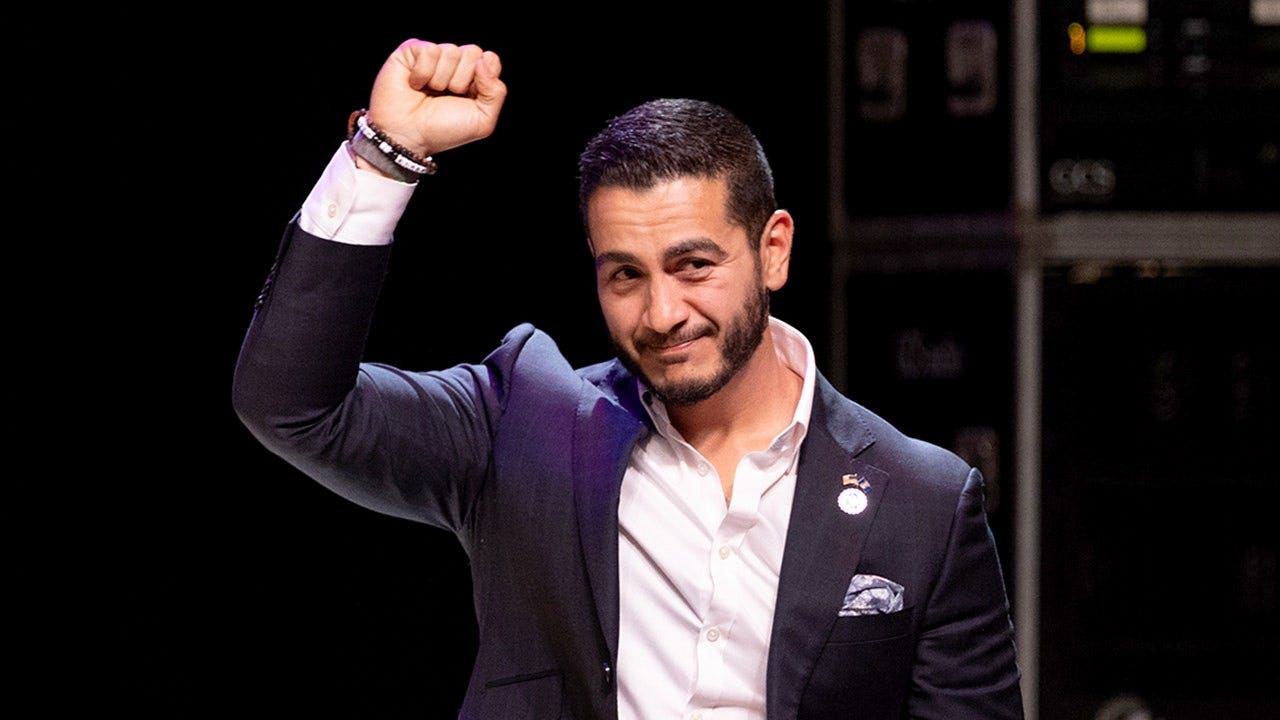
Left-wing Michigan Senate hopeful Abdul El-Sayed has railed against doctors who don’t accept Medicaid, arguing that they “discriminate” against “black communities” and perpetuate “long-held deep racism and structural racism.” That criticism would apply to his wife, a psychiatrist who operates a private practice that does not accept Medicaid, Medicare, or any other insurance.
In a June campaign video captioned “Clinics and hospitals can discriminate against you based on your health insurance coverage,” El-Sayed lamented what he called America’s “multi-class healthcare system.”
“Too often in urban communities, because of structural racism, because of the circumstances of segregation, you end up having situations where you may have health insurance through Medicaid, but you don’t have health care because you can’t get your Medicaid accepted where you need to get care,” El-Sayed said.
He made a similar remark during a July “meet and greet” in Detroit, saying that because Medicaid “reimburses at half the rate. … [M]any providers aren’t required to provide care. If they can provide it for you, they provide it in a way that is consistent with the fact that you’re basically a half-paying customer.” The issue, he said, “falls hardest on black communities, urban communities, communities that are systematically poor as a function of long-held deep racism and structural racism.”
Months earlier, in a May interview with Detroit Public Radio, El-Sayed focused on “Black women,” saying they are “too often … left to Medicaid” and thus “can’t actually find a primary care doc” and are “discriminated against at the point of care.” During an April candidate forum, El-Sayed said doctors “discriminate” against Medicaid patients.
“If you’re low income in this country—and because of the nature of structural racism, too many black and brown folks are low income in this country—you’re on Medicaid. Medicaid reimburses at nearly half the rate, which means that when you walk in with your Medicaid card, the doctor in the hospital thinks of you as a half citizen,” he said. “That means you can’t get appointments. That means they push you to the back. That means they discriminate against you, because they know that the care that your body requires is going to reimburse at half the rate.”
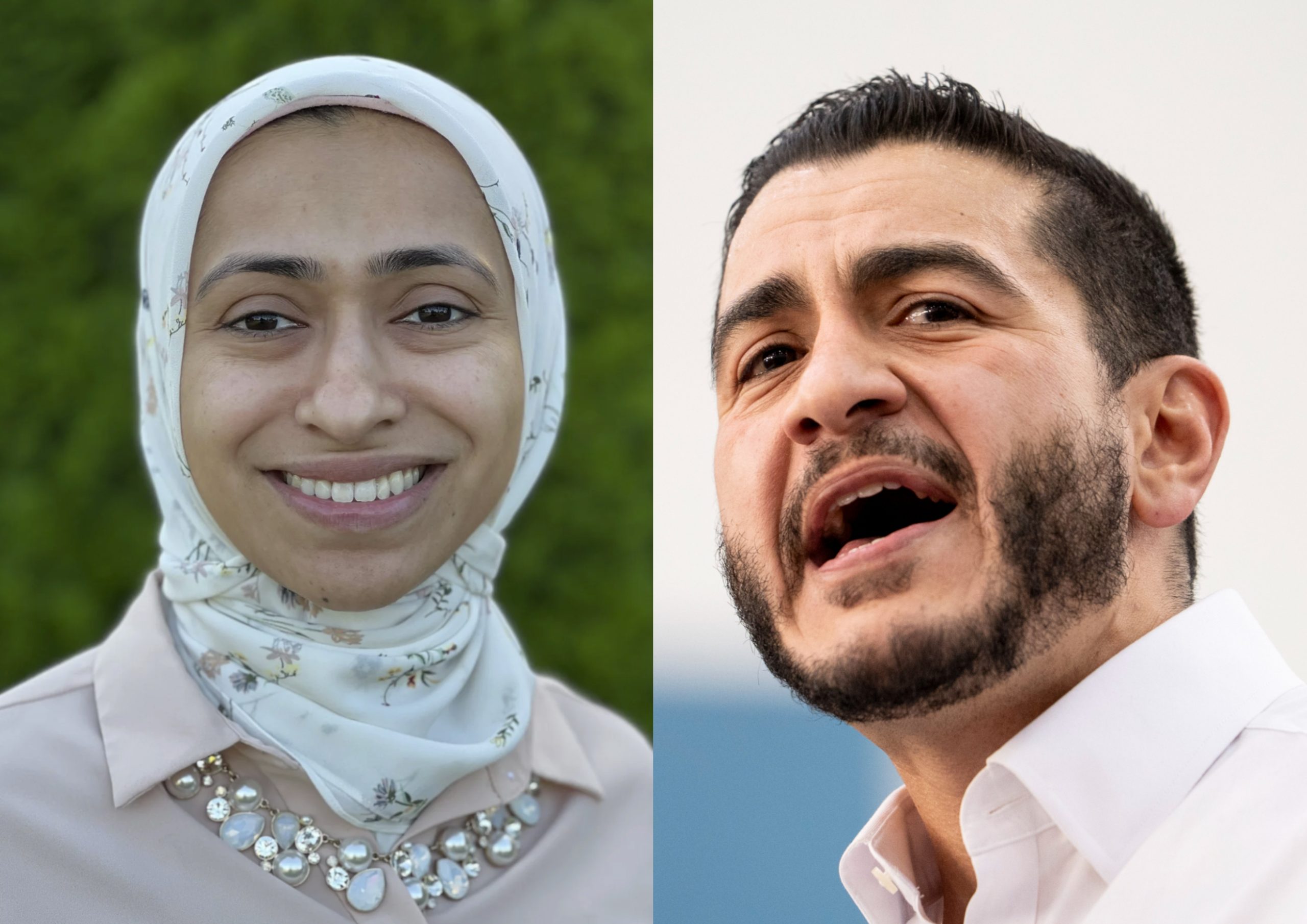
According to El-Sayed’s logic, his own wife, psychiatrist Sarah Jukaku, is one of those discriminatory doctors.
Jukaku runs a private practice in Ann Arbor called Mind Work Psychiatry. She opted out of Medicare in 2025, according to records first reported by the Washington Free Beacon, meaning she cannot bill the program. She is not listed as an eligible provider on any of the six insurance plans that provide coverage for Medicaid or the state-equivalent Healthy Michigan program in Washtenaw County, where her practice is based, a Free Beacon review found.
Mind Work’s website notes that “Dr. Jukaku is out of network for all insurance companies,” meaning patients must pay out of pocket for her services, something “black and brown folks” who “are low income,” as El-Sayed put it, are unlikely to be able to afford. Those with pricier private plans can often submit bills to their insurance providers to recoup a portion of out-of-network care, a privilege that is not afforded to Medicare or Medicaid patients.
El-Sayed’s campaign did not respond to a request for comment. Jukaku did not return a message submitted to Mind Work Psychiatry.
El-Sayed is facing off against Democratic congresswoman Haley Stevens in the Michigan Senate primary, casting himself as a champion of the working class who will fight against “oligarchs.” He backs a single-payer “Medicare for All” system that covers every American “from cradle to grave.” He is also among the top 1 percent of Michigan earners thanks in part to his wife’s private practice.
El-Sayed released a partial copy of his 2025 tax returns on Wednesday showing $686,069 in total income, nearly $75,000 more than the $611,500 it takes “to be in the top 1% of statewide households,” according to IRS data reported by Axios. $292,000 came in the form of “additional income,” while $262,000 came from capital gains, El-Sayed’s return shows.
El-Sayed told an NBC affiliate in West Michigan that his “additional income” stems from his wife’s practice and from his little-known podcast, America Dissected, and that his capital gains came from the sale of a property that his wife’s parents purchased in his name. He did not release the corresponding tax forms that would support his claims, nor did he disclose the location of the property, when it was sold, or for how much.
El-Sayed’s wealth has risen substantially since he ran for governor unsuccessfully in 2018, when he released returns showing $237,000 in gross income. At least some of the money has gone to El-Sayed’s luxury watch collection, which includes a $4,000 German diver’s watch that earned El-Sayed praise from a watch podcast for making a “badass stealthy pick,” the Free Beacon reported.
Read the full article here