





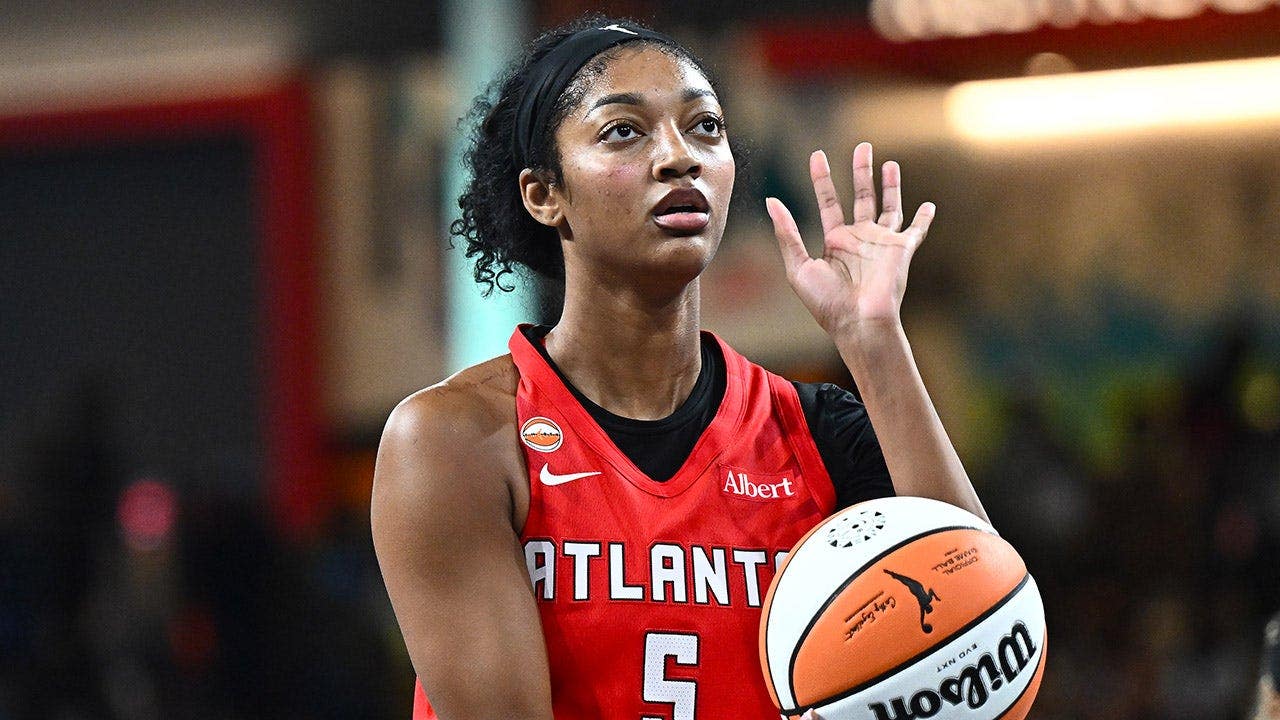
Angel Reese has a new team, a better record and, apparently, the same old offensive problem.
The Atlanta Dream are off to a strong start after acquiring Reese from the Chicago Sky in what qualified as a blockbuster WNBA trade. Atlanta is 4-1, owns the best record in the league as of Wednesday afternoon, and Reese is doing what Reese generally does: grabs rebounds, generates attention and averages a double-double. She is averaging 12.8 points, 11.4 rebounds and 2.6 assists this season.
ANGEL REESE BECOMES FASTEST PLAYER IN WNBA HISTORY TO REACH 50 CAREER DOUBLE-DOUBLES IN DREAM DEBUT
But the shooting numbers are still ugly.
A shooting breakdown went viral on X, highlighting that Reese has yet to make a single basket from beyond 5 feet. OutKick confirmed the shooting stats via the WNBA’s official statistics page.
That’s not ideal.
Actually, it’s worse than not ideal. It’s a major issue for a 6-foot-4 forward whose value is supposed to be built around production near the rim.
Now, to be fair, Reese does some things well. She rebounds. She plays hard (at least in the fourth quarter). She gives Atlanta a physical presence. She clearly brings media and fan attention to a franchise that wanted more of it.
But none of that changes the central problem.
At some point, the ball has to go in the basket.
This has been the issue with Reese since she entered the WNBA. As OutKick noted during her rookie season, Reese was shooting just 42% from the field despite 85% of her shot attempts coming inside eight feet. She was also making just 44% of her layups at the time.
Back then, the defense was pretty simple. Reese was a rookie. The Sky stunk. She had plenty of time to develop. Give her a real team, better spacing and more experience, and maybe the efficiency would come.
Well, now she’s in Atlanta.
And through five games, there’s not much evidence that the offensive skill set has taken a major jump in her third season in the WNBA.
ANGEL REESE LOOKS IMPRESSIVELY BAD IN PRESEASON GAME AGAINST HER FORMER TEAM
That doesn’t mean Reese is a bad player. She’s not. She’s a useful WNBA player who can help a team win if the role is right. But the conversation around Reese has never simply been about whether she can rebound or whether she deserves to be a starter.
The conversation has been about whether she’s a superstar.
That’s where things get ridiculous.
A certain segment of WNBA media and fans badly want Reese discussed like she’s the second coming of Kareem Abdul-Jabbar. She’s not.
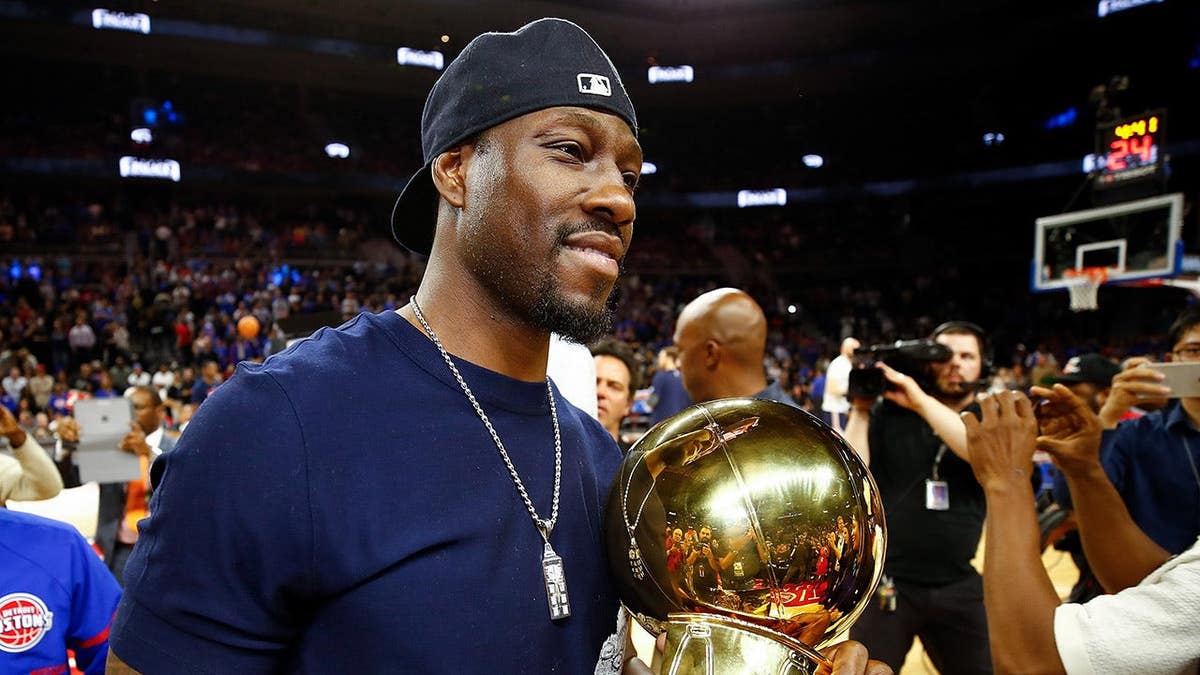
If anything, the better basketball comparison is Ben Wallace. And that’s not an insult.
Wallace is a Hall of Fame player, an NBA champion, a four-time Defensive Player of the Year and one of the great defensive players in basketball history. But nobody watched Ben Wallace and suggested he was Hakeem Olajuwon or Shaquille O’Neal. His value was defense, rebounding, toughness and physicality. He lacked offensive skill, but it didn’t matter because he excelled so much defensively.
Wallace averaged 5.7 points and 9.6 rebounds per game for his NBA career. He also averaged just 5.0 field-goal attempts per game. In other words, Wallace understood his offensive limitations and didn’t force bad shots to stuff his own stat sheet. That’s where Reese starts to diverge from Wallace.
Reese is averaging 10.8 shots per game this season and 11.7 shots per game for her WNBA career. That’s more than double Wallace’s career shot volume. She’s shooting 40.7% this season and 42.0% for her career. And, keep in mind, she takes the vast majority of her shots from inside 5 feet, and still makes fewer than half of those.
Reese has taken 78% of her career shots from inside five feet, but she’s shooting just 48% on those attempts. She’s also shooting just 23% on all shots outside five feet. Additionally, for a player of her size, Reese has a history of having her shots blocked at an alarming rate. Nearly one out of every five of Reese’s shot attempts has been blocked in her WNBA career.
That’s the difference.
Wallace knew exactly what he was, and his teams generally treated him that way. He didn’t take 12 shots per game because nobody was trying to run offense through him and he didn’t demand to be treated as an offensive weapon. Because teams didn’t run offense through Wallace, he averaged one turnover per game for his career.
Reese, on the other hand, averages three turnovers per game for her career and has been even worse this season (4.8).
In addition, Wallace had to become one of the best defensive players ever to make his profile work at a championship level. Reese is not close to that yet. Wallace was an elite rim protector who averaged two blocks per game for his career. Reese sits at 0.6 blocks per game for her career. That also means that Reese has her own shots blocked at about four times the rate she blocks an opponent’s shot. That’s not great and doesn’t exactly scream elite post player.
Reese is a strong rebounder (although even those numbers are bolstered by her infamous “Mebounds”). She’s active and plays with energy, which makes her a valuable rotation player. But too many people pretend that her offensive game isn’t severely limited. And if she’s going to keep taking nearly 11 shots per game, the efficiency has to improve.
While her free-throw shooting has always been solid (74% for her career), Reese is even struggling from the line this year (67%).
The Dream forward had 17 points and 10 rebounds in Atlanta’s win over Phoenix on Sunday, but she needed 16 shots to get there and shot 37.5% from the field (and 5 of 10 from the free-throw line). In Atlanta’s only loss of the season, against Las Vegas, Reese scored nine points on 1-of-8 shooting and committed eight turnovers.
That’s the Angel Reese experience in a nutshell.
The counting stats look fine, and sometimes they even look great. But the context almost always matters, even if some choose to ignore it.
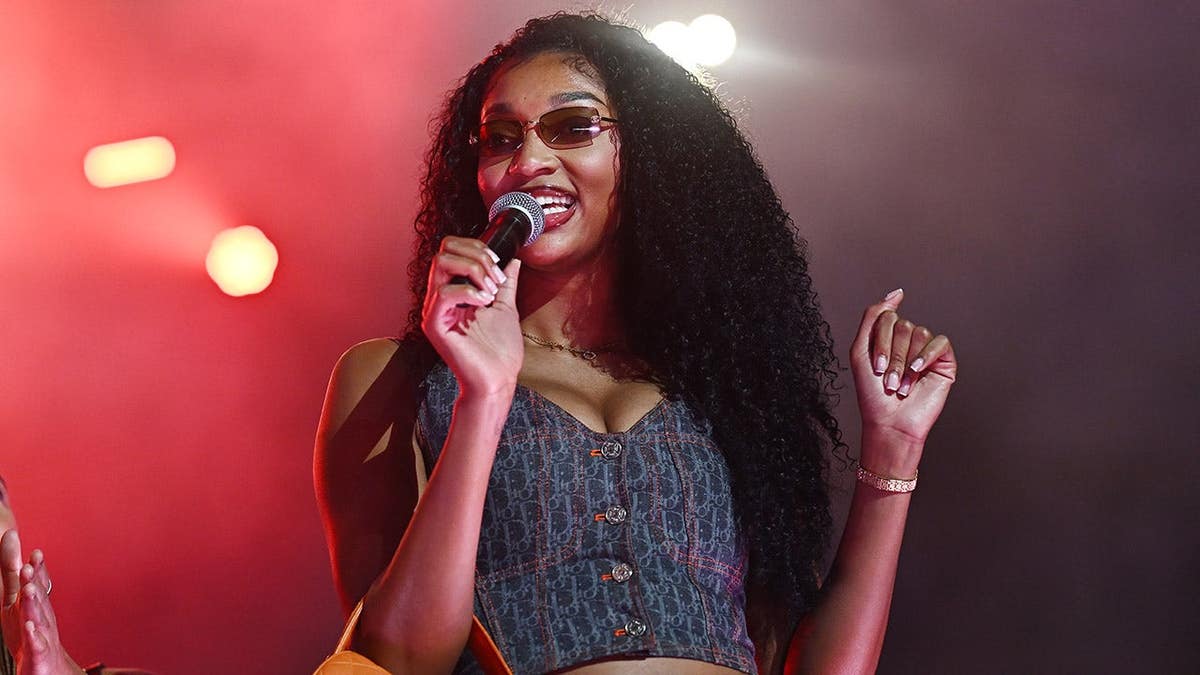
For example, here’s what the WNBA wrote on X on Wednesday:
“Angel Reese has been on a tear. Over her last two games, AR5 is averaging 16.0 PPG, 9.5 RPG, 3.0 APG and 2.0 SPG while leading Atlanta to a 2-0 record.”
The numbers are correct, but lack context. Reese had 32 points in her past two games, but it took her 27 shot attempts. She was also just 6 of 12 from the free-throw line and committed eight turnovers and seven fouls.
Again, that context matters.
If the shooting chart says a forward has not made a shot outside five feet, opponents are going to notice.
Fans have certainly noticed.
Reese, for her part, acknowledged earlier this season that she can still impact the game defensively when her shot isn’t falling.
That’s true.
But again, that sounds a lot more like a defense-and-rebounding specialist than an offensive star.
There’s nothing wrong with that. Good teams need those players. Championship teams need those players. Wallace turned that profile into a Hall of Fame career because he became historically great at it. He even helped the Pistons win an NBA championship.
But that’s a very different conversation than pretending Reese is an offensive superstar waiting to happen.
Right now, the biggest difference between Chicago Angel Reese and Atlanta Angel Reese appears to be the jersey.
CLICK HERE TO DOWNLOAD THE FOX NEWS APP
The rebounds are still there. The attention is still there. The double-doubles are still there.
So is the same ugly shot chart.
Read the full article here