



Grade, test-score data are ‘very sensitive,’ Harvard lawyer tells federal judge
BOSTON—Harvard is turning to Biden administration lawyers to defend itself from the Trump administration’s efforts to make sure that the university has ended race-based discrimination in admissions.
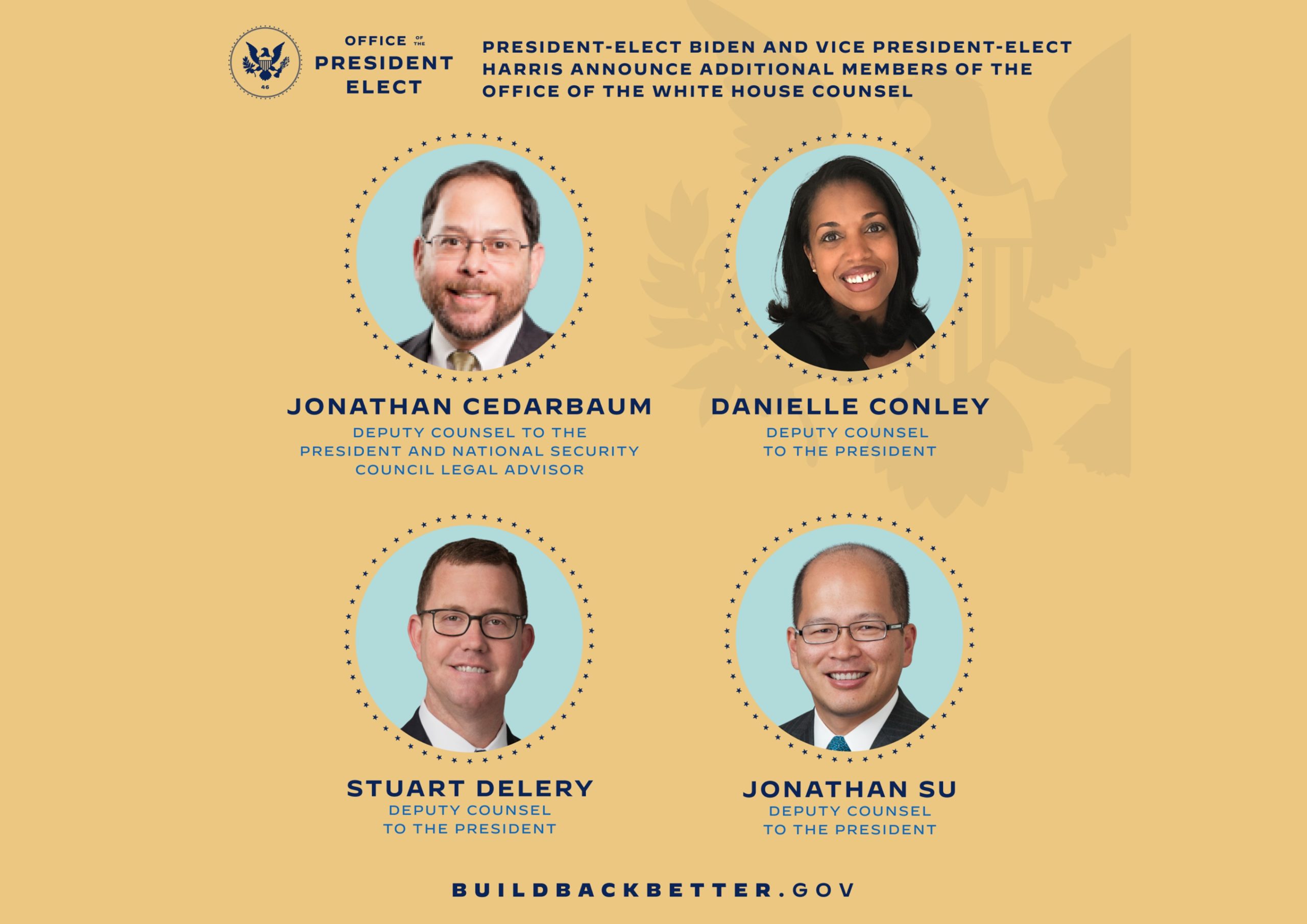
At a Thursday, September 24 morning hearing before Judge Myong Joun, two lawyers sat alongside Harvard vice president and general counsel Jennifer O’Connor. The one who did all the talking was Stuart Delery, a former WilmerHale partner now at Gibson Dunn. Delery was White House counsel to President Biden from 2022 to 2023 and also served in a senior Justice Department role from 2014 to 2016, during the Obama administration. Also at Harvard’s table in the courtroom was Joshua Levy, a lawyer at Ropes and Gray who Biden twice nominated to be U.S. attorney for the District of Massachusetts.
O’Connor, Harvard’s top in-house lawyer, herself was nominated by President Obama to be general counsel of the Pentagon and before that was a deputy White House counsel in the Obama administration. She’s also a former partner at WilmerHale, the firm that unsuccessfully represented Harvard—for fees totaling more than $15 million—in its defense of its racially discriminatory college admissions scheme that the U.S. Supreme Court in June 2023 found unconstitutional. A WilmerHale partner, William Lee, was the senior fellow of the Harvard Corporation, and another two WilmerHale partners, Seth Waxman and Jamie Gorelick, were members of the Harvard Board of Overseers. WilmerHale also prepped then-Harvard president Claudine Gay and then-Penn president Liz Magill for the disastrous December 2023 congressional testimony.
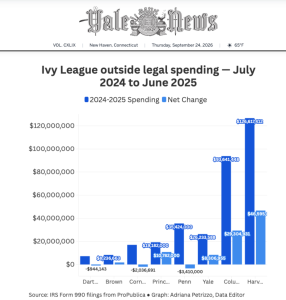
A recent Yale Daily News graphic pegged Harvard’s annual legal spending for the single year from July 2024 to June 2025 at $126,617,412, the most of any school in the Ivy League—more than $30 million more than Columbia and more than five times what Yale spent.
The docket for the case, United States v. President and Fellows of Harvard College, lists a total of seven outside lawyers from four different firms representing Harvard.
In his oral argument for his motion to dismiss the case, Delery echoed Democratic partisan talking points that describe the Trump administration as violating norms to punish its political opponents. Delery said the request for Harvard admissions data was part of a “targeted ideologically motivated assault on Harvard.”
“There’s nothing ordinary or normal about the government’s actions,” he said, describing it as part of a “campaign to punish Harvard.” He said the government had requested “highly sensitive information about hundreds of thousands of high school students,” including application essays that might include accounts of “mental health struggles.”
“Rather than engage with Harvard … the government just sued,” Delery claimed. “The government just needed another hammer against Harvard.” He said, “it is the government that has not followed the law.”
Delery said Congress wanted the executive branch to enforce antidiscrimination law using “an informal process,” and “not through the judicial process.” He said the Trump administration was making an “incredibly broad” and “extraordinarily intrusive” request for “very sensitive materials.”
A lawyer representing the government, Jeffrey Morrison, said Delery’s claim that the administration had bypassed informal, non-judicial steps was “factually incorrect.”
Morrison said there had been “continual” attempts to negotiate with Harvard.
He said the data the government is seeking is less top-secret than Delery had made it seem.
“It’s a spreadsheet, your honor,” Morrison said. He said the grades, interview scores, and information about whether candidates are alumni children—”legacies,” who still get an advantage at Harvard though other schools have scrapped the preference as unjust—were necessary to conduct a regression analysis and test whether Harvard had in fact eliminated the race-based preferences that the Supreme Court found unconstitutional.
Morrison said the government was willing to accept the data even on an anonymized basis, with names replaced by numbers for identification purposes.
Pressed by Judge Joun about whether more give and take about the scope of the data request “could have happened before you filed the lawsuit,” Morrison said Harvard had stonewalled. “They just didn’t provide any data,” Morrison said of Harvard.
Morrison noted that five other institutions had agreed to provide such data as part of settlements with the government. Joun said he wasn’t sure that mattered. “I don’t know how much stock to put into that other institutions have complied,” Joun said.
The hearing took place in a courtroom with ample empty seats, unlike the 15-day district court trial in the Students for Fair Admissions Inc. v. President and Fellows of Harvard College case and unlike some recent hearings over Harvard’s federal research funding, which attracted large crowds. The Supreme Court ruling was huge news in 2023 when it came down. Whether Harvard has actually eliminated the racial bias is something that the government is curious about, while Harvard is trying to resist supplying data about it. The government has been using data it has obtained from other institutions to issue findings such as “Duke Law’s use of race gave a black applicant a roughly 3.5x higher probability of admission than an equally strong Asian applicant with similar academic credentials” or that at Duke medical school, for the 2024-2025 admissions cycle, admission rates for black and Hispanic applicants were two or three times higher than those of white or Asian applicants, even though the blacks and Hispanics, on average, had lower grades and test scores.
There’s little if any reputational or social price to pay for the Harvard administrators and trustees who participated in and defended the system the Supreme Court found was unconstitutional and racially discriminatory. Many of them remain in place and in a position to spend hundreds of millions of dollars on fancy lawyers to avoid public scrutiny of their current practices, which they say have been brought into compliance with the law.
While Harvard resists, it is simultaneously making occasional gestures in the direction of at least some of the Trump administration’s demands. This week Harvard Law School announced it had hired, from Notre Dame, Sherif Gergis, who clerked for Justice Alito and is coauthor of the 2012 book What Is Marriage? Man and Woman: A Defense. Gergis will start January 1, 2027 as a tenured professor of law.
Read the full article here