



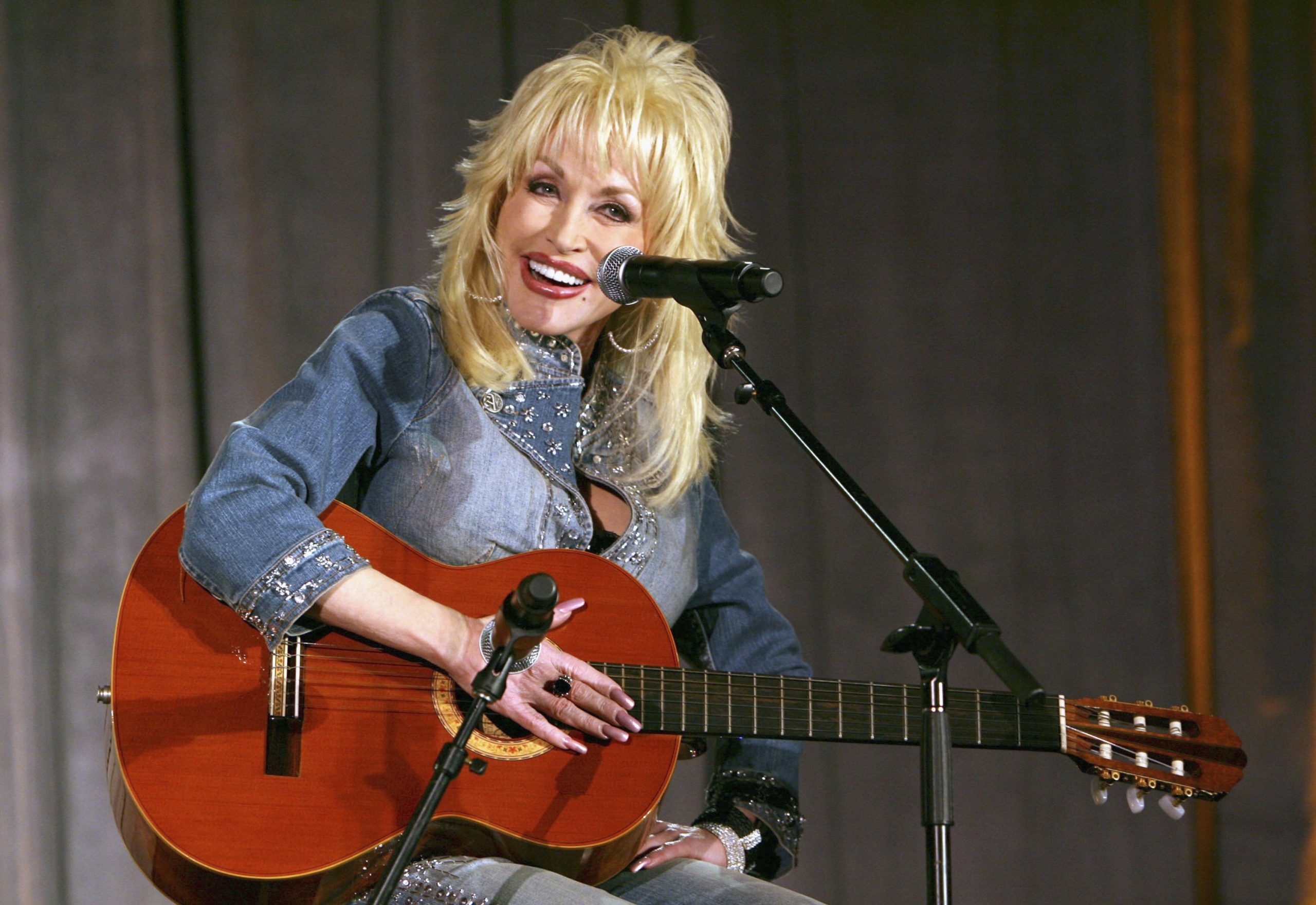
There is a portrait of Dolly Parton sitting on the porch of her childhood home. She has one glitzy cowgirl boot propped on an old log. Her yellow-blonde hair, towering a good six inches over her petite frame, is bright against the gray boards of the one-bedroom cabin where her parents raised 12 children in the Smoky Mountains of Tennessee. She is strumming a guitar that is probably worth more than anything inside the little home, which had neither electricity nor running water. By the time the picture was taken in 1987, she had long since been a global superstar, starred alongside Hollywood legends, and opened her own theme park. But on that porch, she is home, looking dreamily at the horizon. Every rhinestone and diamond feels like it belongs in that humble spot.
Dolly made it clear she didn’t see her humble beginnings as a hardship. In her classic “Coat of Many Colors,” she is not mad, but bemused by the children who don’t understand how special her hand-sewn jacket is and declares herself as “rich as I could be, in my coat of many colors my mama made for me.” She always seemed equally grateful for where she had been and where she arrived.
Parton’s theme park, Dollywood, brings more than $1 billion in economic benefits to her home county, just one of the many things her big, ahem, assets were able to do for the people she loved. In the center of the park, bluegrass music floating on the breeze, are two things. There’s a replica of her family home, built by her brother and approved by her mother. A sign out front says it inspired her music and life, and she hopes it does yours, too. Next to it is a little white wooden church, an altar adorned with handmade Appalachian quilts instead of stained glass. It still holds services. A porch and a pulpit, her place and her faith, at the center of all she did.
Dolly Parton was many things to many people. She was many things at once and always herself. She was somehow both a cartoon and the realest person in show business. She was fully a Christian and fully a gay icon, simultaneously trashy and wholesome. She was a caricature of a dumb blonde and a boss babe who was nobody’s fool.
The ease with which she was many things but always felt real came from that porch and pulpit. Combined with good-old American audacity, they propelled a little girl who colored her cheeks with pokeberry juice and sang into a tin can from her Tennessee Mountain Home to the heights of fame. Her whole life, she inhabited both, just as she does in that picture.
There’s something special about the way Dolly told and lived her own story, and it gets rarer every day. We live in a culture increasingly interested in digging up trauma, naming it, and even building identities and audiences around it. There is value in talking about suffering. Dolly went through plenty. But she understood something we are in danger of losing. There is also value in refusing to let suffering become the most interesting thing about you. In an era of trauma farming, Dolly was farming joy and resilience, in moments big and small. (A professional breakup and betrayal by a mentor became the iconic “I Will Always Love You.”)
Her father was illiterate, so she built a global library that brought more than 300 million books to millions of families. She couldn’t have her own children, so she became a doting aunt to millions of others. My own nephew got a birthday message from her days after her passing to mark his first birthday because he’d joined the Imagination Library.
Julia Roberts tells a story of Parton on the set of 1989’s Steel Magnolias, filmed in Louisiana. Every member of the super-powered cast had complained about the heat at some point, but not Dolly. Roberts ribbed her, suggesting it was okay to admit she was hot sitting in the Louisiana heat with a wig on waiting for the director. Dolly told her, “When I was a little girl, I wanted to be famous and I wanted to be rich, and now I’m both those things. I’m not going to complain about it.” Whether she was in a log home or on a movie set, Dolly was glad to be there.
When she spoke about suffering from depression during a period of her life, she offered this: “I pray every day and I had to really lean on my faith for that, and usually you’ll get on up if you try.” Pain was part of the ride, but not her destination.
At Dollywood, that idea is almost comically literal. It is filled with historic terrors of Appalachian life reimagined as entertainment—a hillbilly hardship park. You can flee a burning mountain town on Blazing Fury, careen through a Tennessee Tornado, plunge into an abandoned Mystery Mine, or race to a forest fire on FireChaser Express. Dolly turned trauma into roller coasters. You get on, you scream, and you come out the other side smiling. It is a picture of her—funny, tough, and relentlessly optimistic.
In so much of her music and life’s work, pain and hope are side by side. She sang about poverty, heartache, and death, but the songs never left you there. In my hardest times, I’ve turned on “Hard Candy Christmas” and known I wouldn’t let sorrow bring me way down.
Today, you can sit in the pews of the church at Dollywood and hear the good news that suffering is not the end of the story. You can sit on the porch of Dolly’s house and see the light of a clear blue morning. And we can rejoice that streets of gold are made for five-inch heels.
Mary Katherine Ham is a Fox News contributor and cohost of the Getting Hammered podcast.
Read the full article here