



The NDO Fairness Act would also compel federal prosecutors to provide courts with written justifications for seizing phone records
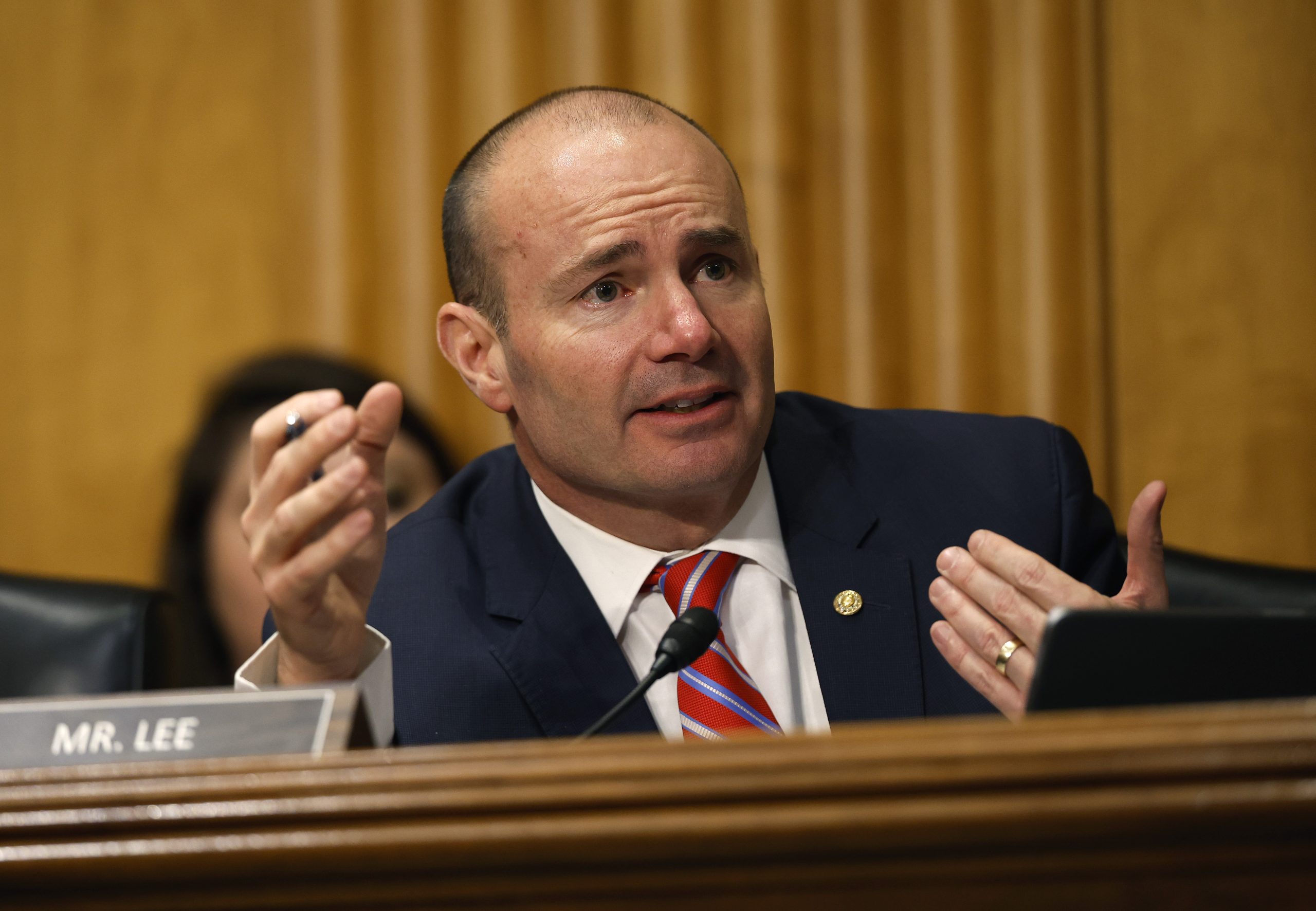
Sen. Mike Lee (R., Utah) is leading a legislative push to block federal prosecutors from seizing a citizen’s phone records without notifying the subject of an investigation unless a judge signs off on a warrant. The effort has earned support from congressional Democrats and the White House, suggesting it may pass after spending several years stuck in Congress.
Lee introduced the Non-Disclosure Orders (NDO) Fairness Act in response to the Biden administration’s 2022 Arctic Frost investigation, in which FBI and Justice Department officials seized the phone records of more than a dozen Republican lawmakers in a bid to charge President Donald Trump with having interfered with the 2020 presidential election. Efforts to prevent the federal government from once again seizing phone records without notifying the subject or obtaining a warrant picked up steam at the end of last year, when the Senate Judiciary Committee unveiled evidence that then-special counsel Jack Smith had targeted a group of GOP lawmakers and more than 400 Republican organizations and individuals.
Lee’s NDO Fairness Act would neuter the federal government’s ability to clandestinely seize electronic information like emails and text messages using a gag order—the titular Non-Disclosure Order—that prohibits phone carriers from informing subjects that their private data had been accessed, ensuring that no future presidential administration can spy on political opponents.
“The government should not be able to hide domestic spying activities behind Non-Disclosure Orders, especially outrageous partisan abuses like Arctic Frost,” Lee told the Washington Free Beacon in a statement. “Any government search for personal digital information should meet established constitutional standards more closely aligned with the rules governing physical searches, where notice is typically required.”
In addition to limiting the use and duration of secrecy orders, the legislation would ensure that federal prosecutors provide the courts with written justifications for their actions. NDO requests would expire after 90 days, similar to physical search warrants, and allow phone providers to challenge the orders in court.
The Trump administration is “fully on board” with the bill because it does not “want a future Democratic Department of Justice led by [Minnesota attorney general] Keith Ellison to use NDOs to target Republicans,” an administration official told the Free Beacon. NDO reform efforts, the official added, have “always been close to passing but didn’t quite have enough momentum in prior Congresses. Now, it likely does with Arctic Frost.”
Lee’s bill is the Senate’s version of similar legislation that passed the House of Representatives in a bipartisan 2022 voice vote but failed to make its way through the upper chamber of Congress, which was then controlled by Democrats. This iteration counts Sen. Chris Coons (D., Del.) as a co-sponsor, and a second Trump administration official said bipartisan support for the bill provides a “rare opportunity” to remedy the problem.
“If Jack Smith can do it, the next one can do it, and that’s what we’re worried about,” that official told the Free Beacon.
House Judiciary Committee chair Jim Jordan (R., Ohio), who also chairs its Subcommittee on the Weaponization of the Federal Government, told the Free Beacon that Smith’s abuse of secret orders set a dangerous precedent that lawmakers from both parties are now trying to remedy.
“The NDO Fairness Act takes a critical step to rein in this surveillance overreach,” Jordan said. “It forces the government to justify how long the order can last and makes sure those affected are notified.”
Read the full article here

