





Peltola’s ostensibly pro-fossil campaign is bankrolled by donors who say the industry is destroying the planet
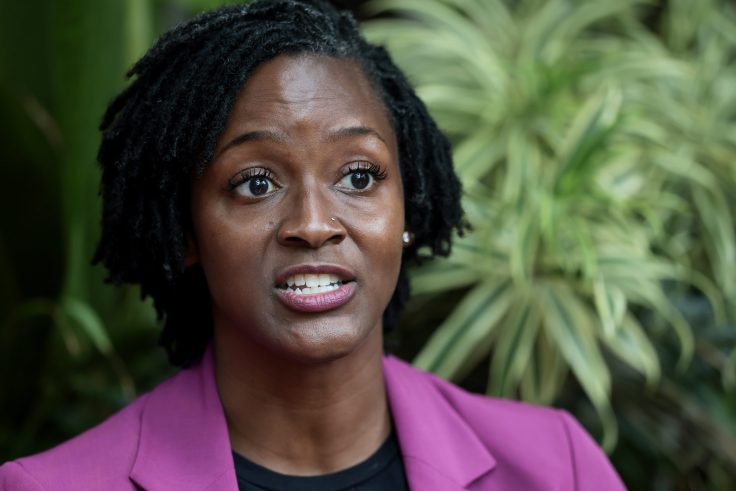
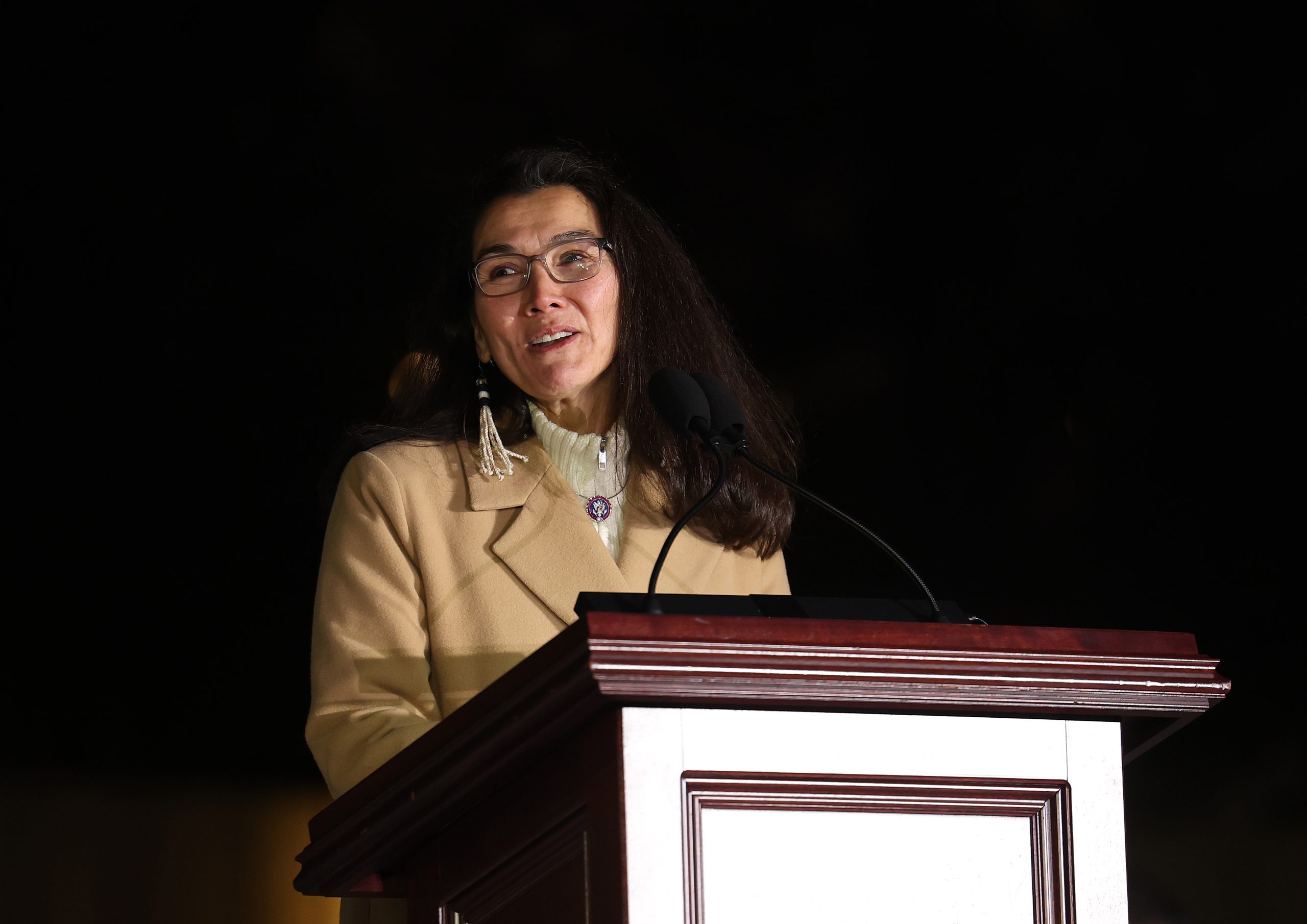
Alaska Democratic Senate nominee Mary Peltola’s campaign is bankrolled by scores of deep-pocketed environmental activists engaged in what they view as an existential fight to block the very fossil fuel projects the self-proclaimed “pro-oil Democrat” claims to support as she campaigns across the red, oil-dependent state, according to a Washington Free Beacon review of campaign finance records.
Peltola, a former congresswoman challenging incumbent Sen. Dan Sullivan (R.) in a surprisingly competitive race, has sought to distinguish herself from her party in deep red Alaska by expressing unabashed support for oil and natural gas production, the dominant industry in Alaska, which accounts for an estimated 35 percent of its GDP. Peltola is pushing an energy plan focused on expanding fossil fuel production in Alaska, and it contains just one mention of renewable energy (Peltola says she will support tax credits for solar, wind, and hydropower projects). She has also pledged to “stand up to anyone” in her party who dares to block major energy initiatives such as the $10 billion Willow Project in Alaska’s National Petroleum Reserve, which is expected to produce 600 billion barrels of crude oil over the next 30 years. The project is strongly opposed by environmental groups, who’ve described it as a “carbon bomb” that endangers the planet.
But despite Peltola’s claims to be “pro-oil,” at least 23 prominent environmental activists and climate-focused donors have contributed nearly $100,000 to Peltola’s campaign during the first half of 2026, according to Federal Election Commission records. The list includes donors who’ve fiercely battled the very energy exploration projects Peltola promises she supports.
Most of the green donors live outside of Alaska. They include Patagonia cofounder Malinda Chouinard, who contributed $3,500 to Peltola’s campaign in April. Chouinard sits on the board of directors of the outdoor gear company, which urged the Biden administration in a 2022 letter to block the Willow Project before it brought about “truly catastrophic climate change” (the Biden administration grudgingly approved a scaled-down version of the project, citing legal reasons, which infuriated climate activists). In 2023, Patagonia took the unusual move of filing an amicus brief supporting a legal challenge against the Willow Project, saying it would devastate the environment to such an extent that it would prevent its customers from enjoying outdoor recreational activities and, by extension, harm the company’s bottom line.
During her 2023 appearance on a podcast hosted by former Bernie Sanders speechwriter David Sirota, Peltola said her ultimate goal is to bring about a transition to renewable energy as she framed her support of initiatives like the Willow Project as a necessity in Alaska, which, for the time being, remains financially dependent on the fossil fuel industry.
“Of course we all want to be on renewables,” Peltola told Sirota. “The type of jobs that Willow would provide are very impactful. About a third of our workforce is tied to oil and gas, and of course we all want to transition, of course we all want to be on renewables. But we recognize we need gap oil.”
Contributors to Peltola’s Senate campaign also include Daniel Tishman, the real estate heir and former chair of the Natural Resources Defense Council, an organization which also sued the Biden administration over the Willow Project in 2023. The Natural Resources Defense Council’s chief policy impact officer said Willow was an “illegal project” and accused the Biden administration of “green-lighting a carbon bomb” that would “set back the climate fight and embolden an industry hell-bent on destroying the planet.” Tishman donated $3,500 to Peltola’s campaign in March, and his wife, Sheryl, a prominent environmental activist in her own right, chipped in $7,000 as well.
Other notable green donors to Peltola’s campaign include Wendy Schmidt, the wife of ex-Google CEO Eric Schmidt, who serves as president of the anti-fossil fuel nonprofit 11th Hour Project, Alida Rockefeller Messinger, a Rockefeller heiress who has used her family’s fortune to bankroll environmental advocacy organizations, and James Gamble, a senior director at Pacific Environment who has called for the transition away from all fossil fuels.
A Peltola campaign spokesman said the Alaska Democrat is not beholden to her donors.
“Mary’s record is clear: She will always put Alaska first, and no one from the Lower 48 will ever tell her how to vote or how to think,” the campaign spokesman said. “Mary was instrumental in standing up to the Biden Administration to secure the Willow project and supports creating good-paying oil and gas jobs, securing America’s energy independence, and bringing down the cost of energy for Alaska families. Mary only answers to Alaskans, and she will use every tool at her disposal to ensure that Alaskans are in control of their natural resources, not anyone from the Lower 48.”
Peltola paid herself $34,400 in campaign funds as a salary while raking in campaign contributions from environmental activists during the first half of 2026. Candidates for federal office are permitted to use campaign funds to pay themselves a salary under certain conditions.
During her service as Alaska’s lone representative from 2022 through 2025, Peltola struck contradictory positions on bills impacting Alaska energy production. In 2024, for example, Peltola served as the Democratic co-lead for the Alaska’s Right to Produce Act, a bill that sought to reverse Biden-era restrictions on oil and gas leasing in Alaska. Peltola said she voted in favor of the bill in the House Natural Resources Committee, but just before the House voted on the measure, she sent a letter to her Democratic colleagues urging them to vote against the bill. When the vote came, Peltola voted “present.” The bill passed the House but did not advance through the Senate.
Read the full article here