






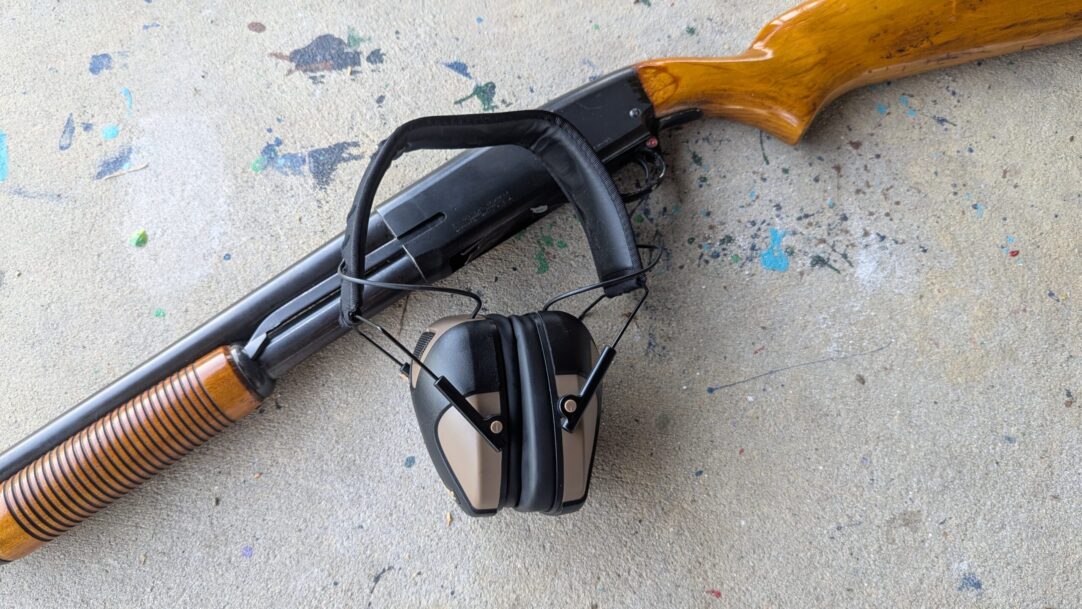
There used to be a time when electronic hearing protection was gate-kept by high prices, but the era of high-priced era pro is over. These days, you can pick up the Caldwell E-MAX Pro Series for about forty bucks. For me, I really need my ear pro to be electronic. I’m not saying everyone does, but if you take classes, compete, and generally do anything that’s a bit dynamic, they can be a lifesaver.
Why Caldwell E-Max Ear Pro?
I like the situational awareness they offer. I can always hear the cease-fire call right away, so I’m not that guy. Plus, I can hear instructors talk and teach without missing a word. What’s the point of paying for training if I can’t hear what the guy’s saying? I can hear match instructions, and don’t ever miss the Shooter Ready question.
Advertisement — Continue Reading Below
There is a safety aspect for me. I shoot old guns, and I often shoot old ammo. I can easily distinguish a normal gunshot from one that sounds a little weird.
This ensures a squib doesn’t destroy my ancient Spanish revolver. I’m all in on electronic hearing protection, and for less than the cost of a cheap date night, the E-MAX Pro Series provides me with electronic hearing protection.
Inside the E-MAX
Caldwell has their fingers in a little bit of everything. Targets, shooting clays, and gadgets and gizmos galore. It’s not a surprise they got into electronic hearing protection. What’s surprising is that they could do it pretty dang well for less than $40.
Advertisement — Continue Reading Below
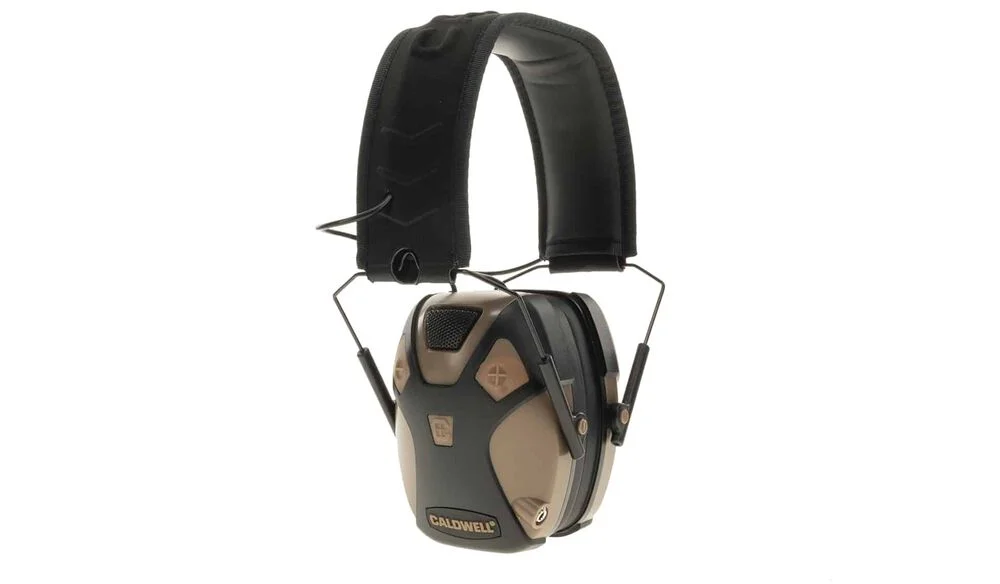
These are over-the-ear muffs that fold to be a bit more compact when needed. They feature three large and tactile buttons. When you’re reaching around your head to find the controls, big buttons are great to have. They have massive – and + signs that you can feel and know right away which button you’re touching.
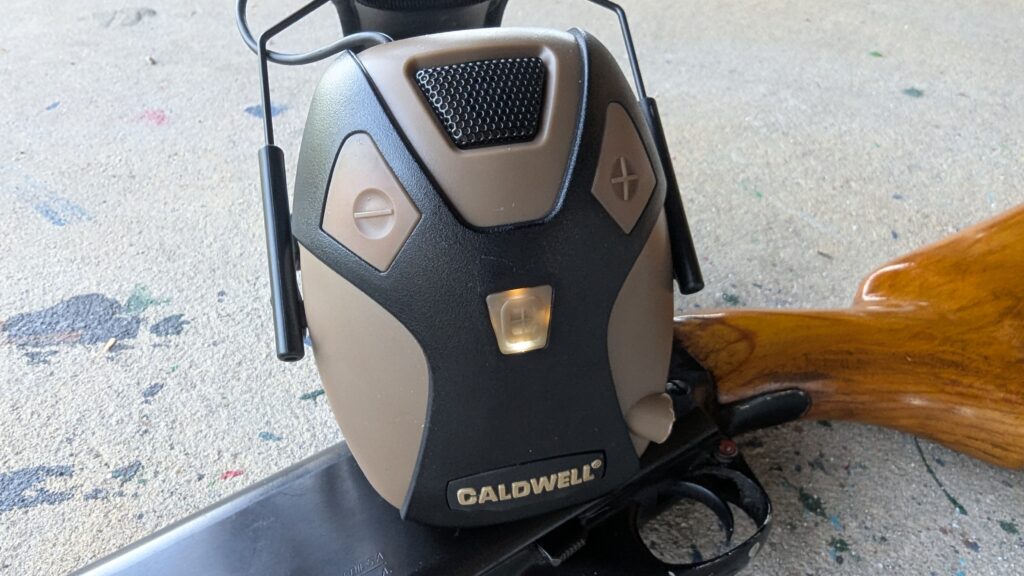
The on button has illumination behind it bright enough to see during the day. It’s clear when the E-MAX is on, which is great because I’ve killed so many batteries forgetting to turn off my Ear Pro. If I toss this in a range bag, I can see that it’s still on. Even if I miss the light, they auto shut off in four hours.
Advertisement — Continue Reading Below
The muffs are soft and wrap around the ears nicely. The headband is padded for increased comfort and sits solidly on the head. We get 23 NRR protection; doubling up won’t be necessary unless you’re indoors and shooting a .308 with a brake.
The E-MAX – Sound and Comfort
I wore the E-MAX for two long days at the Athlon Outdoors Rendezvous. We shot entirely inside the shoot houses to hide from the cold. We shot rifles, shotguns, and handguns of various calibers. Needless to say, a 5.56 SBR inside a shoot house is pretty dang loud, and the same goes for a 12-gauge shotgun. It can be brutal.
The E-MAX seals over the ears and cuts noise to a much more manageable level. I never had my ears ringing or experienced any serious discomfort. At the same time, we were talking to company reps about the guns, optics, and suppressors. Between those long strings of SBR fire, I could have an easy conversation with the reps.
Advertisement — Continue Reading Below

For the price, I didn’t expect the audio quality I received. It’s quite clear with good stereo sound. Voices were easy to hear, and there wasn’t any noticeable static. I played with the volume controls, and it can get loud. Super loud, to the point where it begins to wash out a bit and degrades the quality.
The muffs themselves are low-profile and don’t interfere with my ability to get a cheek weld. My cheek weld never created a gap that allowed gunshots to leak in. I sat behind benched rifles, shotguns, and more without a problem.
Advertisement — Continue Reading Below
Admittedly, like most ear protection, I felt a bit of relief when I removed the E-MAX at the end of those two long days at the range.
The E-MAX Option
The E-MAX isn’t designed for use under the helmet; it’s not designed for attaching a radio to. It’s not a high-speed option. It’s affordable, it’s protective, and it gives solid audio when it’s not blocking gunshots. At 40 bucks, it’s tough to keep using passive earmuffs.
Advertisement — Continue Reading Below
Read the full article here