






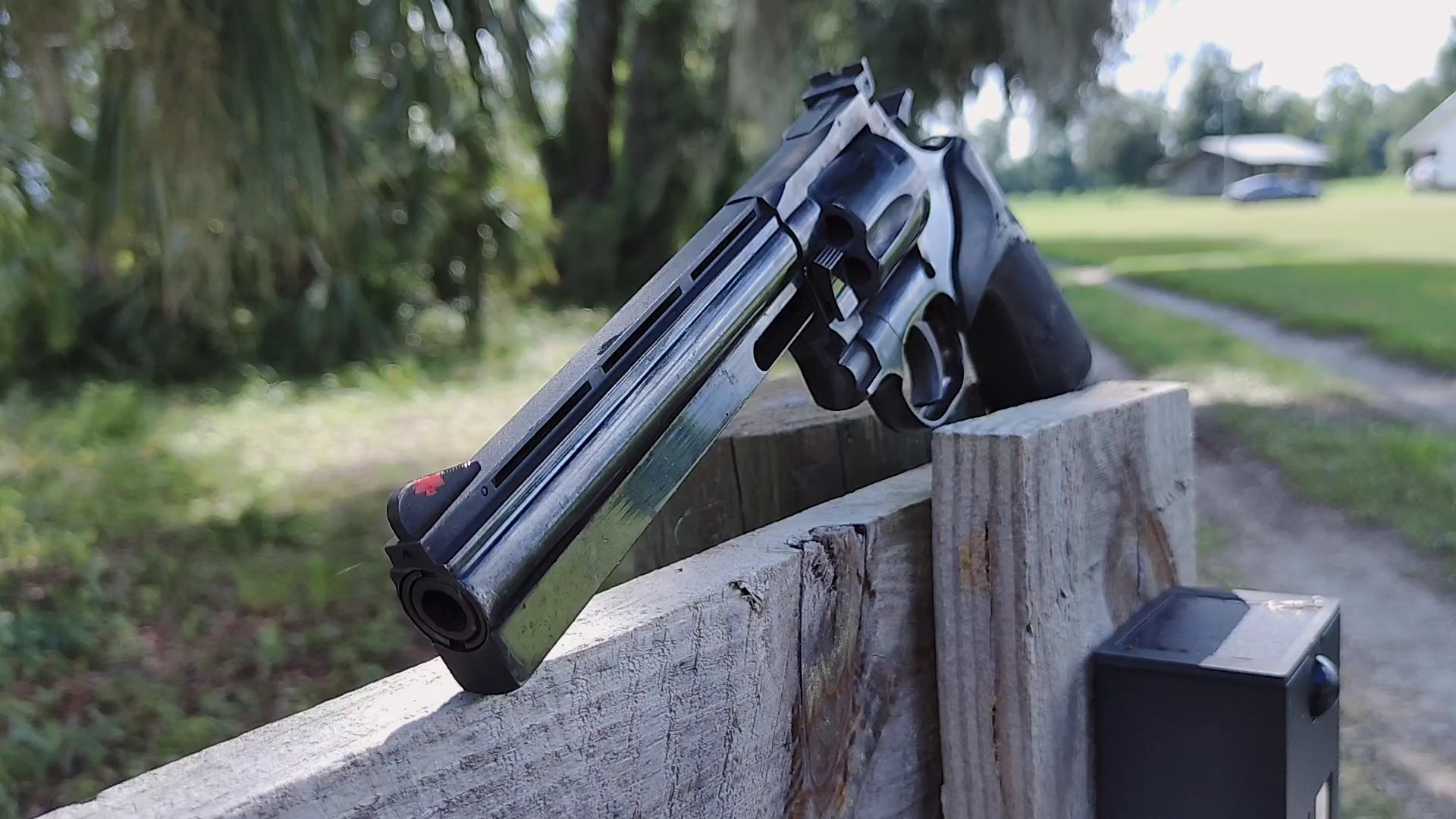
S&W, Colt, Taurus, Ruger, those are the big names in revolver production in the year of our Lord 2026, and arguably well before. There have certainly been alternatives, but they often don’t stick the landing. After S&W was purchased by Bangor Punta, Daniel B Wesson II decided he still wanted to make revolvers, and Dan Wesson was born.
The M15-2 HV From Dan Wesson
Dan Wesson has since been acquired by Colt/CZ Group and currently produces various semi-auto pistols with a focus on M1911s. CZ’s Dan Wesson did produce revolvers for a limited period, but it seems like revolver production has sunsetted for Dan Wesson. I was lucky enough to acquire a Dan Wesson M15-2 HV.
Advertisement — Continue Reading Below
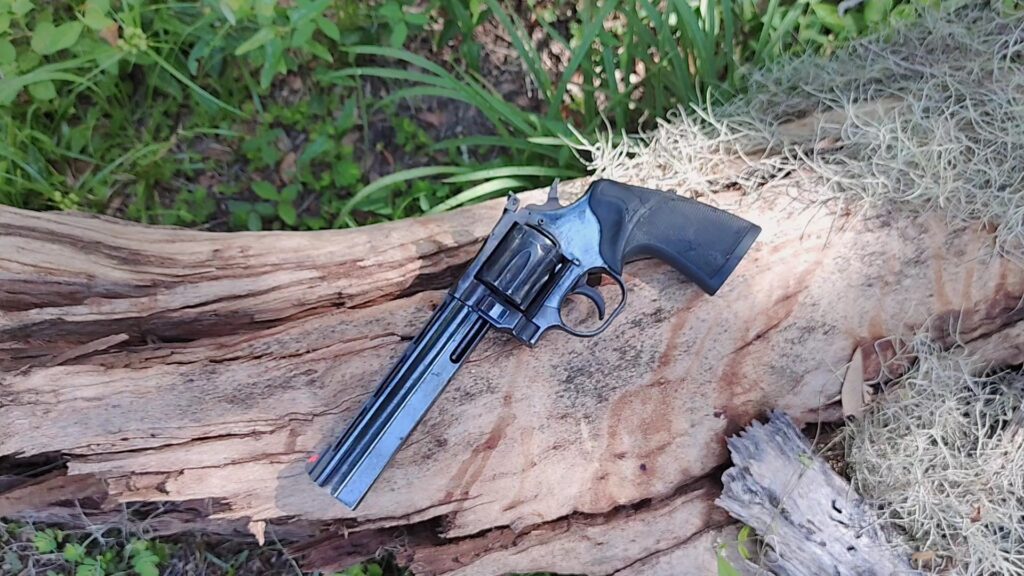
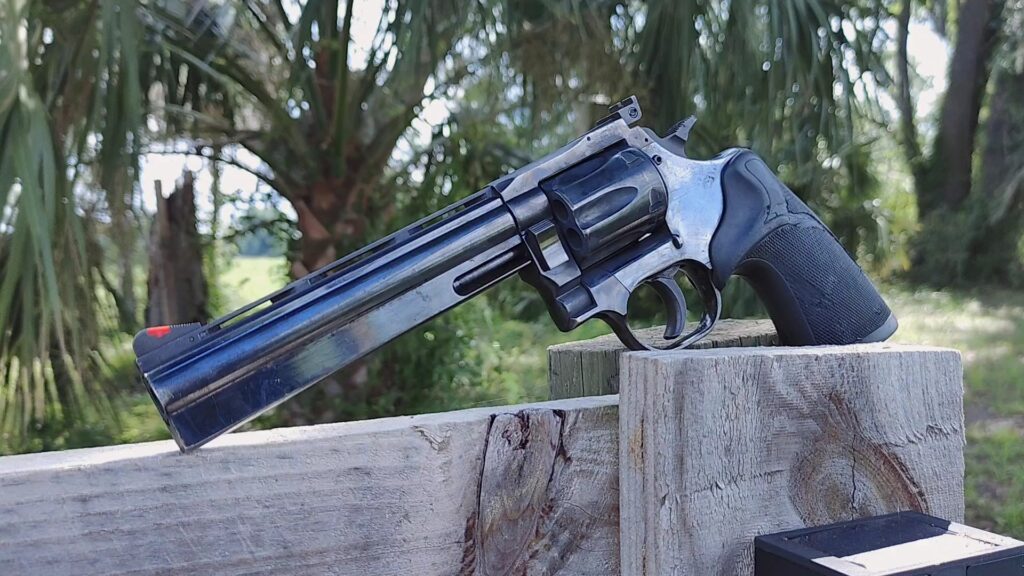
This is a six-shot, .357 Magnum, double-action revolver with adjustable sights. The HV stands for Heavy Barrel, Ventilated. My barrel is six inches long, but as you’ll find out, that’s not the only option.
Dan Wesson revolvers are not S&W clones. Dan Wesson hired Karl R. Lewis, the designer of the Colt Trooper revolver.
Karl Lewis had some innovative ideas that translated to a number of interesting and fascinating revolvers. In fact, they are most known for their modularity. Move over, chassis-style pistols, because Dan Wesson did it first.
Advertisement — Continue Reading Below
The Dan Wesson Modularity
The Dan Wesson revolver’s claim to fame was the ability to swap barrels and grips to turn your revolver into whatever you needed it to be. Do you want a hunting revolver? Six- and eight-inch barrels are an option. A bull’s-eye revolver? Go with the 10, 12, or 15-inch barrels.
Duty revolver? Great, use the four-inch barrel. Concealed carry? Use the 2.5-inch barrel. There was something for everyone and every use, and the end user didn’t need to be a gunsmith to swap the barrels.
The use of a coil mainspring over a flat mainspring allows you to use a wider variety of grip sizes to further customize the gun for your needs.
Advertisement — Continue Reading Below
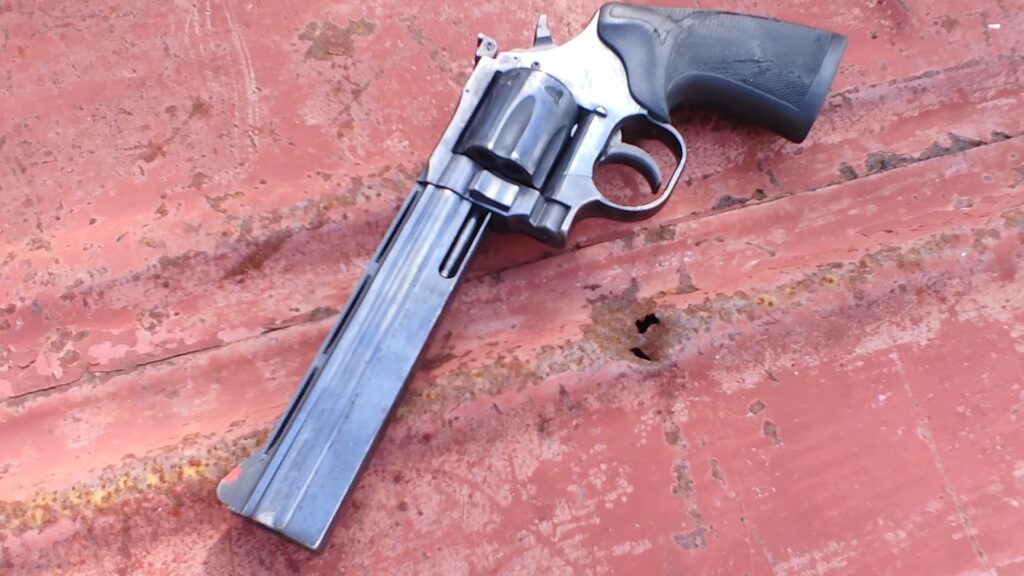
Swapping the barrel requires a proprietary barrel wrench and the barrel and shroud you wish to use. Over the years, the variations of the revolver had slightly different designs for the barrels and shrouds, but the swap was always easy.
The barrel is a free-floating design that locks into the frame. From there, you attach the appropriate barrel shroud and tighten the nut at the front, which pulls the barrel forward toward the nut.
Advertisement — Continue Reading Below
This prevents barrel whip and barrel squaring issues. The barrel is stretched a bit, and this allows the stress of firing to be absorbed by the entire barrel and shroud rather than just the portion threaded to the frame.
With the original M15 designs, you have a flanged barrel shroud. Dan Wesson fans call it the pork chop shroud. It made the revolver a little ugly. With the later models, like the 15-2, this was eliminated.
Advertisement — Continue Reading Below
The 15-2 uses a recess in the frame and has a roll pin that allows for consistent alignment. The M15-2 in .357 Magnum is the most common variant of the Dan Wesson guns.
A Little Different
Traditionally, the cylinder release for revolvers is attached to the side plate. Taurus, Colt, Ruger, and S&W all do it their own way, but the placement remains the same. Dan Wesson revolvers move the cylinder latch in front of the cylinder.
Dan Wesson positioned it on the crane, and this positioning increased the structural strength of the frame. You reach forward of the cylinder and press down, then pop the cylinder out. It seems odd, but when using this latch, your hand is already in position to hit the ejection rod.
Advertisement — Continue Reading Below
The downside is that after a few cylinders, this area gets a bit warm. If it’s hot, you have to watch your hands a bit when emptying and reloading.
From what I assume is a need to accommodate a short 2.5-inch barrel, we are stuck with a shortened ejection rod. It doesn’t have the length necessary to fully eject the .357 Magnum cases, so they can partially remain in the cylinder. It feels silly on a 6-inch barreled revolver, but modularity has its cost.
Blasting Away With the Dan Wesson M15-2
This is, without a doubt, the most accurate stock revolver I own. Sadly, I’m not the most accurate shooter for this revolver. I shot several one-hole groups at ten yards, well, several 5-shot 1-hole groups with at least one shot always breaking out of my tiny, satisfying groups.
That’s entirely with what I’d call a buttery smooth double-action trigger. The trigger is downright incredible. It’s light, fairly short for a double action with a smooth, consistent movement from front to rear. There is no grit or changing weight as the trigger is pulled. It’s delightful.
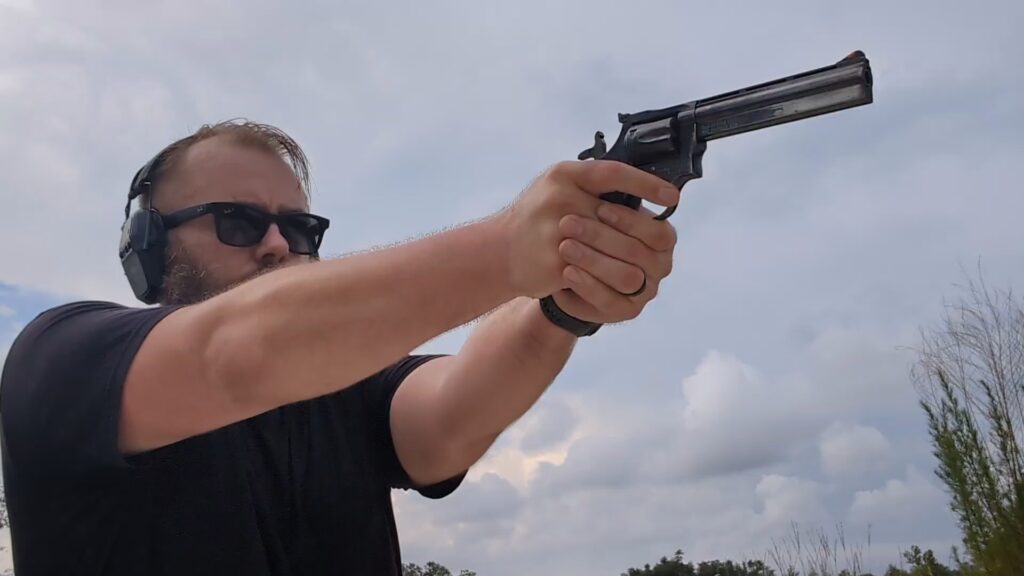
The adjustable sights help me a fair bit. I need a proper rear sight to shoot a revolver with any degree of accuracy. The rear adjustable sight and high-visibility front sight are easy to snap behind and make it easy to land accurate and fast shots.
I’m no revolver shooter; I’m an enthusiastic amateur at best, but I can land two shots of .38 Special inside an ISPC A-zone in less than three-quarters of a second from the low ready at ten yards. The shots were nearly touching. For me, that’s good, and it’s the revolver doing most of the work.
I can fire six shots into the same A-zone in 2.68 seconds from the low ready. A smooth trigger, solid sights, and the big grips help make this an easy-shooting revolver. That, and the six-inch barrel and the weight a full-sized revolver brings to the table, helps.
Adding Some Range
Speaking of recoil, even with some hotter 125-grain Remington Defensive JHPs, the gun didn’t escape control. It’s gassy and loud, but it’s the easiest shooting .357 Magnum I’ve ever handled. There is no real discomfort, wrist pain, or fingers banging into trigger guards. Even shooting one-handed didn’t feel all that difficult with the Magnum rounds.
At 25 and 50 yards, I landed all of my shots onto an IPSC steel target, and boy, does .357 Magnum wallop that target. It’s smile-inducing to hear .357 Magnum on steel. The sights move a fair bit more, but seem to settle right back down to where I want them to be. I hit these shots using the double-action trigger.
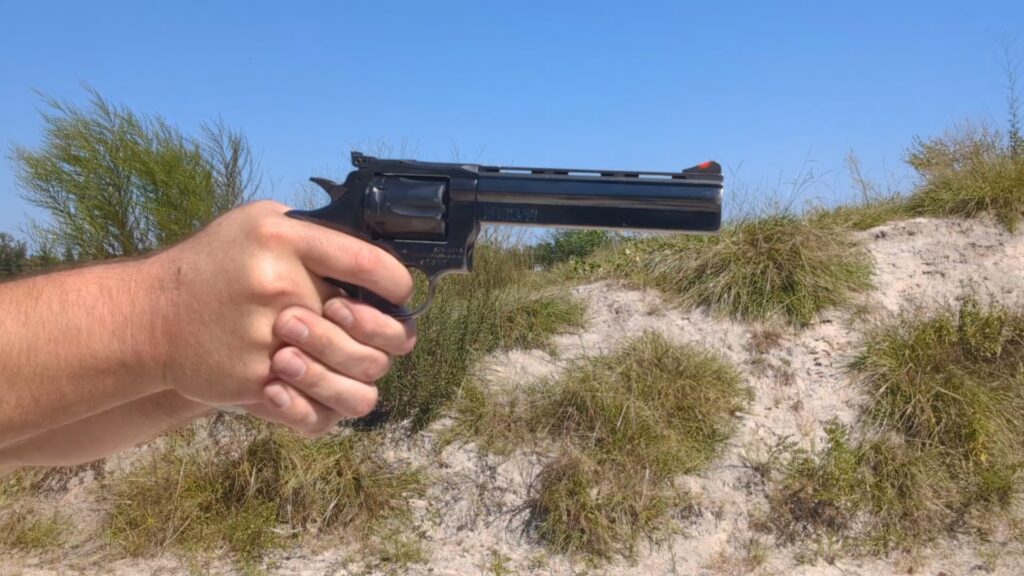
The single action fixes things up even more, making it easy to smack 10-inch gongs at 25 yards. I snapped the chain on my reduced-sized IPSC target, hitting it smack dab with repeated shots. Even with the front sight covering the majority of the target, I had no problems sending it swinging back and forth.
Up close, the additional recoil of the .357 Magnum makes it a bit slower when trying to shoot fast. My double-taps grew a fair bit in spread, and I was hitting at right at one second to keep those shots inside a small target. With a bit of practice, I feel confident I can trim that time.
If I were using these for self-defense, I’d stick to .38 Special +P rounds, but I could see this being a solid hunting revolver with .357 Magnum.
The Dan Wesson
After shooting this 15-2, I’m a little disappointed that CZ killed the Dan Wesson revolver production. These are fantastic revolvers, and I can’t believe I don’t hear more about them. I wish they were still in production, but if you find one, snatch it up!
Read the full article here