





Federal loans would support 10 new nuclear reactors nationwide—the United States has constructed just 2 reactors this century
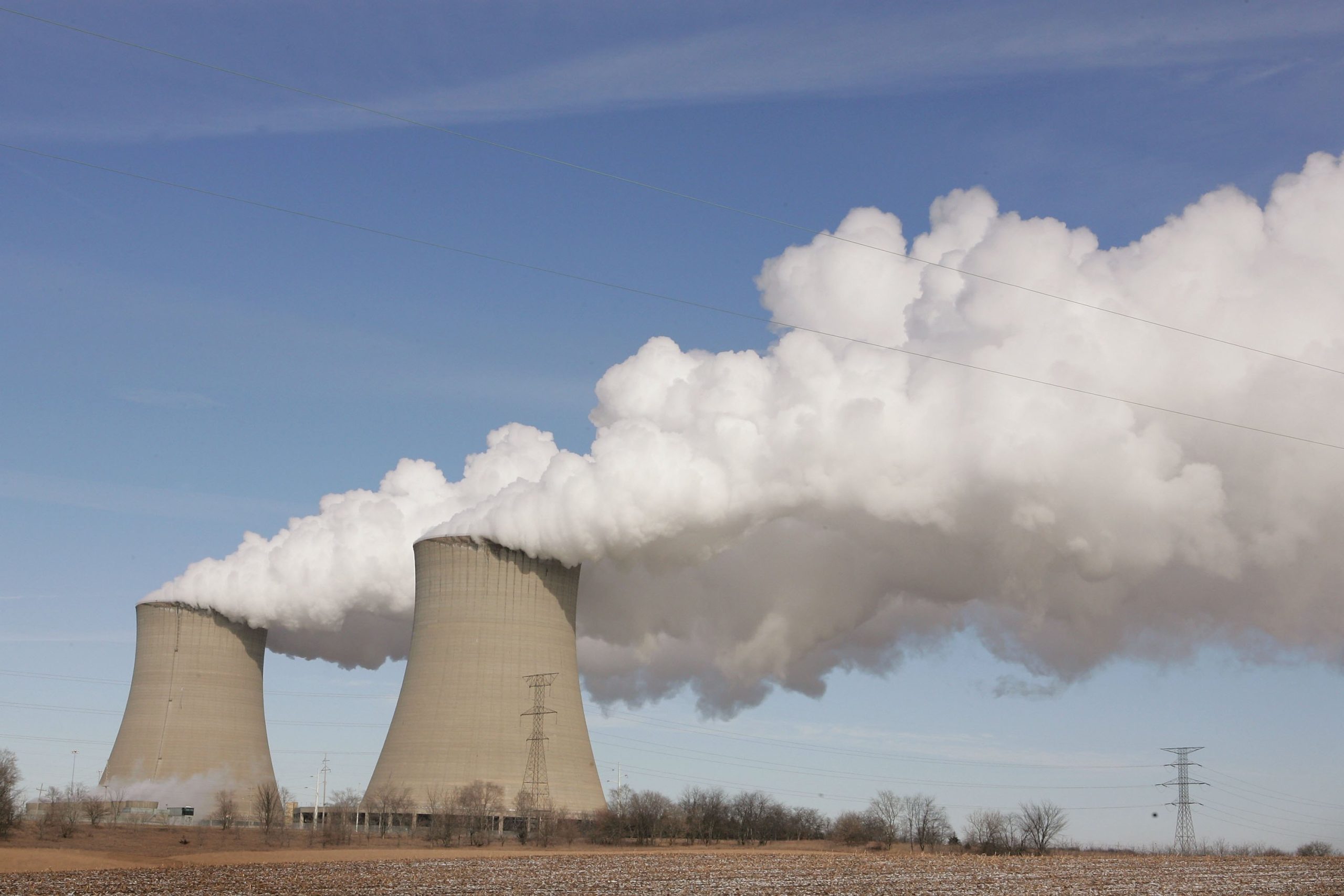
The Trump Department of Energy will issue loans worth a total of $17.5 billion to help fund 10 new nuclear power reactors nationwide, administration officials said on Tuesday.
The loans, provided by the agency’s Office of Energy Dominance Financing—the Trump administration’s renamed Energy Department loan program—will back the construction of reactors manufactured by the American nuclear power firm Westinghouse. According to the Energy Department, seven utility companies have entered into letters of intent with Westinghouse, but the agency will select just five that will ultimately receive funding to construct two reactors each.
“We want to get things moving again,” Energy Secretary Chris Wright told reporters. “We are doing everything we can at the Department of Energy to add dispatchable, reliable, secure energy to the United States, to lower electricity prices and power a reindustrialization of our country.”
The Washington Free Beacon first reported that the Department of Energy would finance 10 reactors in December. Wright told the Free Beacon at the time that the move would provide a “nudge” to an industry that has struggled for decades to get new projects up and running.
The action is a remarkable vote of confidence for an industry that has struggled to develop new projects in recent decades, due in part to longstanding public superstition and safety concerns going back to the 1980s. And it signals that the Trump administration is confident nuclear power is a viable power source for supporting the rapidly increasing power demand in the United States from artificial intelligence, data centers, and manufacturing.
The Energy Department loans will fund a single type of reactor, Westinghouse’s AP1000 units. Each of the 10 reactors will generate 1.1 gigawatts of power, which is enough to power roughly a million homes and means Tuesday’s announcement will kickstart projects that could power 10 million homes altogether.
While the timing of the projects remains undetermined, the announcement is part of President Donald Trump’s goal to begin construction of 10 new nuclear reactors by 2030.
For the five projects the Energy Department selects, Westinghouse and the selected energy company must invest $500 million each before they can access their loan funding, something that is designed to ensure private commitment and protect taxpayer money. Westinghouse and their energy company partners will jointly own the projects. Greg Beard, the director of the Office of Energy Dominance Financing, told the Free Beacon that the agency did not plan to take on an ownership stake in any of the projects.
Getting the projects online, however, figures to be an uphill battle. Just two reactors, both at the same plant in Georgia, have been licensed and constructed in the 21st century. They were also completed after substantial cost overruns and delays.
Those reactors, however, were able to proceed with the help of Energy Department loans issued during the first Trump administration. And Wright has taken steps to streamline the nuclear permitting process, which he previously said was “so bureaucratic, so slow, and so difficult that it just killed the economics of new nuclear reactor development.”
Overall, energy demand in the United States is projected to skyrocket in the coming years, meaning the nation needs more power generation. Driven primarily by artificial intelligence and manufacturing growth, more new electricity will be required over the next decade than any other period in U.S. history, and electricity demand could increase by a staggering 50 percent by 2040, according to a S&P Global Commodity Insights study last year.
“America has always won when it thinks big and builds for the future. If we want to lead in artificial intelligence, advanced manufacturing, and the industries that will define the next century – we need more American baseload energy,” Westinghouse CEO Dan Sumner said on Tuesday.
Read the full article here