




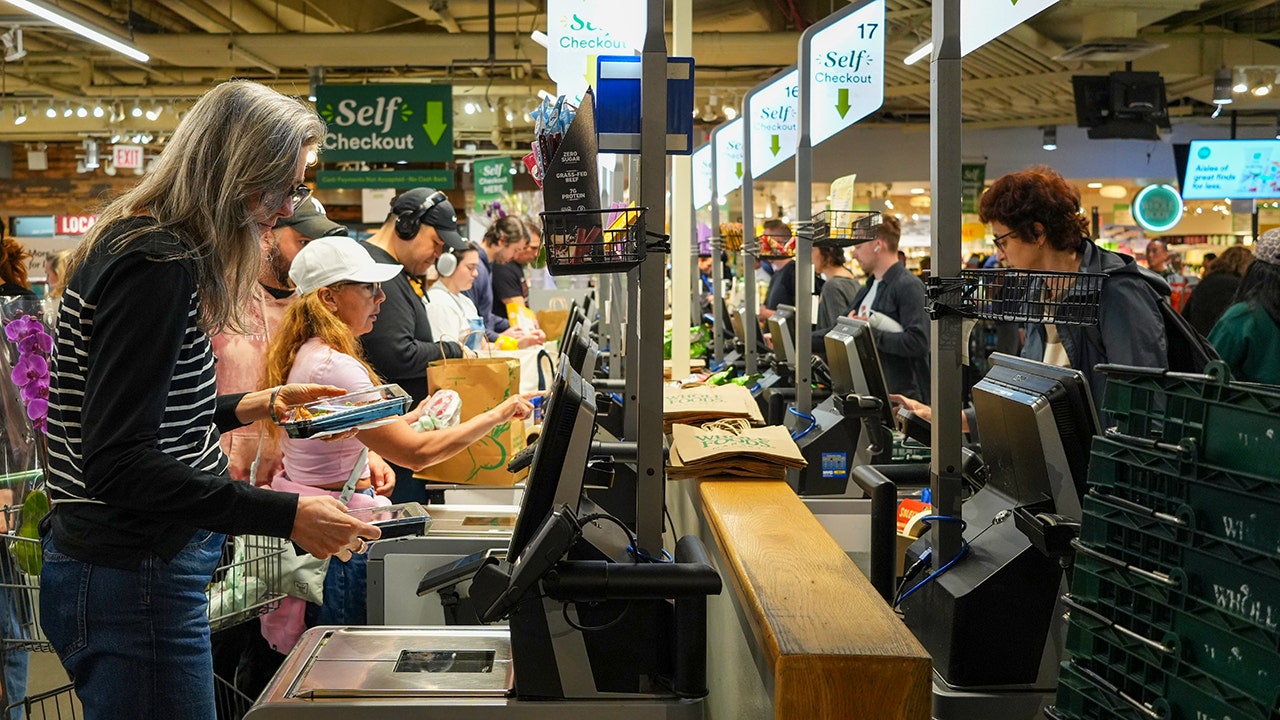
American families are increasingly being pushed past their financial limits at the grocery checkout counter, turning to credit card debt just to keep food on the table, according to a new study.
Data released Monday from the Urban Institute found that a cumulative 32% increase in food costs over the last five years has pushed more than one in four working-age Americans into credit card debt just to cover their regular grocery bills.
“Groceries are one of the largest household budget items for families. Over the past five years, food costs have increased substantially,” the report said. “This means that families today face persistently higher prices when they go to the grocery store, and food affordability remains a key concern for many.”
The report also found, “Between 2023 and 2025, the share of working-age adults who paid for groceries with a credit card and did not make the minimum payment increased, signaling worsening financial distress among families.”
WHITE HOUSE, GAS STATIONS POINT FINGERS OVER STUBBORN PRICES WHILE LOCATIONS THAT SLASHED PRICES SEE BOOM
While recent relief at the gas pump offered a temporary inflation reprieve, corporate supply chain strains and the lingering effects of global trade and geopolitical shocks are expected to keep prices elevated for the foreseeable future, The Conference Board Chief Economist Dana M. Peterson recently told Fox News Digital. She predicted everyday Americans will continue to feel the squeeze at the grocery store, with the Federal Reserve’s 2% inflation goal remaining out of reach until at least 2028.
Though June’s inflation data via the consumer price index (CPI) will be released this Tuesday, April’s personal consumption expenditures (PCE) index rose 0.4% on a monthly basis and is up 3.8% from a year ago.
The Urban Institute findings underscore current price pressures, noting 63.2% of working-age Americans ages 18-64 charged their grocery purchases to credit cards last year. More than one-quarter of those individuals then encountered repayment struggles.
Additionally, the share of individuals who failed to make the minimum payment on credit cards used for grocery purchases increased from 7.1% in 2023 to 8.7% in 2025.
“Buy now, pay later” installment plans were used by 8.9% of adults to secure food, but more than a third (34.8%) of those users failed to make an installment payment on time.
Those hit hardest by the food costs are middle-income earners, the data shows, with middle-class families earning between 200% and 400% of the federal poverty level seeing missed minimum credit card payments on food jump from 9.3% in 2023 to 12.3% in 2025.
“Although access to credit and savings can provide a lifeline for families struggling to meet basic needs,” the Urban Institute wrote, “relying too much on these strategies may lead to financial instability if they have a hard time keeping up with debt or do not recover financially after drawing down savings.”
READ MORE FROM FOX BUSINESS
Read the full article here