




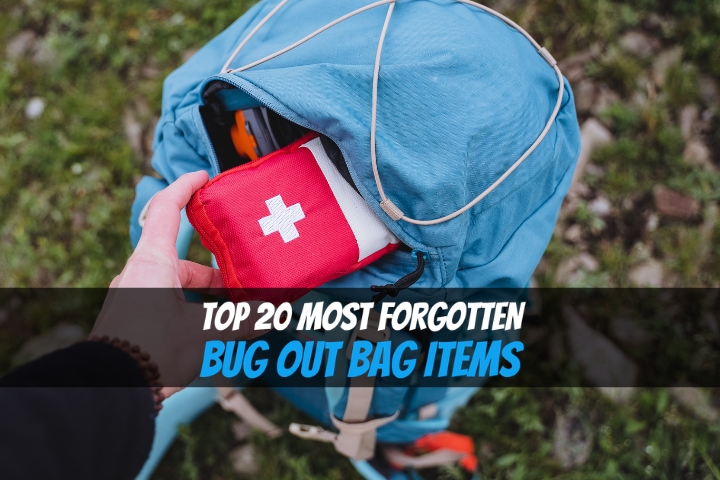

Let me tell you something about bug out bags: No one gets it exactly right the first time. If you think you can assemble a bug out bag once and then forget about it forever, you are gravely mistaken. There are bound to be a few items missing. Your needs change, your gear wears out, and the season you packed for last year probably isn’t the season you’ll bug out in. That’s why it’s important to regularly update your bug out bag.
Most preppers remember the obvious stuff: a knife, a fire starter, a first aid kit, etc. But it’s the overlooked items that tend to bite you when things go wrong. The difference between a good bug out bag and a great one often comes down to a handful of small, cheap items that never made the list. These are often little things you use every day without thinking, the ones that are easy to leave behind because they feel too ordinary to matter.
If you haven’t updated your bug out bag in a while, or haven’t even built one yet, here is a list of 20 items you might have forgotten. These items are commonly overlooked, but they’re the kind of thing you’ll desperately wish you have when you need them. Here they are in alphabetical order.
Want to save this post for later? Click Here to Pin It On Pinterest!
1. Anti-Diarrhea Medicine
Dehydration is already a serious threat in a survival situation, and diarrhea can turn that threat deadly fast. A small pack of Imodium takes up almost no space and could save your life. Unfamiliar water, spoiled food, and the stress of a crisis all raise your odds of an upset stomach at the worst possible moment. Pack a few doses, and consider adding an anti-nausea option alongside it so you’re covered from both ends.
2. Bandana
Don’t underestimate this one. A bandana can work as a pre-filter for water, a dust mask, a tourniquet, a signal cloth, or a way to keep sweat out of your eyes on a long hike. It weighs next to nothing and folds flat, so there’s no reason not to toss two or three in your bag. A plain cotton version can even carry small items or improvise a sling when you need one.
3. Bug Spray
Mosquitoes and ticks carry diseases that can put you down hard in a grid-down situation where medical care isn’t available. A small bottle of DEET-based repellent is cheap insurance. A single tick bite can lead to Lyme disease or another long-term illness that follows you long after the emergency has passed. Permethrin spray for your clothing adds another layer of protection that lasts through several washes.
4. Camouflage Change of Clothes
A fresh set of clothes has obvious practical value, but going with camo specifically helps you blend into a natural environment if you need to move without being seen. Dry clothing is also one of the fastest ways to fight off hypothermia after you’ve been caught in the rain. Pick earth tones that match your local terrain rather than flashy patterns, and include a spare pair of wool socks while you’re at it.
5. Cash
In the early stages of a crisis, cash still works when cards don’t. Keep small bills on hand. People are less likely to make change during a disaster, and smaller denominations are more universally useful. ATMs and card readers both depend on power and a working network, neither of which you can count on. Stash the cash in more than one spot so a lost or stolen wallet doesn’t wipe out your entire reserve.
6. Copies of Personal Info
Think ID, insurance cards, emergency contacts, and any critical medical information. Store physical copies in a waterproof bag so you have them if your phone is dead or lost. Include copies of birth certificates, property deeds, and prescriptions, since proving who you are and what you own gets much harder once records go offline. A small USB drive with scanned documents gives you a backup that takes up almost no room.
7. Duct Tape
Duct tape earns its spot in nearly every survival kit because it fixes so much. You can patch a torn tent, seal a leaking bottle, reinforce a worn boot, hold a wound dressing in place, or splint a sprained ankle with it. Rather than hauling a full roll, wrap several feet around a water bottle or an old gift card to keep it flat and compact.
8. Electrolyte Powder
Plain water replaces fluid, but it doesn’t replace the salts and minerals your body loses through sweat, illness, or exertion. A few packets of electrolyte powder or oral rehydration salts can pull you back from the edge of dehydration far faster than water alone. They weigh almost nothing and pair perfectly with the anti-diarrhea medicine already in your bag.
9. Emergency Radio
When the internet and cell towers are gone, a hand-crank or battery-powered emergency radio is how you stay informed about what’s happening and where it’s safe to go. Look for a model that pulls in NOAA weather bands so you get early warning of storms heading your way. Many include a built-in flashlight and a USB port for topping off your phone, which makes them worth their weight several times over.
10. Enough Food
Most people underestimate how much food they actually need when they’re moving under stress. Aim for calorie-dense options like energy bars or freeze-dried meals that don’t take up much room. Hiking and carrying a loaded pack can burn well over 4,000 calories a day, far more than a normal desk-bound routine. Choose foods that need little or no cooking so you can keep moving even when you can’t safely light a fire.
If you depend on a daily medication, a bug out bag without it can turn a survival situation into a medical emergency. Keep at least a few days’ supply of anything you take regularly, rotating it out before it expires so it stays effective. Ask your doctor or pharmacist about an emergency supply, and store the pills in a labeled, waterproof container so there’s never any confusion about the dose.
12. Fishing Equipment
A small fishing kit weighs almost nothing but opens up a reliable long-term food source if you’re near any body of water. A few hooks, some line, split-shot weights, and a couple of lures fit inside a tiny tin or a repurposed pill bottle. The same kit does double duty for repairs, since fishing line makes surprisingly strong emergency cordage.
13. Oral Hygiene
Dental problems can be debilitating even under normal circumstances. In a survival situation, a severe toothache or infection can be mission-ending. At minimum, pack a travel toothbrush and some floss. An untreated abscess can spread into a genuinely life-threatening infection when no dentist is available. Adding a small tube of toothpaste and a few drops of clove oil, a natural remedy for tooth pain, rounds out a kit that fits in a sandwich bag.
14. Road Map
Your phone dies. The grid goes down. A paper road map of your area never needs a battery and never loses signal, and knowing your routes in advance could mean the difference between getting out and getting stuck. Mark several routes to your bug out location ahead of time, including back roads that avoid the highways everyone else will be clogging. A compass tucked alongside the map turns it from a nice reference into a real navigation tool.
15. SAS Survival Pocket Guide
Even experienced preppers can blank under stress. A compact survival reference like the SAS guide covers shelter, navigation, fire, first aid, and more, and takes up almost no space in your bag. Written by a former Special Air Service instructor, it distills decades of hard-earned field knowledge into a book you can slip into a cargo pocket. Reading through it now, before you ever need it, means you’ll recognize the key techniques instead of fumbling for the page mid-crisis.
16. Sewing Kit
Gear fails. Clothes tear. A basic sewing kit lets you repair a busted pack strap, patch a jacket, or fix anything else that takes damage when you can’t afford to replace it. Toss in a few heavy-duty needles and some waxed thread so you can handle thick materials like canvas, leather, and webbing. In a real bind, the same kit can help close a deep cut when proper medical supplies have run out.
17. Toilet Paper
It sounds obvious until you realize you forgot it. A compressed travel roll or a few feet of TP wrapped around a small cardboard tube takes up minimal space and makes a rough situation a lot more bearable. Beyond the obvious use, it works as a fire starter, a wound blotter, or a quick way to clean a lens. Seal it inside a zip-top bag, because wet toilet paper is useless toilet paper.
18. Trash Bags
A few heavy-duty contractor bags are among the most versatile items you can carry for their size and weight. They serve as a rain poncho, a ground cloth, an emergency shelter, a water collector, or a way to keep your gear dry when you have to cross a stream. The thick 3-mil contractor grade holds up to real abuse, so skip the flimsy kitchen bags.
19. Water Filter
You can survive weeks without food, but only days without water, and most natural water sources are contaminated. A compact filter like a Sawyer Squeeze gives you access to safe drinking water almost anywhere. Even clear mountain streams can carry giardia and other parasites that will leave you violently sick within days. Back up your filter with a few purification tablets, which handle viruses that some filters miss and serve as a fallback if the filter clogs or freezes.
20. Work Gloves
Your hands are the one tool you can’t replace, and a single bad cut or blister can compromise everything else you’re trying to do. A sturdy pair of work gloves protects you while clearing debris, gathering firewood, handling rope, or moving through broken glass and sharp metal. Look for a leather or reinforced synthetic pair that still lets your fingers move freely enough for finer tasks.
Like this post? Don’t Forget to Pin It On Pinterest!
You May Also Like:

Read the full article here